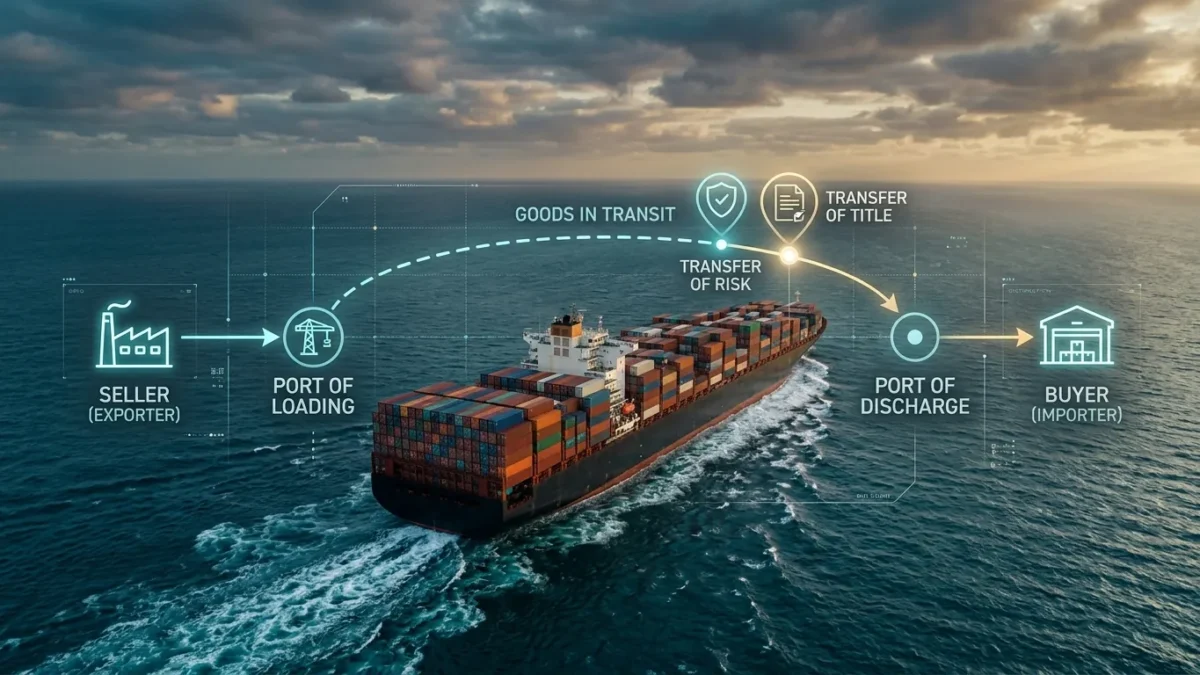
The primary FOB shipping point vs FOB destination difference lies in the exact moment ownership, freight costs, and transit damage risk transfer from the seller to the buyer. Free On Board, commonly abbreviated as FOB, is a standard commercial legal term that identifies which party owns goods while cargo moves between origin and destination. Under shipping point terms, the buyer assumes ownership the moment the carrier accepts the cargo at the seller shipping dock. In contrast, destination terms keep legal title and loss risk with the seller until the carrier delivers the shipment to the buyer receiving dock.
Clear freight terms prevent expensive commercial disputes and accounting errors. At BoringMagazine.Co, we explain the operational details behind routine business agreements. Misunderstandings about transit terms lead to unexpected transportation bills, contested insurance claims, and delayed revenue recognition. Procurement managers and business owners can review our Business guides to master supply chain standards and commercial agreements.
How FOB Terms Define Title and Freight Ownership
Commercial purchase orders require precise rules regarding transport logistics. FOB terms establish three fundamental elements: the timing of title transfer, the assignment of shipping charges, and the legal responsibility for cargo loss or damage during transit. Title represents legal ownership of the property. The party holding title must record those goods as inventory on its corporate balance sheet, even when the items are traveling on a highway or cargo ship.
In the United States, commercial freight transactions reflect provisions outlined in the Uniform Commercial Code. When cargo suffers transit damage, the business holding legal title must file the damage claim with the freight carrier. That business also absorbs any losses that carrier insurance does not cover. Because freight damage happens across transit routes, companies must coordinate their FOB terms with commercial cargo insurance policies.
FOB Shipping Point: Mechanics and Buyer Responsibilities
Under FOB shipping point, also known as FOB origin, the buyer takes legal ownership and financial risk at the exact location where shipping begins. When the seller loads the freight onto the transport vehicle or transfers custody to a common carrier, the legal sale is complete. The seller records the sale on its books upon departure, removing the merchandise from finished goods inventory.
The buyer assumes full responsibility for the transit journey. The buyer typically pays the freight carrier charges and arranges transit insurance. If a truck crashes or cargo shifts during rail transit, the buyer must absorb the direct loss or seek compensation from the carrier. When damaged items cannot be salvaged or repaired, the purchasing company must recognize an accounting loss. To understand the bookkeeping treatment for damaged transit goods, review how inventory shrinkage and write-offs are recorded in financial records.
Procurement teams often prefer FOB shipping point when they hold negotiated volume discounts with freight carriers. Controlling their own logistics allows large buyers to select preferred routes, control delivery schedules, and consolidate shipments from multiple regional suppliers.
FOB Destination: Mechanics and Seller Responsibilities
Under FOB destination, the seller retains legal ownership and bears all risks of transit damage until the freight reaches the buyer receiving dock. The seller selects the carrier, pays transportation costs, and ensures the cargo arrives in sound condition. Legal transfer of title occurs only when the receiving warehouse staff inspects the delivery and signs the carrier bill of lading.
Because ownership remains with the seller throughout transit, the seller cannot record revenue until delivery is complete. If an accident, bad weather, or handling error destroys the cargo during transit, the seller suffers the loss. The seller must replace the goods or issue an invoice credit to the buyer while filing a claim against the carrier or marine cargo insurance policy.
Buyers frequently choose FOB destination terms because this structure removes transportation risk and administrative burdens. Buyers assume financial responsibility only after merchandise arrives intact. Small enterprises with limited logistics staff favor destination terms to avoid handling shipping claims.
Real-World Scenarios and Practical Examples
Examining practical shipping situations illustrates how FOB terms function during commercial disputes. Suppose an office furniture supplier in Dallas sells one hundred desks to an accounting firm in Chicago.
Scenario A represents an FOB shipping point agreement:
- The Dallas supplier loads one hundred desks onto a freight carrier truck at its loading dock.
- The carrier driver signs the receipt, and legal title passes to the Chicago firm.
- During transit, rainwater leaks through the trailer roof and ruins twenty desks.
- The Chicago firm must pay the seller for all one hundred desks because ownership transferred in Dallas.
- The Chicago firm must file a cargo claim with the freight carrier to recover the loss.
Scenario B represents an FOB destination agreement:
- The Dallas supplier hires the trucking company and manages transport logistics.
- When the truck reaches Chicago, dockworkers discover the twenty water-damaged desks.
- The Chicago firm notes the damage on the bill of lading and rejects the twenty damaged units.
- The Chicago firm pays only for the eighty undamaged desks.
- The Dallas supplier files a claim with the carrier and ships replacement desks to complete the order.
Common Mistakes and Contract Disputes to Avoid
Misunderstandings regarding freight designations frequently trigger disputes between buyers and sellers. One frequent mistake is confusing freight payment terms with title transfer. Contracts often modify terms using phrases like FOB shipping point, freight prepaid, or FOB destination, freight collect. Freight prepaid means the seller pays carrier charges upfront, while freight collect means the buyer pays the carrier upon delivery. However, payment terms do not alter when legal title transfers. Under FOB shipping point, freight prepaid, the buyer still assumes ownership at the seller dock even though the seller paid the carrier on the buyer behalf.
Another mistake involves overlooking conflicting contract terms. Standard purchase orders often contain indemnity provisions that contradict stated shipping terms. To prevent conflicting liability terms, review what indemnification clauses mean in vendor agreements before signing supply contracts.
Companies also make accounting errors by recording revenue or inventory on incorrect dates. Suppliers must not recognize revenue on FOB destination shipments before physical delivery. This article provides general educational information, not legal or financial advice. Readers should consult a licensed attorney or certified public accountant for guidance on specific contracts or accounting practices.
FAQ
Who is responsible for damaged freight under FOB shipping point?
The buyer is responsible for transit damage under FOB shipping point because ownership and risk transfer at the seller shipping dock. Once the freight carrier accepts the cargo, the buyer holds legal title throughout transit. If damage occurs, the buyer must pay the seller invoice in full, document the damage on the delivery receipt, and file a compensation claim directly with the freight carrier or cargo insurer.
Can FOB destination terms require the buyer to pay freight charges?
Yes, FOB destination terms can require the buyer to pay freight charges by specifying FOB destination, freight collect in the contract. Under this arrangement, the seller retains title and transit risk until delivery, but the buyer pays the transportation carrier invoice. This hybrid structure lets buyers manage transport payments while requiring sellers to ensure safe arrival.
How do FOB terms affect corporate balance sheet inventory?
FOB terms determine which party must report goods in transit on its balance sheet at the end of an accounting period. When products ship under FOB shipping point, the buyer must include those goods in transit as inventory assets, even before physical delivery. Under FOB destination, the seller keeps the merchandise in its inventory asset accounts until delivery at the buyer facility.