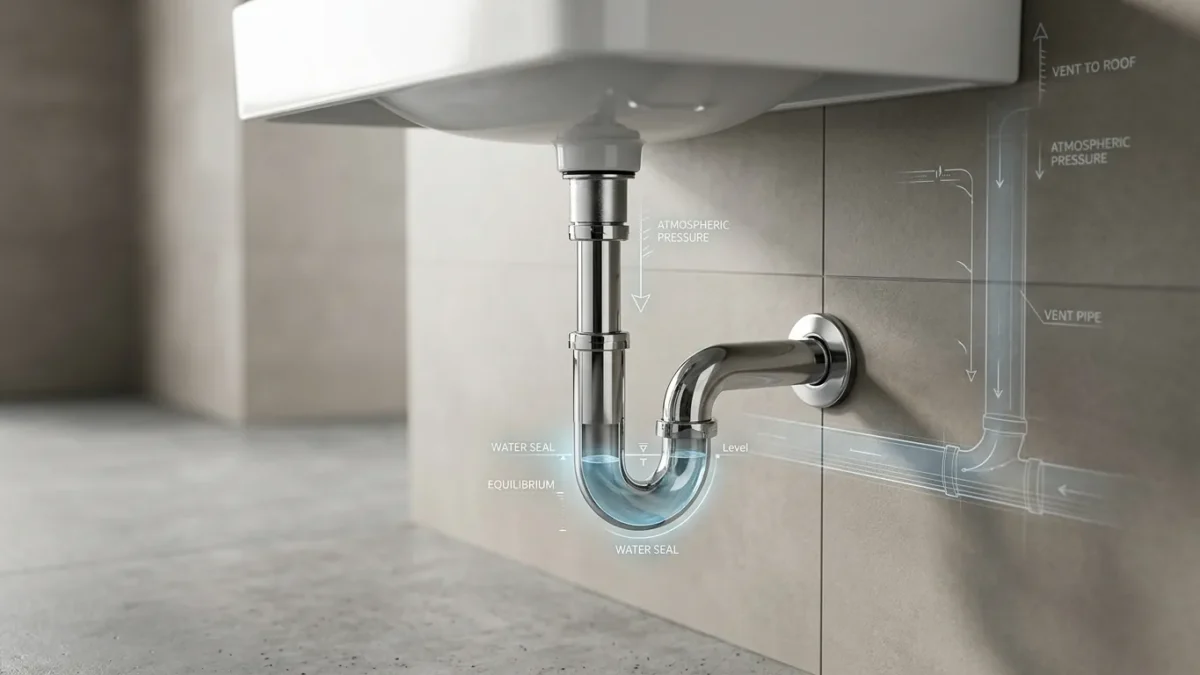
Plumbing fixtures need vents to equalize air pressure in the drainage system, preventing vacuum suction from pulling protective water seals out of P-traps and allowing dangerous sewer gases into the home. When wastewater rushes down a drain, it pushes air forward and creates a low-pressure pocket behind it. Without an open pathway for outdoor air to enter the pipe, that negative pressure siphons standing water out of sink basins, tubs, and toilets. Modern residential drainage relies on this continuous balance between liquid flow and atmospheric air. At BoringMagazine.Co, we explain home systems using core physics so property owners understand how pipes operate behind finished walls.
The Mechanics of Drain Flow and Atmospheric Pressure
Residential drainage systems are not closed pressurized loops like domestic water supply lines. While fresh water arrives under mechanical pressure from a utility main or well pump, drain pipes rely entirely on gravity to carry wastewater downward. Because drain lines do not run completely full under normal operation, they carry both liquid waste and air simultaneously.
When a sink empties or a toilet flushes, a dense slug of water enters the drain line. As this water moves downward through horizontal branches and vertical stacks, it acts like a piston inside a cylinder. The falling mass pushes air ahead of it, increasing pressure downstream. Behind the moving water, a partial vacuum develops where air has been dragged away.
Atmospheric pressure at sea level exerts approximately 14.7 pounds per square inch on all open surfaces. When a vacuum forms inside an unvented pipe, the higher atmospheric pressure inside the bathroom pushes downward on the water in the fixture trap. Without an open vent stack to introduce outdoor air and neutralize the suction, the vacuum pulls the water out of the trap and down the waste pipe.
How Negative and Positive Pressure Disrupt P-Trap Seals
Every plumbing fixture connects to a curved pipe known as a P-trap. This curve holds a standing barrier of water between two and four inches deep. The water seal isolates the living environment from the municipal sewer line or septic tank, blocking sewer gases such as methane, hydrogen sulfide, and carbon monoxide. Pressure imbalances compromise this water barrier through two distinct mechanical forces:
- Self-siphonage: When a basin empties rapidly, the momentum of the water column pulls the remaining liquid past the trap weir if no air enters at the top of the drain bend.
- Induced siphonage: When a large fixture discharges into a shared vertical stack, the falling water pulls air from adjoining branches, siphoning dry the traps of nearby bathtubs or sinks.
- Positive backpressure: When falling water reaches a sharp turn or a horizontal drain line, the compressed air ahead of it cannot escape. That excess pressure pushes upward through the P-trap, bubbling past the water seal and releasing foul odors into the room.
Primary Components of a Modern Plumbing Vent System
A residential Drain-Waste-Vent (DWV) network connects several specialized pipes to maintain atmospheric balance throughout the building. Homeowners reading through our Home Improvement guides will find that plumbing codes dictate strict sizing and layout rules for each segment.
- Waste Stack: The central vertical pipe that collects drainage discharge from upper fixtures and transfers it to the underground building drain.
- Stack Vent: The dry upward extension of the waste stack that travels through the roof framing to vent into outdoor air.
- Branch Vents: Dedicated air pipes that connect individual fixtures to the main vent stack above the highest flood level rim.
- Wet Venting: A piping design where an oversized pipe carries liquid waste from one fixture while acting as an air vent for another fixture within the same bathroom group.
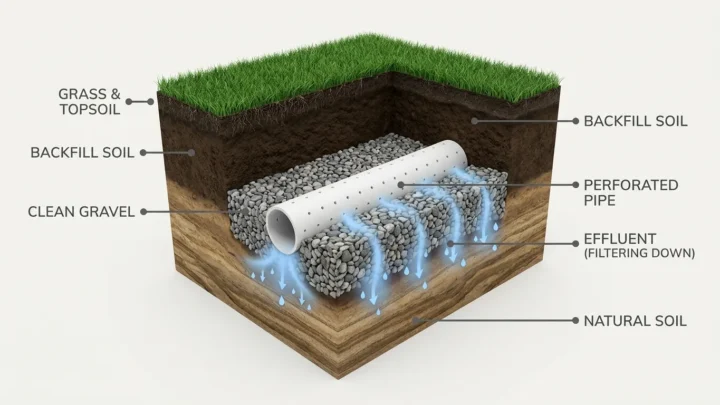
Proper airflow also protects downstream systems. For homes on private waste systems, smooth gravity drainage influences how a septic drain field filters effluent by preventing surging discharges that can disrupt settling tanks.
Real-World Warning Signs of Venting Failures
Plumbing vent failures rarely remain silent. Because air pressure dynamics react instantly to water movement, restricted vent pipes produce distinct acoustic and environmental symptoms throughout the house.
A classic symptom is a loud gurgling or bubbling noise coming from a bathroom sink when a toilet flushes. This sound occurs because the falling toilet discharge pulls air through the sink P-trap instead of drawing air from a clear roof vent. As air bubbles break through the standing water seal, the trap loses volume and fails to protect the home.
Slow drainage across multiple fixtures on the same floor often points to a venting issue rather than a localized pipe clog. Without adequate air intake, the drain line acts like a liquid-filled straw held shut with a finger at the top. Water struggles to drain until enough air slowly bubbles upward through the line.
Finally, intermittent sewer odors that appear throughout the week indicate siphoned traps. When a fixture trap is pulled dry, sewer gas enters the room until the fixture is run again to refill the trap basin.
Common Mistakes and Misconceptions in Vent Installation
A frequent misconception is that plumbing vents exist solely to exhaust foul smells out of the house. While expelling sewer gas into the outdoor atmosphere above the roofline is necessary, air intake is the primary mechanical function of a vent. Homeowners who assume vents are simply exhaust pipes often attempt to cap them or reduce pipe diameters, resulting in severe drainage dysfunction.
Another common mistake during DIY bathroom remodels involves exceeding the allowable distance between a P-trap and its vent pipe. This section of horizontal pipe, known as the trap arm, must maintain a slight slope toward the drain. If the trap arm runs too far before reaching a vertical vent, the fall of the pipe drops below the level of the trap weir. This geometry turns the fixture into an unvented S-trap that siphons itself dry after every use.
Installing horizontal vent lines below the flood level rim of a fixture is another dangerous error. If a drain line clogs, waste backs up into the horizontal vent. When the drain clears, solid debris remains trapped inside the vent line, creating a permanent hidden blockage. Anyone planning structural changes to drain lines should consult a licensed plumbing professional to ensure code compliance and safety.
FAQ
Why does a sink gurgle when a toilet is flushed?
A sink gurgles when a flushed toilet pulls air through the sink P-trap because a blocked or undersized vent pipe fails to supply air to the drain line. The fast-moving toilet water creates a localized vacuum inside the shared soil stack. Because air takes the path of least resistance, atmospheric pressure pushes room air through the sink trap seal to satisfy the vacuum, producing a distinctive gurgling sound.
Can an Air Admittance Valve replace an exterior roof vent stack?
An Air Admittance Valve can replace branch vents for individual fixtures, but it cannot replace the primary exterior roof stack required for whole-house pressure balance and gas release. These mechanical one-way valves open under negative pressure to admit room air into the drain pipe and close by gravity to keep sewer gases contained. However, they cannot relieve positive pressure spikes or vent sewer gases out of the structure.
How far can a P-trap be located from its vent pipe?
A P-trap can be located between three and a half and eight feet from its vent pipe, depending on pipe diameter under standard model plumbing codes. A standard one-and-a-half-inch bathroom sink drain generally allows a maximum trap arm distance of six feet before reaching a vent. Exceeding this distance creates an inverted hydraulic siphon that drains the water seal whenever the sink is emptied.