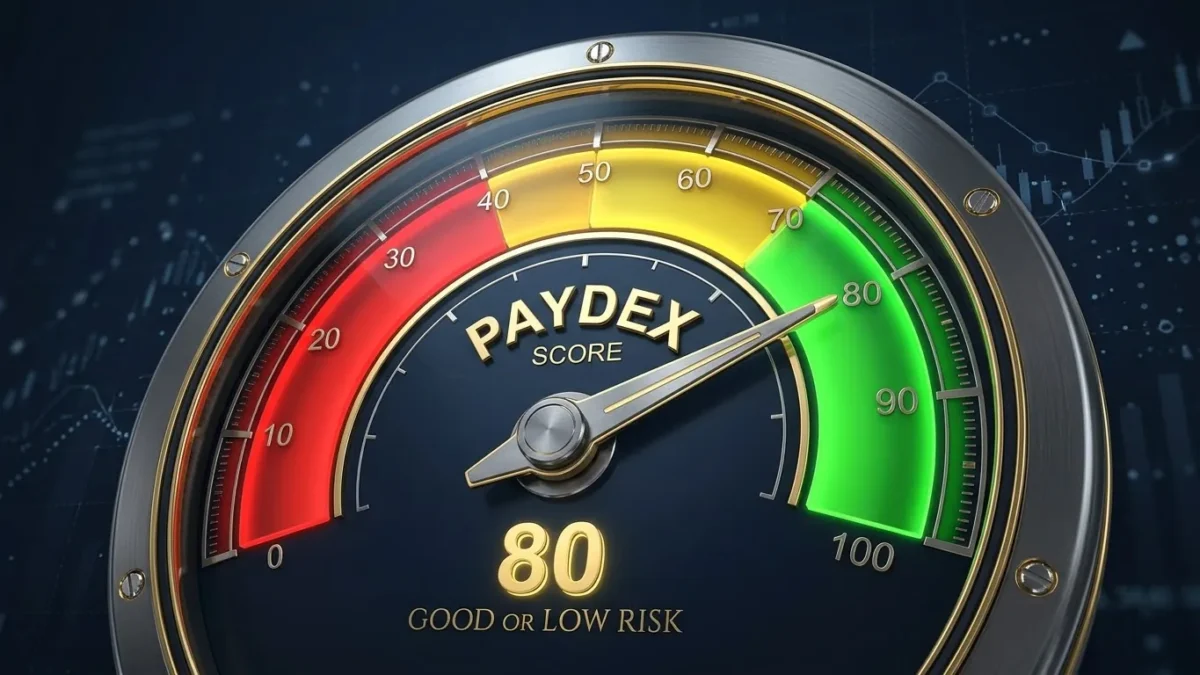
A Dun & Bradstreet PAYDEX score works by rating how promptly a business pays its trade bills on a scale from 1 to 100 based on verified trade credit experiences.
Unlike consumer credit scores that look at personal cards, mortgages, and revolving balances, this commercial score focuses on settlement timelines between a company and its suppliers. A higher number signals that an organization settles invoices on time or ahead of agreed terms, while a lower score indicates chronic payment delays.
Suppliers, wholesalers, equipment leasing firms, and commercial lenders inspect this metric when evaluating whether to extend trade credit or net-30 terms. Understanding the calculation method helps owners build a dependable commercial profile and secure favorable terms with vendors. At BoringMagazine.Co, we examine everyday commercial procedures that shape operational cash flow. You can explore our Business guides to see how vendor relationships affect financial operations.
What the Dun & Bradstreet PAYDEX Score Measures
The PAYDEX score is a dollar-weighted numerical indicator developed by Dun & Bradstreet to quantify commercial payment habits. It reflects whether a company pays its bills prior to terms, exactly on terms, or past the due date. The rating reviews actual transactions rather than public sentiment, revenue volume, or profitability.
The dollar-weighted element is a central feature of the scoring model. A late payment on a $50,000 raw material shipment carries far greater negative weight than an overdue payment on a $200 office supply order. When suppliers report their ledger entries, Dun & Bradstreet factors the invoice size into the final calculation. As a result, maintaining prompt payments on your largest vendor accounts provides the greatest protection for your commercial rating.
Trade credit differs from retail debt. In trade agreements, a supplier ships goods first and issues an invoice with designated terms such as net-30 or net-60. The PAYDEX score translates those historical settlement records into a single number that outside suppliers use to judge default risk.
The Numerical Scale and Promptness Tiers
The PAYDEX scale runs from 1 to 100. Each point range directly corresponds to a specific payment behavior relative to invoice due dates:
- 100: Payments arrive 30 days ahead of the invoice due date.
- 90: Payments arrive 20 days ahead of terms.
- 80: Payments arrive exactly on time, matching the agreed terms.
- 70: Payments arrive 15 days past terms.
- 50: Payments arrive 30 days past terms.
- 40: Payments arrive 60 days past terms.
- 30: Payments arrive 90 days past terms.
- 20: Payments arrive 120 days past terms.
- 1 to 19: Payments arrive more than 120 days late or reflect collection actions.
A score of 80 serves as the standard commercial benchmark for good standing. Lenders and major distributors consider an 80 rating to represent low credit risk because it proves the firm honors contractual payment schedules. Securing a score above 80 requires early settlements, such as taking advantage of early-payment discounts like 2/10 net-30 terms.
Scores below 70 generally trigger tighter vendor terms. When a rating falls into the 40 to 60 range, suppliers may demand upfront deposits, cash on delivery, or personal guarantees before fulfilling new purchase orders.
How Trade Credit Data Reaches Dun & Bradstreet
The data behind your score does not originate from consumer credit bureaus like Equifax, Experian, or TransUnion. Instead, Dun & Bradstreet collects information directly from commercial suppliers through trade payment experiences.
Participating vendors submit their accounts receivable ledgers to the reporting agency on a recurring monthly cycle. These automated reporting programs share customer account numbers, outstanding balances, terms of sale, and the exact number of days taken to pay past due balances. Not every vendor participates in trade credit reporting. Many smaller suppliers and regional service providers do not upload their books because reporting requires software integration and formal data agreements.
Before negotiating net payment terms with key suppliers, business owners should review what indemnification clauses mean in B2B vendor contracts to understand total contractual liability. Clear payment expectations protect both parties and prevent administrative billing disputes that could otherwise show up as delinquent trade lines.
Step-by-Step: How a PAYDEX Score Is Generated
Generating a functioning trade credit profile requires completing several administrative and operational stages:
- Register for a D-U-N-S Number: Your enterprise must obtain a unique nine-digit Data Universal Numbering System identifier from Dun & Bradstreet. According to the Small Business Administration, obtaining this number is also standard for federal contracting.
- Establish Accounts with Reporting Vendors: Open trade accounts with distributors, office supply merchants, building material providers, or industrial suppliers that actively report to commercial bureaus. Inquire with vendor credit departments before ordering to verify that their billing software transmits monthly ledger data.
- Accumulate Trade Experiences: Dun & Bradstreet requires a minimum of four trade payment experiences from at least two separate suppliers before calculating a PAYDEX score. Without this baseline data, the agency marks the profile as having insufficient trade lines.
- Maintain Early or On-Time Payments: Pay invoices well ahead of due dates whenever early-payment terms exist. Over time, the agency weights these records according to transaction sizes, producing your score across a rolling 12 to 24 month window.
Unpaid bills or damaged supplier shipments can create inventory disputes, making it useful to understand how inventory shrinkage and write-offs are recorded in small business accounting. Keeping accurate ledger books ensures your finance team spots billing discrepancies before vendors register late trade records.
Common Misconceptions and Reporting Delays
A frequent error among new entrepreneurs is assuming that paying utility bills, office rent, and business credit cards automatically creates a strong PAYDEX rating. Traditional landlords, utility providers, and retail card issuers rarely report to Dun & Bradstreet’s trade program. Without active B2B supplier accounts, a company can operate for years without generating any score at all.
Another common mistake involves ignoring reporting lag times. When a firm pays off an invoice early, that transaction does not reflect on the credit profile the following afternoon. Most vendors transmit batched accounting data once per month, and Dun & Bradstreet requires processing time to verify and merge incoming records. As a result, improving a damaged score typically takes sixty to ninety days of consistent settlement activity.
Finally, business owners sometimes treat this score as personalized financial advice. Commercial credit reporting rules vary, and this article provides general educational information rather than individualized financial or legal advice. Consult a certified public accountant or commercial credit attorney regarding complex corporate finance decisions or formal disputes.
FAQ
How many trade references do you need for a PAYDEX score?
You need a minimum of four trade payment experiences from at least two distinct vendors before Dun & Bradstreet will generate a score. If you have fewer trade references on file, your report displays an unrated status until more suppliers submit ledger histories.
How long does it take for vendor payments to update a PAYDEX score?
Vendor payment updates usually take thirty to sixty days to appear on your trade report after a supplier transmits its monthly records. The exact timeline depends on when the supplier submits its batched receivables file and how quickly the bureau verifies the submitted records.
Can a small business have a PAYDEX score without personal credit checks?
Yes, a business can establish a PAYDEX score without personal credit checks because the rating evaluates business-to-business vendor transactions tied exclusively to a company D-U-N-S number. However, some suppliers may still inspect personal credit scores if the enterprise lacks an established trading history.