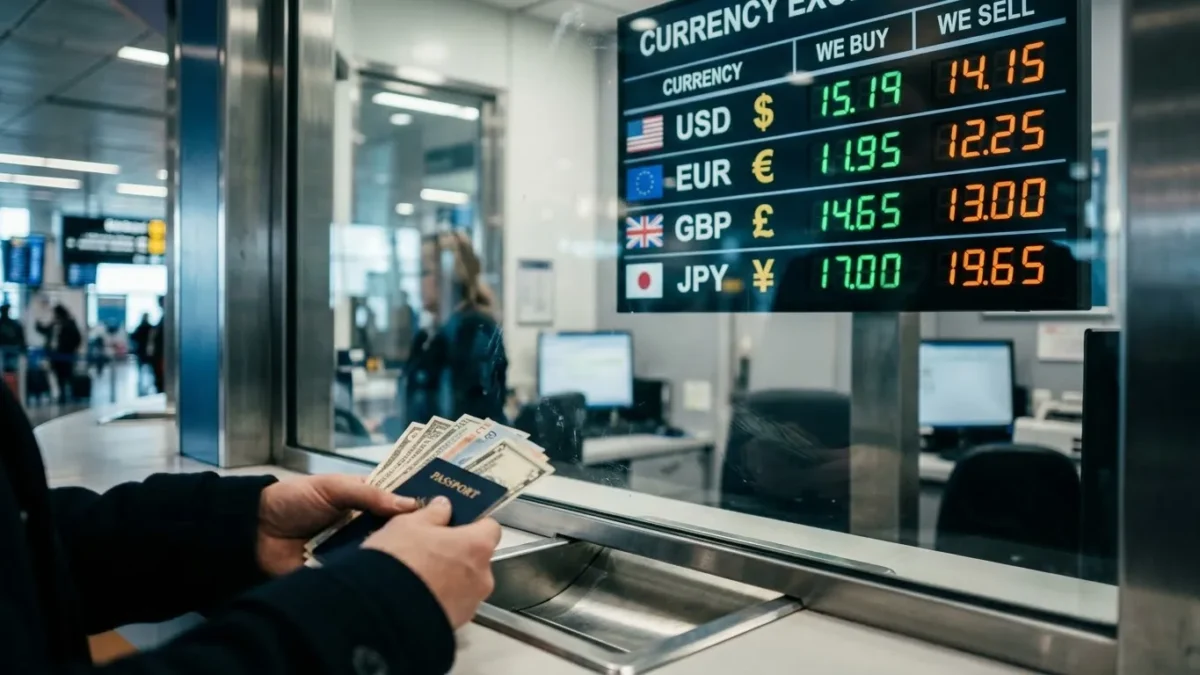
Foreign exchange spreads work by creating a price difference between the cost to buy a currency and the price to sell it, allowing brokers and financial institutions to capture profit on each transaction. Whenever money moves from one denomination into another, the entity processing the exchange offers a rate that deviates from the raw market value. At BoringMagazine.Co, we look at how everyday financial plumbing impacts your wallet. Understanding these pricing tiers helps personal travelers, remote workers, and international businesses avoid unnecessary expenses.
The Mechanics of Bid, Ask, and Mid-Market Rates
To understand how foreign exchange spreads work, you must look at how institutions quote currencies. In financial markets, currencies always trade in pairs, such as the US Dollar and the Euro (EUR/USD). Every quote presents two distinct figures: the bid price and the ask price. The bid represents the highest price a dealer is willing to pay to purchase a currency from you. The ask, or offer, is the price at which the dealer will sell that currency to you.
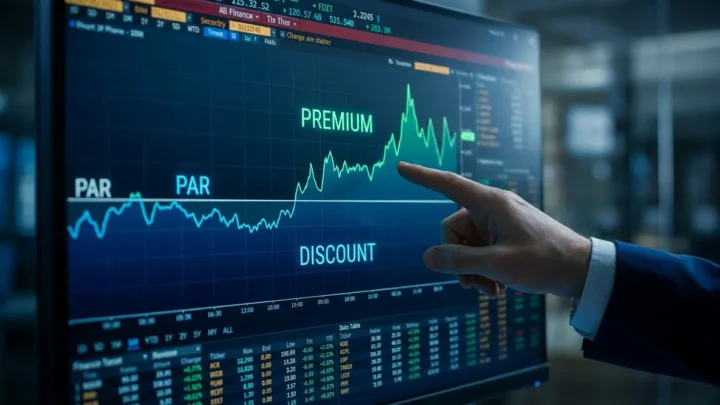
The gap separating the bid and the ask is the spread. The midpoint between these two prices is called the interbank rate or the mid-market rate. This mid-market rate serves as the true baseline value of a currency pair at any given second. Global financial institutions trade trillions of dollars with one another at or extremely close to this rate because of massive trading volume and deep liquidity.
Retail customers, however, do not trade at the mid-market rate. Instead, banks, credit card networks, airport kiosks, and online money transfer services adjust both sides of the quote. They lower the bid price when buying foreign money from you and raise the ask price when selling foreign money to you. The spread widens accordingly, creating an automatic margin on every exchanged dollar.
Wholesale Interbank Rates vs. Retail Markup Margins
The difference between wholesale and retail currency pricing comes down to scale, operational overhead, and profit strategy. In the interbank market, central banks, commercial lenders, and sovereign funds exchange colossal sums. Because transactions occur in units of millions of dollars, the spread is tiny, often measured in fractions of a pip (percentage in point), which represents the fourth decimal place in most currency pairs.
When you change money for an overseas vacation or pay a foreign supplier, you enter the retail market. Retail operators face retail costs. They maintain branch locations, hold physical banknotes in vaults, operate compliance departments, and manage inventory risk. To cover these expenses and generate profit, they apply a retail markup on top of the wholesale interbank rate.
This markup margin varies widely depending on the provider you use:
- Airport kiosks: Physical exchange booths often apply markups between 8 percent and 15 percent above the mid-market rate.
- Traditional commercial banks: Standard bank transfers and foreign wires usually add a margin of 2 percent to 4 percent to the exchange rate.
- Credit card networks: Major credit card processors typically charge a tighter currency conversion margin around 1 percent, though issuing banks may tack on a separate foreign transaction fee.
- Specialized digital transfer operators: Online remittance platforms frequently offer spreads below 1 percent, relying on digital routing rather than physical branches.
Similar structural markups appear across other banking operations. As detailed in our Finance guides, financial intermediaries frequently build compensation into transaction spreads rather than itemized invoices. When moving money across borders, wire networks charge both fixed delivery fees and variable exchange margins. Readers comparing payment rails can also review how ACH transfers clear through the Federal Reserve to see how domestic settlement systems differ from international wire rails.
Where Consumers Encounter Currency Spreads Every Day
Currency exchange markups appear in several familiar consumer settings, often without explicit disclosure of the exact percentage margin applied:
First, travelers experience spreads directly when purchasing physical banknotes before traveling abroad or at airport arrival halls. The provider posts a board showing buy and sell rates. If you examine the numbers, you will find that exchanging USD for EUR and immediately trading it back would result in a substantial cash loss, even without any formal commission fee listed on the receipt.
Second, international e-commerce platforms utilize dynamic currency conversion. When shopping online from an overseas merchant, the checkout page may offer to bill your credit card in your home currency instead of the local currency of the seller. While this seems convenient, dynamic currency conversion applies an unfavorable exchange spread set by the merchant or payment processor, which is almost always worse than your domestic credit card network rate.
Third, freelance professionals and remote contractors encounter exchange spreads when withdrawing foreign earnings. Digital wallets and merchant payment gateways convert incoming foreign payments to domestic bank accounts using internal exchange rates that include a built-in markup of 2 percent to 3.5 percent.
A Step-by-Step Mathematical Example of a Currency Spread
Following a simple calculation demonstrates how the spread translates directly into lost purchasing power for ordinary consumers:
- Identify the mid-market rate: Assume the global interbank rate for EUR/USD is 1.1000. Under this true market rate, 1,000 Euros equals 1,100 US Dollars.
- Examine the retail quote: A retail exchange booth quotes a selling rate of 1.1800 USD per EUR and a buying rate of 1.0200 USD per EUR.
- Calculate the initial purchase: You need 1,000 Euros for a trip. At the retail ask rate of 1.1800, you pay 1,180 US Dollars. At the fair mid-market rate, you would have paid only 1,100 US Dollars. The provider captured an 80-dollar markup margin on the initial trade.
- Calculate the round-trip cost: Suppose your travel plans cancel, and you sell the 1,000 Euros back immediately. The booth buys them at their bid rate of 1.0200, returning 1,020 US Dollars to you.
- Measure the total spread loss: You began with 1,180 US Dollars and finished with 1,020 US Dollars. The 160-dollar difference represents the dealer spread, pocketed by the exchange company without any market rate shift.
Common Misconceptions and Hidden Markups to Watch
The most widespread misconception among currency consumers is the belief that zero percent commission means free currency exchange. Marketing materials frequently promote no fee or zero commission services. However, companies offering these terms simply embed their entire profit within an expanded exchange spread. A company charging a five-dollar fixed fee with a 0.5 percent markup is often far cheaper than a zero-commission service applying a 4 percent markup.
Another common error is accepting dynamic currency conversion at international ATMs and point-of-sale terminals. When an ATM in London asks whether you prefer to be charged in US Dollars or British Pounds, choosing US Dollars allows the foreign ATM operator to set the conversion rate. Choosing the local currency forces the transaction through your home bank or card network, which almost always provides a tighter spread.
Finally, consumers frequently assume all financial institutions provide the same baseline rate. In practice, spreads vary dramatically across banks, regional credit unions, and independent transfer services. Regulatory agencies such as the Consumer Financial Protection Bureau mandate remittance transfer disclosures, requiring money transmitters to disclose exchange rates and fees prior to payment. Comparing quotes against independent financial market data before transferring large sums prevents costly surprises.
Because foreign currency volatility and tax implications on currency gains present financial risks, individuals executing significant foreign property purchases or business remittances should speak with a qualified financial advisor or tax specialist.
FAQ
What is the mid-market rate in foreign exchange?
The mid-market rate is the exact midpoint between the buy and sell prices of a currency pair in the global wholesale interbank market. It represents the fair, unadjusted market valuation before any commercial bank, broker, or retail vendor adds a markup margin for retail customers.
Why are airport currency exchange rates so expensive?
Airport currency booths charge wide exchange spreads to offset high airport commercial lease costs, secure physical transport of foreign cash, and inventory holding risks. They also benefit from a captive audience of travelers who need cash immediately and have limited alternatives.
How can I avoid paying high foreign exchange spreads?
You can avoid high foreign exchange spreads by using credit or debit cards with zero foreign transaction fees, declining dynamic currency conversion at overseas checkout terminals, and using specialized digital transfer services instead of traditional bank wires. Always compare the offered exchange rate against current live mid-market rates to see the exact margin being charged.