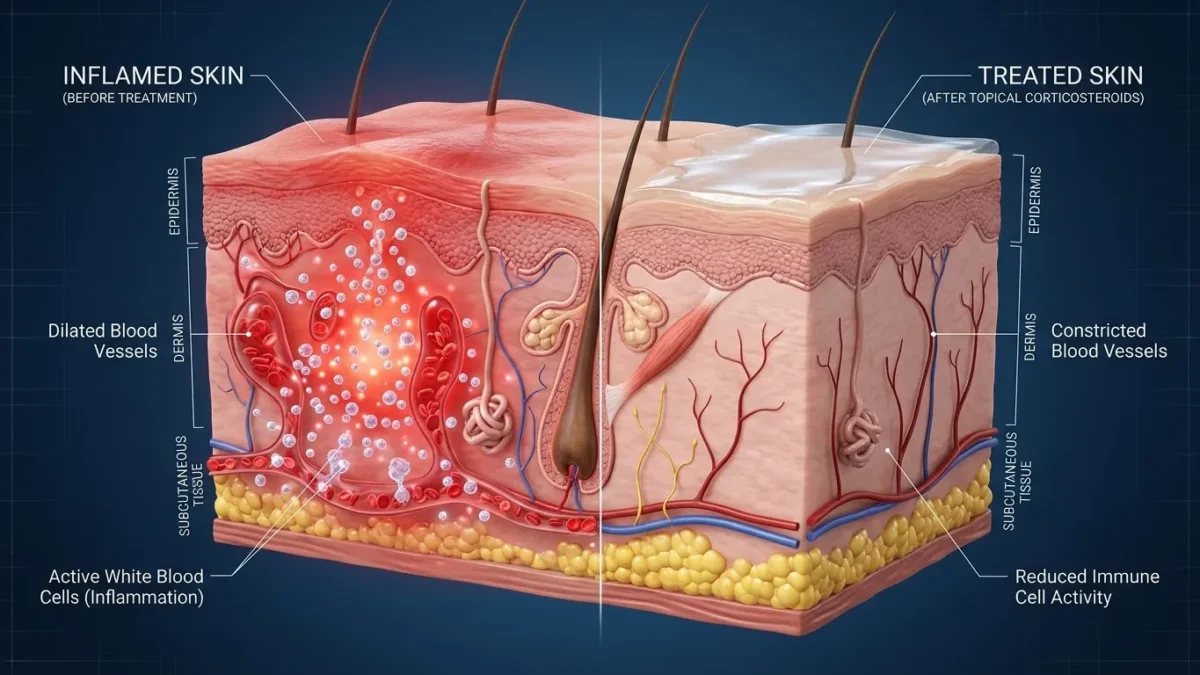
Topical hydrocortisone works by penetrating skin cells, binding to glucocorticoid receptors, and switching off the genetic production of inflammatory proteins while constricting local blood vessels.
When an insect bites or contact with an irritating plant leaves an itchy red mark, your immune system rushes defense cells to the area. These cells release chemical alarms that dilate blood vessels, leak fluid into tissue, and trigger sensory nerve endings. Applying over-the-counter hydrocortisone halts this localized response. Instead of merely numbing the surface, hydrocortisone changes how skin cells express their genes. At BoringMagazine.Co, we explain physiology so you can understand medicine in your cabinet.
Hydrocortisone is a synthetic form of cortisol, a steroid hormone produced naturally by your adrenal glands. When applied topically, it mimics natural hormonal brakes on inflammation. Understanding how this molecule enters cells and calms redness helps you use it safely. If you want to explore biological mechanisms, browse our Health guides for clear explanations.
The Cellular Biology of Topical Corticosteroids
The outermost skin layer, the stratum corneum, consists of dead cells packed with keratin and surrounded by lipids. Hydrocortisone has a lipophilic chemical structure, meaning it dissolves easily in fats. This property allows the medication to pass directly through the oily skin barrier and reach living cells in the epidermis and dermis.
Inside a living keratinocyte or immune cell, hydrocortisone encounters glucocorticoid receptors in the cell cytoplasm. Under baseline conditions, these receptors remain inactive. When hydrocortisone binds to a receptor, the complex sheds protective chaperone proteins and travels directly through the nuclear membrane into the cell nucleus.
Inside the nucleus, the steroid-receptor complex binds to DNA sequences called glucocorticoid response elements. It suppresses genes that produce pro-inflammatory messengers like interleukins and prostaglandins. Concurrently, it activates genes for anti-inflammatory proteins such as lipocortin-1. Lipocortin-1 blocks phospholipase A2, an enzyme required to create arachidonic acid, the building block for inflammatory prostaglandins and leukotrienes.
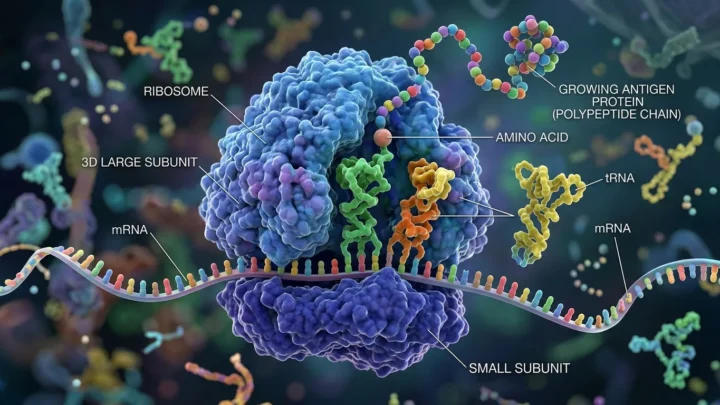
Because cellular function depends on how ribosomes build proteins from genetic messages, a topic detailed in our guide on how ribosomes translate mRNA, stopping that message halts inflammatory protein construction. The cell stops releasing inflammatory signals, calming surrounding tissue.
Four Steps from Application to Relief
Applying a thin film of hydrocortisone cream calms inflamed skin through a distinct four-stage sequence:
- Absorption through the epidermis: The lipid-soluble steroid diffuses through the stratum corneum into deeper skin layers within minutes.
- Receptor binding and translocation: Hydrocortisone attaches to cytoplasmic glucocorticoid receptors, which travel into cell nuclei.
- Gene regulation: The activated receptor complex suppresses inflammatory transcription factors like NF-kB, blocking cytokine production.
- Vasoconstriction and fluid reduction: Hydrocortisone prompts dermal capillaries to constrict. Narrowing these vessels reduces local blood volume, clearing redness and stopping fluid from leaking into surrounding tissue.
Vasoconstriction is a defining feature of topical corticosteroids. In clinical laboratories, researchers rate the potency of topical steroids by measuring their ability to blanch human skin. Mild hydrocortisone causes modest vessel narrowing, providing relief without extreme potency.
Over-the-Counter Hydrocortisone Versus Prescription Corticosteroids
Dermatologists group topical corticosteroids into seven potency classes. Class 1 contains super-potent agents like clobetasol propionate, while Class 7 includes the mildest formulations, represented by standard over-the-counter hydrocortisone.
Over-the-counter hydrocortisone comes in 0.5 percent and 1.0 percent concentrations, formulated as a base or acetate. Sitting in Class 7, it offers a strong safety profile when used briefly on small areas. It provides adequate cellular suppression to calm mild rashes without rapidly causing tissue thinning.
Prescription steroids like triamcinolone acetonide feature molecular adjustments that increase their receptor affinity. These changes suppress inflammation aggressively but raise the risk of skin atrophy and systemic absorption. While systemic allergic reactions involve distinct pathways, as detailed in our guide on the difference between an allergy and an intolerance, topical steroids target local chemical signals in skin tissue.
Real Situations Where Topical Hydrocortisone Helps
Topical hydrocortisone treats non-infectious, inflammatory skin complaints. Common situations where it provides relief include:
- Contact dermatitis: Touching poison ivy, nickel, or harsh detergents causes local immune cells to release irritants. Hydrocortisone dampens this response, easing redness and burning.
- Mild eczema flares: Atopic dermatitis involves an overactive local immune reaction. A brief course of hydrocortisone quiets inflammation, giving the skin barrier time to recover.
- Bug bites and stings: Insect saliva sparks histamine release and secondary swelling. Hydrocortisone halts the lingering inflammatory cascade that causes prolonged itching.
- Seborrheic dermatitis: Mild flaking and redness along the scalp line or ears often improve with short-term application of low-strength hydrocortisone.
In each scenario, hydrocortisone manages the reaction rather than removing the trigger. Washing away external irritants is still necessary for permanent relief.
Common Mistakes and Misconceptions About Hydrocortisone
Despite its availability, hydrocortisone is often misused. One significant mistake is applying it to infectious rashes. Because hydrocortisone dampens local immune activity, placing it on ringworm or athlete’s foot allows fungi to thrive. The rash might briefly look less inflamed, but the fungus spreads, creating a condition known as tinea incognito. Bacterial infections and viral outbreaks also worsen under topical steroids.
Another frequent mistake involves applying hydrocortisone to thin facial skin or body folds for weeks. Facial skin and eyelid tissue absorb medication rapidly. Extended use in these sensitive areas can lead to thinning skin, visible spider veins, and steroid-induced perioral dermatitis.
Conversely, some people avoid hydrocortisone entirely due to exaggerated fears. Using 1.0 percent hydrocortisone twice daily for three to seven days carries minimal risk for localized patches. However, if an irritated spot does not improve after seven days, stop application and consult a doctor for a formal diagnosis.
This article provides general scientific context and does not constitute medical advice. Check resources like MedlinePlus or talk with a licensed health provider if you have questions about skin symptoms.
FAQ
How long does it take for topical hydrocortisone to work?
Topical hydrocortisone begins easing itching and redness within thirty to sixty minutes, while full anti-inflammatory action develops over several days of consistent use. Its vasoconstrictive properties reduce local blood flow quickly, whereas suppressing cellular cytokine production requires several hours to take effect.
Can you use topical hydrocortisone on an open wound?
You should not apply topical hydrocortisone to open wounds or broken skin because steroids slow natural healing and increase infection risks. The medication suppresses cellular migration and collagen production needed for tissue closure. Wash open cuts with soap and water, and cover them with petroleum jelly instead.
Why does itching return after stopping hydrocortisone?
Itching often returns after stopping hydrocortisone because the drug calms symptoms without removing the underlying cause or contact allergen. If an environmental trigger persists or if an eczema barrier defect remains unmanaged, immune cells produce new inflammatory signals once the steroid clears the tissue. Eliminating the trigger is essential for lasting relief.