The mercerized cotton process is an industrial finishing treatment where cotton yarn or fabric is soaked in a cold sodium hydroxide bath under mechanical tension to permanently swell its fibers. Discovered by English chemist John Mercer in 1844 and refined by Horace Lowe in 1890, this chemical reaction transforms flat, twisted cotton into smooth, cylindrical strands. The result is a textile that reflects light evenly, absorbs dye with deep saturation, resists tearing, and holds its shape through hundreds of wash cycles. At BoringMagazine.Co, we break down textile science into clear guides for intentional shoppers. Understanding this structural alteration helps you evaluate true fabric quality before spending money on designer clothing.
How the Mercerization Process Alters Cotton Fibers
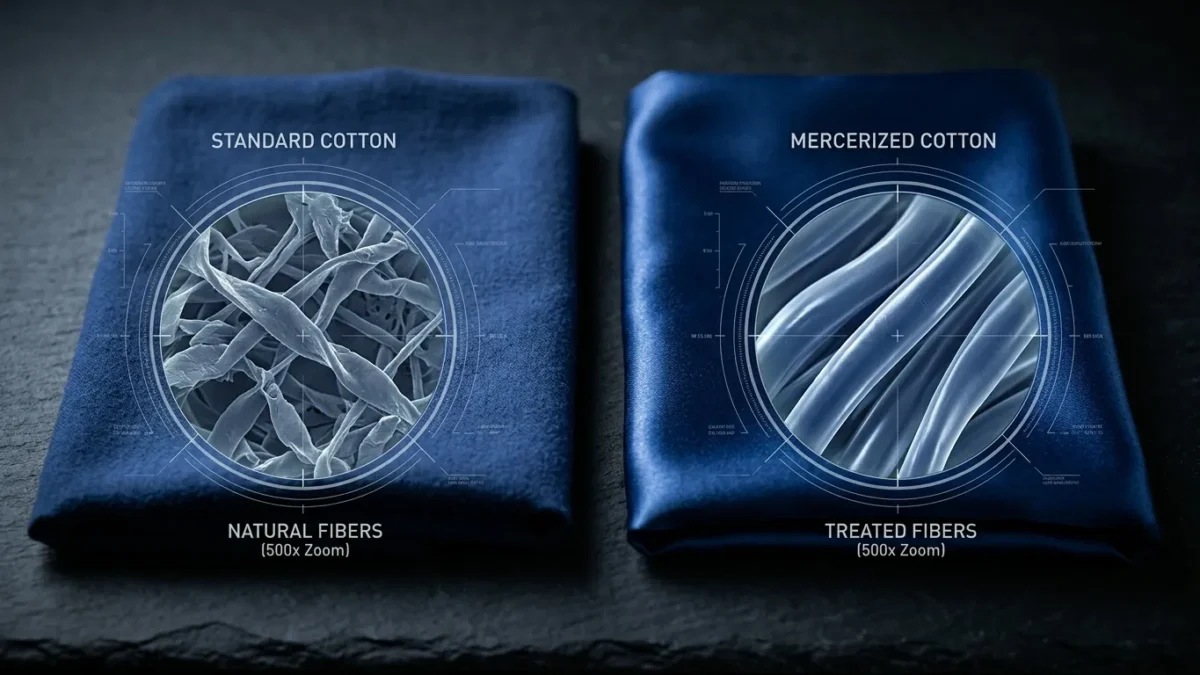
Raw cotton fibers look irregular and collapsed under magnification. As a cotton boll ripens on the plant, the living cell inside the central lumen dries out and collapses. This shrinkage pulls the outer cellulose wall inward, creating a shape like a flat kidney bean or a twisted ribbon. These natural twists, called convolutions, scatter light in random directions. They also trap tiny air pockets that prevent liquid dye from reaching every inner cellulose layer.
When cotton enters a cold bath of liquid caustic soda (sodium hydroxide), the molecular geometry changes rapidly. The alkaline liquid penetrates the crystalline lattice of the cellulose polymer chains. As sodium ions pull water molecules into the cell wall, the fiber swells outward. The collapsed lumen fills out, and the flat cross-section expands into a rounded, uniform cylinder.
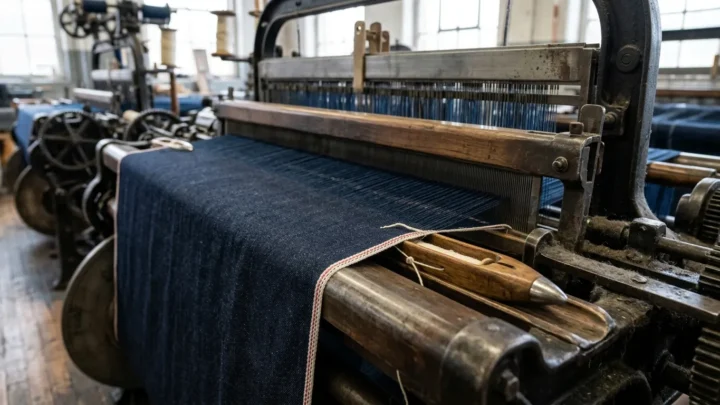
Mechanical tension makes this transformation permanent. If loose cotton sits in caustic soda without tension, the fibers shrink in length, gaining elasticity while remaining dull. In 1890, Horace Lowe discovered that holding yarn or cloth taut under motorized rollers during immersion forces cellulose chains into parallel alignment. Washing away the alkali under physical tension locks this smooth, cylindrical shape in place. For deeper insight into fiber foundations, read our Fashion guides for wardrobe maintenance and fabric selection.
Step-by-Step Stages of Modern Mercerization
Textile mills process cotton either as spun yarn wound on frames or as continuous rolls of fabric. Industrial mercerization follows three strictly regulated stages:
- Caustic Immersion: Machines feed tensioned cotton through a chilled liquid bath containing twenty to twenty-five percent sodium hydroxide. Chemical technicians keep the bath temperature between fifteen and twenty degrees Celsius, because colder solutions swell cellulose walls more effectively. The immersion lasts thirty to sixty seconds.
- Mechanical Tension and Washing: As fibers absorb the alkali, motorized steel rollers pull the yarn or fabric tight along its length and width. High-pressure spray jets soak the cotton in hot water to rinse out the chemical before releasing tension.
- Acid Neutralization: Because leftover alkali degrades cellulose over time, the cotton travels through a mild acidic bath of dilute sulfuric or acetic acid. This neutralizing step, called souring, restores the fabric to a balanced pH level. Multiple clean water rinses remove all remaining salt residues.
Why Mercerization Alters Sheen, Strength, and Dye Retention
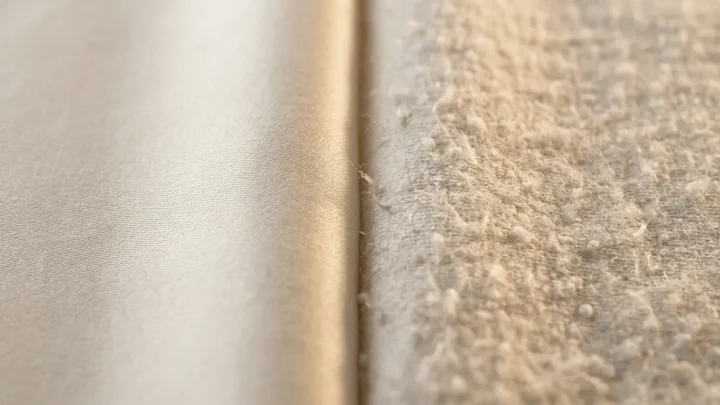
The most noticeable visual result of mercerization is a glossy, refined appearance. When light strikes untreated cotton, microscopic twists reflect light rays at broken, disorganized angles, producing a matte surface. Once mercerization converts those flat ribbons into smooth cylinders, the uniform exterior reflects incoming light along consistent planes. This organized reflection gives the cotton a soft, silk-like luster without requiring synthetic resin coatings or plastic additives.
Dye retention improves through fundamental molecular changes. Natural cellulose consists of tightly grouped polymer chains with limited surface area. Caustic soda breaks temporary hydrogen bonds between these chains, opening up thousands of fresh hydroxyl sites. Because modern textile dyes attach directly to these hydroxyl groups, mercerized fibers absorb up to twenty-five percent more dye than untreated cotton fibers. Deep shades like navy and black appear richer, and colors resist fading after routine laundering.
Tensile strength also rises by a significant margin. In raw cotton, individual convolutions create weak spots where pulling force causes premature tearing. When tension aligns cellulose chains parallel to the fiber axis, physical stress spreads evenly across each strand. Mercerized cotton gains ten to thirty percent more tensile strength, reducing broken threads and surface pilling. Just as cotton staple length matters more than thread count for fabric longevity, internal fiber alignment determines how well a woven shirt withstands friction.
Real-World Garments That Use Mercerized Cotton
You find mercerized cotton primarily in premium knitwear and business clothing where a neat, crisp look is needed:
- Fine Knit Polo Shirts: Upscale apparel makers regularly choose mercerized two-ply cotton for short-sleeve polos. The treatment provides a clean collar, a silky hand feel, and a subtle gloss that pairs comfortably beneath casual jackets.
- Luxury Dress Socks: Premium dress socks, traditionally sold as fil d’Ecosse or Scottish thread, rely on double-mercerized yarn. The process keeps thin socks durable, protects against heel friction, and maintains rich color depth throughout years of wear.
- Sewing and Embroidery Thread: Perle cotton and high-speed sewing threads receive thorough mercerization so the thread passes through dense woven materials without fraying, splitting, or snapping during rapid needle movements.
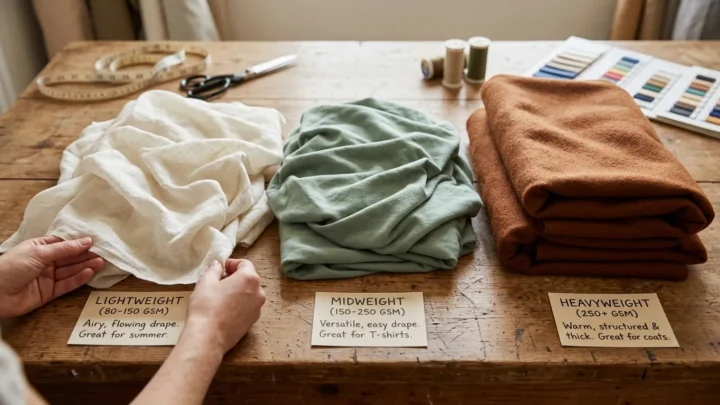
- Crisp Business Shirting: Tailored shirts crafted from mercerized yarns hold ironed lines longer and resist rumpling throughout long workdays. Exploring how grams per square meter affects drape helps you pair mercerized shirting weights with seasonal temperature shifts.
Common Misconceptions About Mercerized Fabrics
Several persistent myths surround mercerized textiles in retail stores and online forums:
- The Synthetic Coating Myth: Some shoppers believe the slick touch and sheen come from silicone sprays or chemical wax coatings. Mercerization is an internal restructuring of natural cellulose, leaving behind zero synthetic coatings or microplastics.
- The Poor Breathability Myth: Although individual fibers swell and fit together neatly within spun yarns, the resulting textile remains porous and comfortable. Mercerized cotton absorbs moisture faster than untreated fiber because the exposed hydroxyl groups attract water vapor readily.
- The Fragile Care Myth: Because mercerized fabrics resemble silk, consumers often assume they require dry cleaning. In practice, mercerized cotton is stronger than raw cotton and tolerates standard washing machine cycles, provided you avoid hot dryer settings and chlorine bleach.
FAQ
Does mercerized cotton shrink when washed?
Mercerized cotton resists shrinking much better than raw cotton because the industrial stretching process releases internal fiber stresses before garment assembly. Laundering in cool or warm water will preserve the original cut, though high tumble-dryer heat can still cause slight shrinkage in open knit patterns.
Is mercerized cotton 100 percent natural?
Yes, mercerized cotton is one hundred percent natural plant cellulose that contains no synthetic petrochemical ingredients. Chemical mills use sodium hydroxide solely as an immersion bath, and technicians wash out every trace of the alkali before spinning or sewing begins.
How can you tell if a garment uses mercerized cotton?
You can identify mercerized cotton by running your hand across the fabric surface to feel its smooth finish, subtle sheen, and absence of loose fuzz. Manufacturers also frequently state terms like mercerized, double mercerized, or fil d’Ecosse directly on the sewn garment care label.