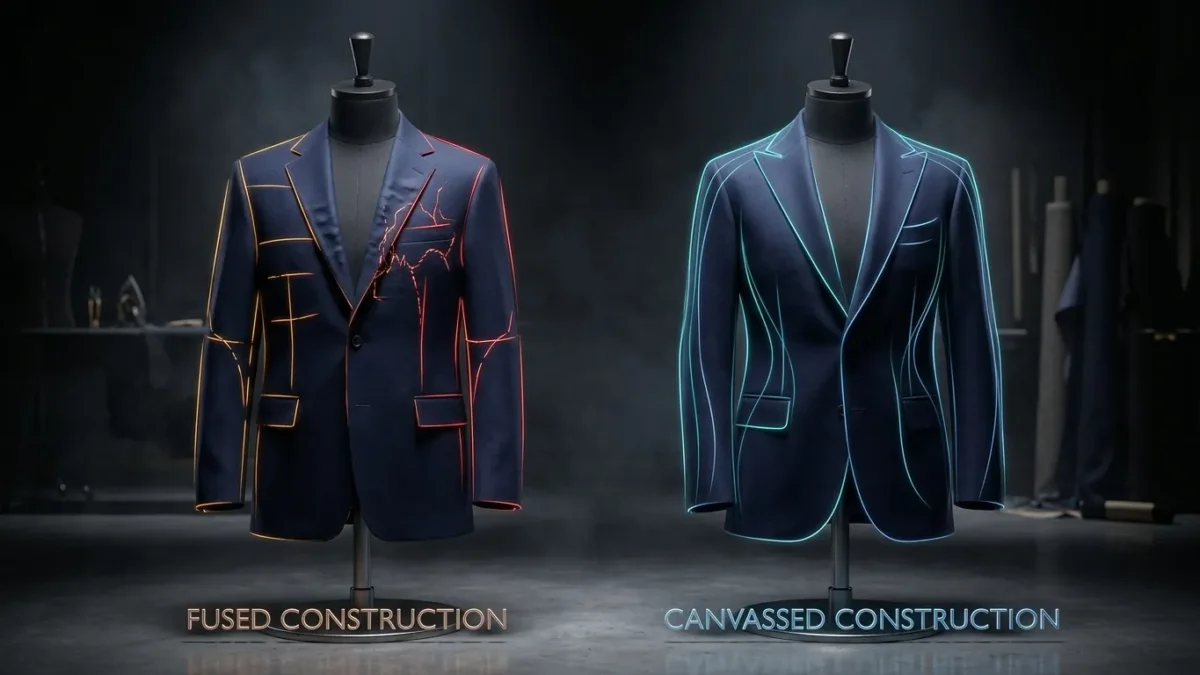
The primary difference between a full canvas and half canvas suit is that a full canvas jacket features a floating layer of horsehair interlining running from the shoulders down through the entire front panels, while a half canvas jacket uses floating canvas only through the chest and lapels with heat-activated adhesive fusing the lower panels. At BoringMagazine.Co, we examine clothing construction to help you buy pieces that last. Knowing how interlining works clarifies why jackets drape differently and age differently over time.
What Is Suit Interlining and How Does It Work?
A tailored jacket is not just an outer shell of wool stitched to a lining. Between those visible fabrics sits a middle layer called interlining. This internal piece gives a jacket its shape, chest structure, and lapel roll. Without interlining, wool fabric would drape limp and cling like a shirt.
Traditional tailoring uses canvas made from woven wool and animal hair, usually horsehair. Horsehair has natural spring. When shaped with steam, it retains memory and forms a curved chest piece that contours to the body. This canvas floats freely between the wool and the lining, held in place by loose stitches.
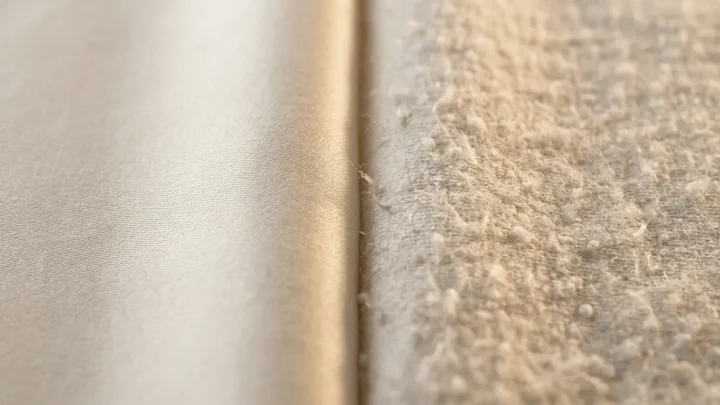
Mass production introduced fusible interlining to cut labor. Fusing uses a synthetic backing coated with glue dots. An industrial press melts the glue, bonding the synthetic material directly to the underside of the wool. This change speeds up assembly, but it changes how the cloth moves and cleans.
The Key Structural Differences Between Full Canvas and Half Canvas
The choice between construction methods comes down to durability, drape, and cost. Each approach uses interlining differently:
- Full Canvas Construction: The horsehair canvas extends from the shoulder seam down to the bottom hem. The entire front floats freely. The canvas absorbs movement, allowing the wool to drape cleanly without pulling. Over time, the animal fibers soften with body heat and mold to your shape.
- Half Canvas Construction: Floating canvas covers only the chest and lapels. Below the chest, the lower jacket uses fused interlining glued to the wool. This hybrid build provides a rolled lapel and contoured chest where visible, while keeping assembly costs lower along the stomach.
- Fused Construction: The jacket contains no horsehair canvas. A synthetic sheet is glued across the entire front. These jackets feel stiffer and lack a soft lapel roll.
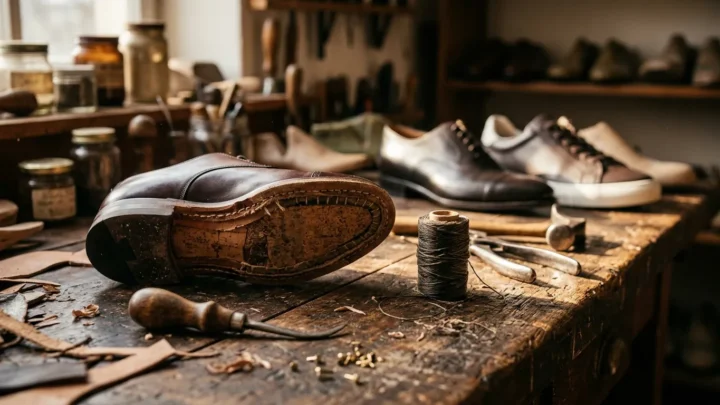
As explained in our Fashion guides, garment lifespan depends on whether internal layers float or stick. Much like the difference between Goodyear welting and cementing in shoes, stitched layers allow parts to move independently and withstand wear.
Why Fused Jackets Bubble and How Floating Canvas Prevents It
The most common issue with fused suits is bubbling. Bubbling looks like ripples or blisters across the chest and lapels. Once bubbling starts, you cannot iron it flat.
This happens because of delamination. Outer wool and synthetic interlining expand at different rates in humidity. Dry cleaning solvents also weaken the adhesive resin over time. When the glue dissolves, the synthetic backing pulls away from the wool. The loose wool expands into small pockets, forming visible bubbles.
Floating canvas avoids this problem completely in canvassed areas. Because horsehair canvas attaches with loose thread rather than glue, there is no adhesive to disintegrate. Dry cleaning solvents cannot break down an adhesive that is not there. The outer wool remains free to breathe and move naturally.
How Fabric Weight and Drape Interact with Canvas
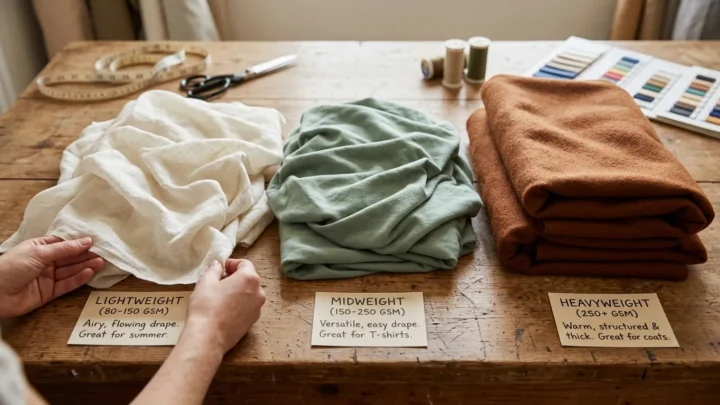
Interlining must match the weight of the outer shell cloth. The relationship between fabric weight and GSM dictates how stiff an internal canvas needs to be.
A light wool under 250 GSM lacks natural stiffness. If combined with a heavy canvas, the jacket looks rigid and unnatural. Tailors choose softer horsehair or linen for warm-weather coats. On lightweight cloths, heat-glued fusing can also cause glue to seep through the weave, creating shiny stiff spots. Floating canvas keeps adhesives away from delicate yarns.
How to Identify Jacket Construction with the Pinch Test
You can check the internal build of a suit jacket without opening the lining by using the pinch test:
- Pinch the lapel: Pinch the front and back of the lapel between your thumb and forefinger. Gently pull them apart. You should feel a distinct middle layer sliding between the wool surfaces. If the lapel feels stiff and stuck together, it is fused.
- Pinch the chest: Press the fabric below the collarbone and roll it between your fingers. Canvas feels springy and separate from the outer cloth.
- Pinch below the bottom button: This step reveals the difference between full canvas and half canvas. Pinch the fabric a few inches below the lowest button. If you feel a third layer sliding inside, the jacket is full canvas. If the wool feels like a single stiff layer with no floating core, it is half canvas.
Common Misconceptions About Canvased and Fused Suits
Several common misunderstandings lead people to choose the wrong suit construction:
- Canvas makes a jacket hot: Many believe horsehair canvas adds unwanted heat. In fact, natural wool and horsehair breathe better than glue. A fused jacket traps body heat against a layer of melted resin, making it warmer than a breathable canvas jacket of identical weight.
- Half canvas is low quality: Full canvas is traditional, but half canvas is a practical option. Because the lapel and chest receive the most shaping, half canvas offers most of the visual shape of full canvas at lower production costs. For regular work wear, it holds up reliably.
- Dry cleaning keeps suits in good condition: Frequent dry cleaning harms tailoring. Solvents strip lanolin from wool and weaken horsehair fibers. Brush your jacket after wear, air it out, and dry clean only when stained.
FAQ
Can a bubbled fused suit jacket be repaired?
A bubbled fused suit jacket cannot be repaired once the internal adhesive separates from the wool. Heat and steam will not reattach the degraded glue and often shrink the wool further, making the blisters more noticeable.
Does a full canvas suit last longer than a half canvas suit?
A full canvas suit generally lasts significantly longer than a half canvas suit because it avoids adhesive breakdown across the entire jacket body. With proper maintenance, a full canvas jacket can last decades without losing its original structure.
How can you tell if a suit jacket is half canvas or full canvas?
You can identify the difference by pinching the cloth a few inches below the bottom buttonhole to check for a floating middle layer. If you feel a distinct third layer between the wool and lining, the jacket is full canvas; if the panel feels bonded with no floating core, it is half canvas.