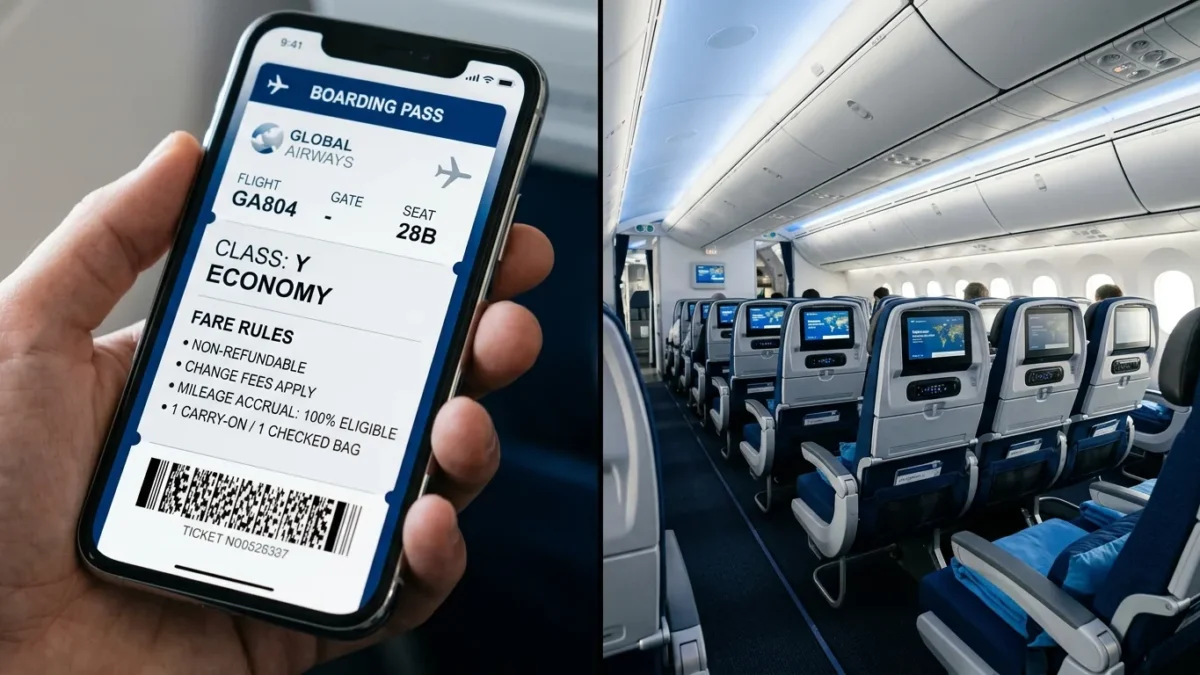
Airline fare class letters are single-character codes assigned to tickets that specify the booking inventory, price level, flexibility rules, and frequent flyer benefits within a physical cabin. When you search for a flight, booking engines show broad categories such as Economy, Premium Economy, Business, or First Class. Behind those names sits an alphabet of letters such as Y, B, M, H, Q, and K. At BoringMagazine.Co, we track how reservation systems operate so travelers can make informed choices. Understanding these codes helps you see why ticket prices change, whether a flight qualifies for changes, and how many points you collect.
Commercial flights divide their cabins into physical seating sections. Reservation systems further divide each cabin into invisible inventory buckets. That single letter on your e-ticket receipt controls your contract with the carrier.
Physical Cabin Classes vs. Inventory Fare Buckets
Physical cabin classes describe the actual hardware and space on the aircraft. If you buy an economy ticket, you sit in a standard coach seat with standard legroom. If you buy a business class ticket, you receive a wider seat, lie-flat features on long flights, and dedicated meal service. Aircraft typically feature between one and four physical cabins: basic coach, premium economy, business class, and first class.
Fare classes, also called booking classes or inventory buckets, divide that physical cabin into pricing tiers. A single economy cabin with one hundred seats might have twelve different fare class letters assigned to it. Five seats might belong to the cheapest discount bucket, twenty seats to a mid-tier bucket, and ten seats to a full-fare flexible bucket. Every passenger in that cabin shares the same aisle and sits in the same seat design. Yet each passenger holds a fare letter that dictates what they paid and how flexible their ticket is.
To explore transport systems and flight mechanics, check our Travel guides for detailed breakdowns.
How Airlines Manage Inventory Buckets
Airlines use revenue management software to predict passenger demand and adjust prices dynamically. Revenue managers analyze historical booking patterns, holidays, local events, and competitor fares on every route. The computer algorithm allocates a specific number of seats to each fare bucket long before departure.
A flight usually opens for sale about 330 days in advance. The airline makes a small batch of discounted fare classes available to early planners. As travelers purchase those discount seats, that low-cost bucket empties. Once the quota sells out, the booking engine shifts buyers to the next highest fare bucket.
The system also responds to sales speed. If a route sells quickly, the system closes lower fare classes immediately. If many seats remain unsold two weeks before takeoff, the airline may reopen a cheaper fare bucket to fill the aircraft. Physical cabins never change size during this process. The airline simply updates the digital availability counter across the letters.
Ticket Rules, Refundability, and Upgrade Priority
Your fare class letter establishes the legal conditions attached to your ticket. Deeply discounted economy letters often carry strict rules. They may be non-refundable, charge penalties for itinerary changes, or forbid same-day flight switches. On domestic routes, the lowest fare letters might exclude seat selection or overhead carry-on bags.
In contrast, full-fare letters give you maximum flexibility. If you hold a full-fare ticket, you can cancel for a cash refund, switch flights without fees, or stand by for earlier departures. Business travelers whose meetings change at the last minute rely on these higher inventory tiers.
Upgrade priority also depends on your fare class letter. When elite frequent flyers request complimentary upgrades, systems rank them first by elite tier and second by the fare class letter they purchased. A traveler on an expensive economy fare ranks ahead of an elite flyer who bought a bottom-tier ticket. For corporate accounting or tax deductions on business travel fares, rules vary by jurisdiction, and readers should consult an accountant or tax professional for financial advice.
Real Examples Across Global Airlines
While each carrier creates its own chart, the airline industry follows naming traditions established over decades.
The letter Y represents full-fare, unrestricted economy across almost every major airline. If you buy a last-minute economy ticket at the airport counter, your receipt will likely show Y. Letters such as B, M, and H represent slightly discounted flexible economy. Letters like Q, V, W, S, T, L, and K represent deeply discounted, non-refundable coach fares with minimal flexibility.
Premium cabins follow their own alphabetical ladder. The letter J signifies full-fare business class, while C and D represent standard business fares. Discounted business seats often carry the letters Z, P, or R. For international first class, F designates full fare, while A denotes discounted first class.
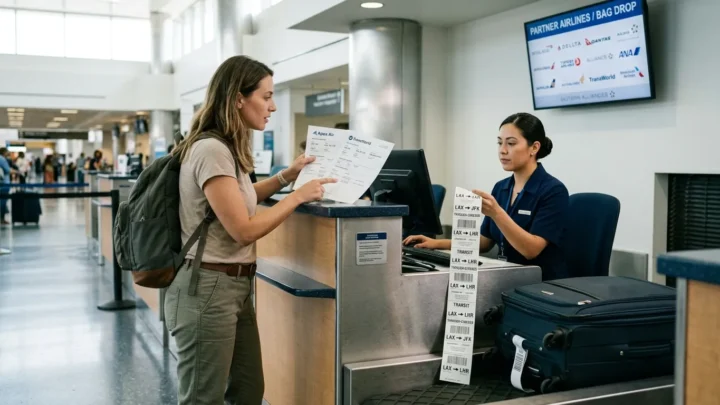
Award tickets booked with miles use reserved letters that cash buyers cannot access. For instance, X often designates economy award space, I indicates business class awards, and O represents first class awards. If you book an itinerary across multiple airlines, your fare class also influences baggage transfers. Learning how interline baggage agreements function helps ensure your luggage transfers smoothly between different carriers and fare rules.
Common Misconceptions About Fare Letters
Many travelers assume that every seat in coach earns the same number of frequent flyer miles. In reality, loyalty programs base earning rates on ticket price and fare class. A discounted economy ticket with a K or L code might earn only 25 percent of the actual miles flown, or zero miles in partner programs. A full-fare Y ticket can earn 100 percent or even 150 percent of flown miles.
Another frequent error is confusing a single fare class letter with a full fare basis code. The fare class is just the first letter. A full fare basis code consists of six to eight characters, such as Y26LNR. The following characters detail seasonal pricing, day-of-week rules, minimum stay requirements, and advance purchase windows.
Travelers also mistakenly believe that a higher fare class letter gives them extra legroom. A ticket issued under a high fare letter still sits in standard coach unless the traveler buys an extra-legroom seat product or holds elite status. Paying a higher price for an emergency booking secures availability, not a larger seat.
FAQ
Where can you find the fare class letter on your ticket?
You can find your fare class letter on your booking confirmation email, e-ticket receipt, or boarding pass under the ticket details or class line. Most airlines display it in parentheses next to the cabin name or as the first letter of the fare basis code.
Does a higher fare class letter guarantee a better seat?
A higher fare class letter does not change the physical seat you receive within the same cabin. It only governs the price you paid, your change and cancellation privileges, and your priority for standby or upgrade requests.
Why do basic economy tickets earn fewer frequent flyer miles?
Basic economy tickets earn fewer frequent flyer miles because airlines assign them to deeply discounted fare classes that have lower mileage accrual percentages. Carriers use reduced mileage earning to encourage budget-conscious fliers to pay extra for standard tickets.