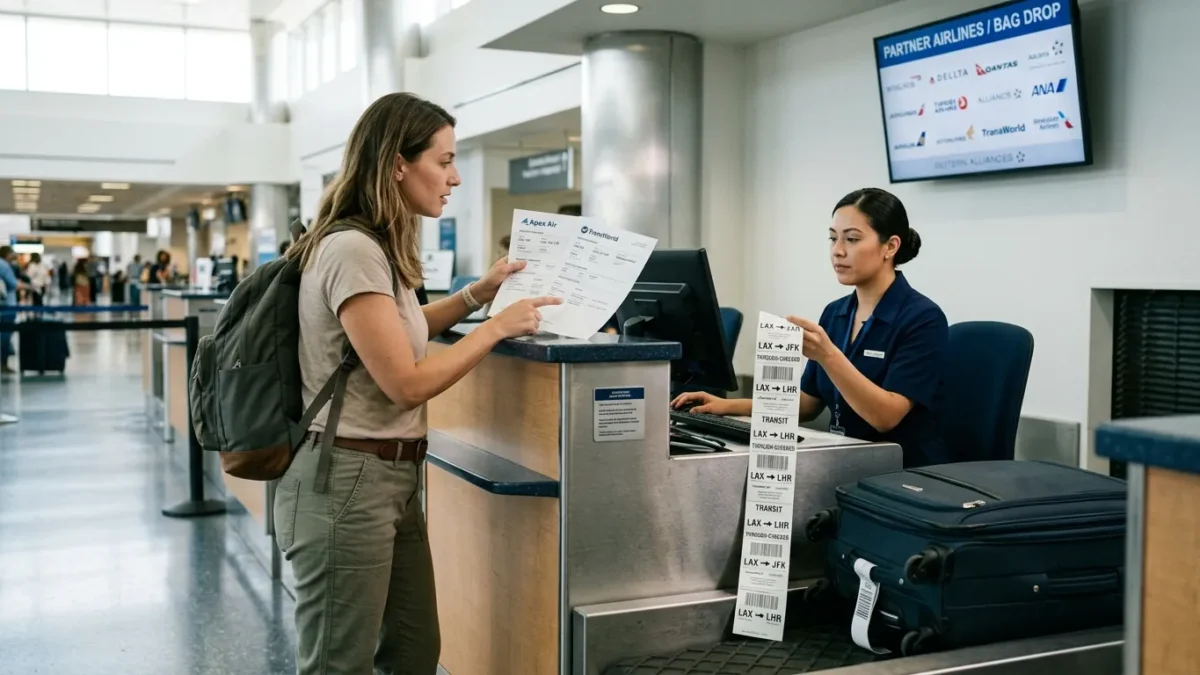
Interline baggage agreements work as commercial contracts between airlines that allow one carrier to check baggage through to a passenger’s final destination across connecting flights operated by a partner airline. Under these agreements, carriers coordinate ticketing, baggage handling, and liability under standardized framework rules created by the International Air Transport Association. When you book your entire journey under a single reservation, this process happens automatically at check-in. The first carrier prints a luggage tag showing every airport code along your journey, and baggage handlers transfer your bags between aircraft at each transfer hub. However, when you buy separate tickets on different booking references, interline transfers become complex, conditional, or completely impossible depending on airline rules.
At BoringMagazine.Co, we examine the fine print of airline operations so travelers can avoid unexpected surprises at the airport. You can explore our Travel guides for detailed breakdowns of ticketing rules, airport transit logistics, and flight connections.
The Technical Mechanics of Interline Luggage Transfer
An interline agreement is an operational treaty between two airlines. It differs from a codeshare agreement or an alliance membership because it does not require joint marketing or revenue sharing. Instead, it creates technical compatibility between two reservation systems and airport baggage systems.
When an airline agent checks your luggage, the computer system generates a Baggage Source Message. This message transmits flight numbers, connection airports, passenger names, and unique ten-digit barcode numbers to the baggage handling systems at connecting airports. Baggage systems use automated optical scanners to read these barcode tags as luggage moves along conveyor belts. When an interline contract exists, the handling systems at the transfer airport recognize the receiving airline. Ground handlers can then sort the bag onto the correct cart for the next flight.
Without an active interline agreement between the two operating carriers, the check-in system cannot generate the routing tag for the second flight. Even if an agent wanted to tag your luggage through to your final city, the computer system would reject the second carrier code.
Single Ticket Reservations Versus Split Tickets
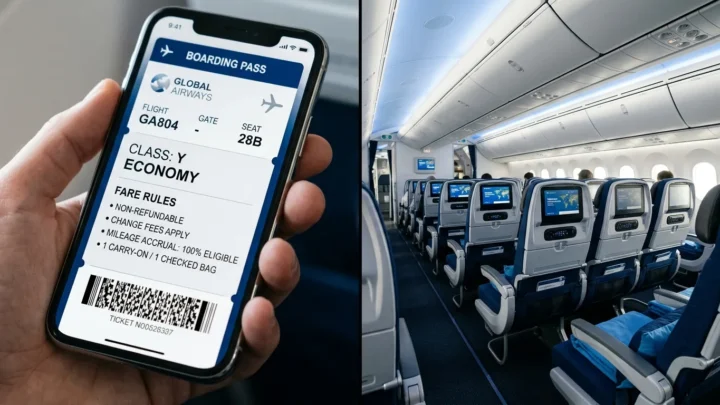
A single ticket contains one electronic ticket number and one Passenger Name Record, even if it covers multiple flights operated by different airlines. On a single ticket with partner carriers, airlines are legally obligated under interline rules to transfer your luggage to the final destination printed on your boarding pass. The airline that checks the bag collects any applicable baggage fees for the route according to international baggage regulations.
Split ticketing occurs when you purchase two or more separate reservations to assemble an itinerary. For instance, you might book a transcontinental flight on one airline and a regional connection on another airline to save money. Each reservation has its own confirmation code and distinct contract of carriage.
When you travel on split tickets, airlines have no joint legal obligation to protect your connection or transfer your bags. The first carrier only contracted to transport you and your belongings to the destination listed on its specific ticket. Some airlines permit through-checking on separate tickets under select conditions, but many refuse outright.
Understanding your booking structure is just as significant as understanding airline fare class codes, because your ticket type dictates your rights at the check-in desk.
Alliance Rules and Carrier Restrictions on Separate Tickets
Global airline alliances establish broad operational partnerships, but they do not enforce universal baggage policies for separate tickets. Each alliance maintains different baseline requirements for its members.
The Oneworld alliance previously required member airlines to check bags through to other member airlines on separate bookings. In 2016, Oneworld removed this requirement. Today, carriers such as British Airways and American Airlines maintain strict policies against through-checking bags to separate tickets on partner carriers. While American Airlines allows through-checking if both separate reservations are on American Airlines or American Eagle flights, it will not tag bags to a separate British Airways or Qatar Airways ticket.
The Star Alliance network leaves through-checking policies to the discretion of individual airlines. United Airlines generally refuses to check bags through to separate tickets on other Star Alliance carriers, such as Lufthansa or Air Canada. Singapore Airlines, by contrast, frequently permits through-checking to partner airlines on separate bookings if you present both ticket numbers at check-in.
SkyTeam carriers follow similar individual standards. Delta Air Lines does not through-check bags to separate tickets booked on other SkyTeam members, such as Air France or Korean Air. Because these carrier rules can change without public notice, relying on an alliance connection on split tickets creates significant transit risk.
The Airport Terminal Re-Check Process
When an airline cannot or will not check your luggage through to your final destination, you must execute a physical baggage re-check at your intermediate transfer airport. This multi-step process requires significant connection time between scheduled flights.
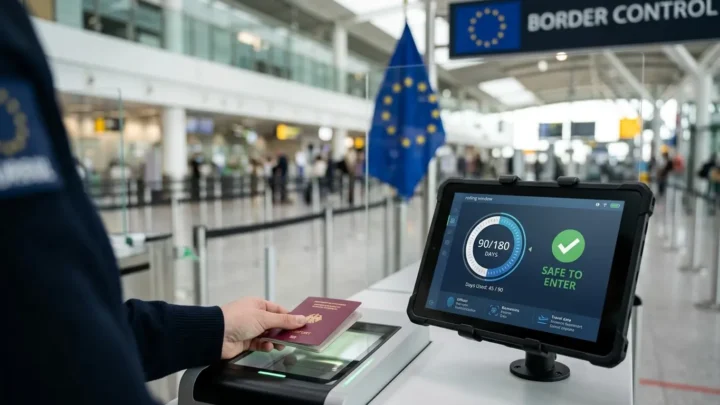
First, you must deplane and clear local passport control or border control if arriving on an international flight. Next, you proceed to the baggage claim area to wait for your luggage on the carousel. After retrieving all your bags, you exit the secure transit area and enter the public arrivals hall.
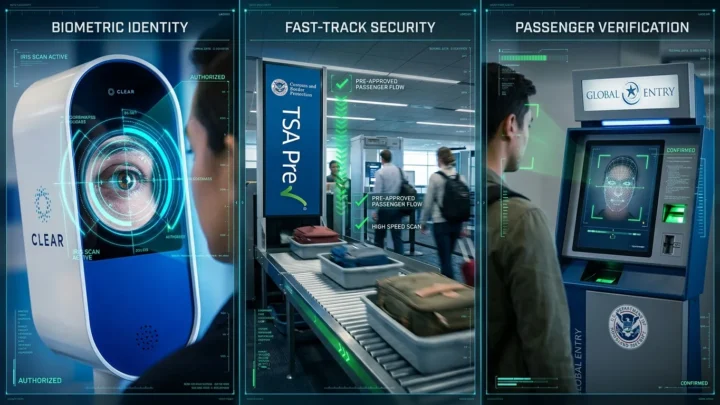
From the arrivals hall, you must travel to the departure area for your second airline, which often involves changing terminals via airport trains or shuttle buses. Once at the departure terminal, you join the regular check-in queue to drop your luggage, present your documentation, and pay any secondary baggage fees. Finally, you must pass through airport security checkpoints a second time to reach your departure gate. Having expedited screening tools like TSA PreCheck and Global Entry clearance can save valuable minutes during domestic transfers, but international transit hubs still require clearing full security lines.
Customs Protocols That Force Manual Luggage Collection
Even when an airline successfully tags your luggage through to your final destination on a single ticket or approved split ticket, government customs regulations can require manual retrieval.
In the United States, all passengers arriving on international flights must collect their checked baggage at the first port of entry. After passing through passport inspection, you collect your bags from the carousel and carry them through US Customs and Border Protection inspection. Once cleared, you drop the bags at a designated connecting baggage re-check belt located just outside the customs exit. You do not need a new luggage tag, but you must physically possess the bag during customs processing.
Similar rules apply when entering countries like Canada, Australia, and Japan. In contrast, many European airports within the Schengen Area allow baggage to transfer directly to connecting international flights without passenger collection, provided your connecting flight leaves the Schengen zone or handles customs at your final airport. Always verify customs regulations for your transit country to budget enough connection time.
Common Misconceptions About Interline Baggage Transfer
Travelers frequently make assumptions about luggage routing that lead to missed flights and stranded bags. Recognizing these errors helps you plan realistic itineraries.
- Assuming alliance membership guarantees transfer. Airline alliances share frequent flyer benefits, but alliance membership does not force an airline to honor baggage transfers across separate reservations.
- Confusing an interline agreement with willingness to interline. Two airlines may hold an active interline agreement for single-ticket bookings, yet their internal corporate policies forbid agents from combining separate tickets at the ticket counter.
- Relying on Minimum Connection Times for split bookings. The standard Minimum Connection Time published by airports applies strictly to single-ticket itineraries. When you must collect luggage, change terminals, and re-check bags before the check-in cutoff window, standard connection times are insufficient.
- Expecting compensation for missed connections. If your first flight arrives late on a split ticket and you miss your bag drop cutoff for the second flight, the second airline views you as a standard no-show. Neither carrier owes you a free rebooking or accommodation.
FAQ
Can check-in agents manually link two separate reservations at the airport?
Check-in agents cannot merge two distinct booking references into a single reservation, though they can sometimes view your secondary flight details in their computer system. If an airline policy forbids through-checking on split tickets, the agent cannot bypass system restrictions to combine your bookings.
What happens to my luggage if my first flight is delayed on separate tickets?
Your luggage will travel with you on the first flight to the intermediate airport, but you risk missing the baggage check-in deadline for your second flight. Because separate tickets carry no mutual protection, you must claim your luggage and re-book the missed segment at your own expense.
How much connection time should I budget for a split-ticket baggage re-check?
You should budget at least three to four hours for a domestic re-check and four to five hours for an international transfer. This window accounts for flight delays, baggage delivery wait times, terminal transfers, check-in cutoff deadlines, and security lines.