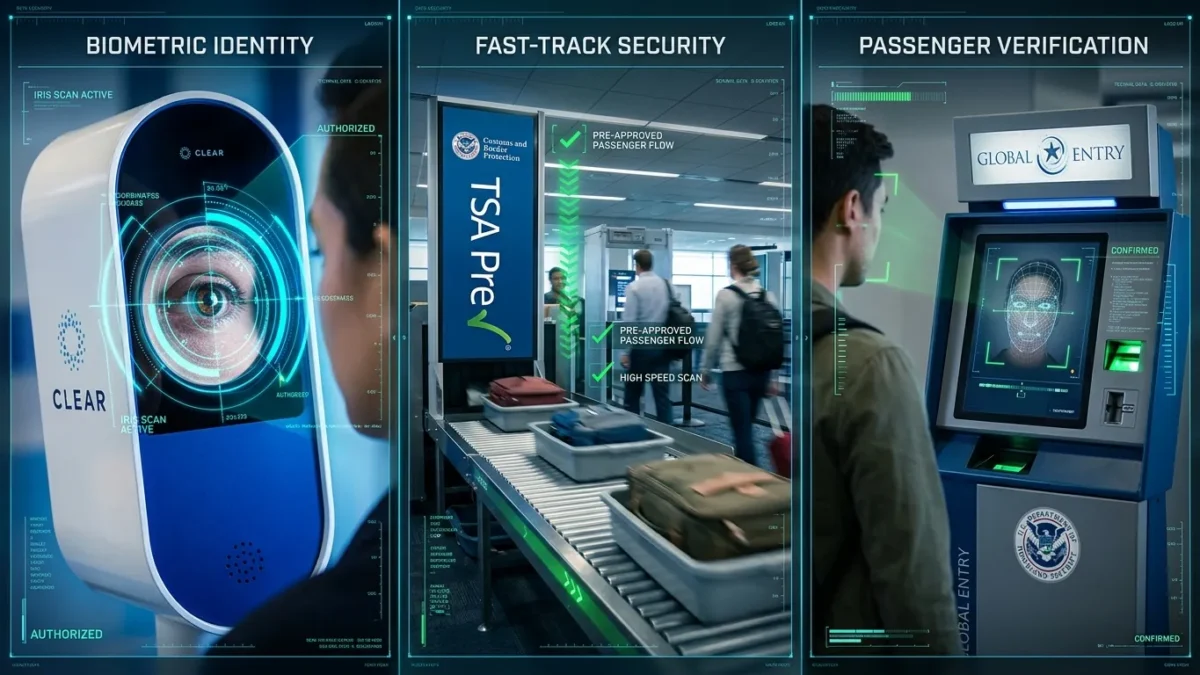
The difference between Global Entry, TSA PreCheck, and CLEAR lies in whether each program verifies your identity, expedites physical security screening, or speeds up border control. CLEAR uses private biometric kiosks to accelerate the document check line, TSA PreCheck shortens physical luggage and body inspections, and Global Entry expedites international customs processing while including TSA PreCheck privileges. At BoringMagazine.Co, we analyze transit systems to help travelers choose the right program for their airport journeys.
How Airport Security Screening Layers Work
Airport security in the United States separates identity verification from physical screening. Understanding these separate stages clarifies how different trusted traveler and commercial services function.
When you enter an airport checkpoint, you first encounter travel document checking. A Transportation Security Officer examines your photo identification and scans your boarding pass to verify your identity. After passing this podium, you proceed to physical screening. There, officers inspect carry-on bags with scanners while you walk through a metal detector or full-body imaging unit.
International arrivals introduce a third stage. When landing in the United States from abroad, travelers must pass passport control and customs processing run by the U.S. Customs and Border Protection agency. Each program targets specific bottlenecks within these three separate operational phases.
Key Differences Between the Three Programs
Each program addresses a distinct phase of transit through different operating models, background checks, and governing bodies.
TSA PreCheck is operated by the federal Transportation Security Administration to speed up physical screening. Applicants submit fingerprints, pass a background check, and receive a Known Traveler Number. When added to airline bookings, this number grants access to dedicated security lanes. In these lanes, travelers keep their shoes, belts, and light jackets on. Laptops and small liquid bottles remain inside carry-on luggage, and passengers pass through walk-through metal detectors rather than full-body scanners.
Global Entry is a federal trusted traveler program managed by U.S. Customs and Border Protection. It focuses on international entry. Applicants complete a federal background check and an in-person interview. Approved members use automated kiosks or mobile apps to complete customs declarations rapidly. Every Global Entry membership automatically includes full TSA PreCheck benefits, making it an all-in-one option for international travelers.
CLEAR is a private commercial subscription that replaces the document verification podium with biometric kiosks. Members scan their eyes or fingerprints at an automated station instead of presenting a driver’s license to an officer. A company employee then escorts the passenger directly to the front of the physical screening line. CLEAR does not alter physical baggage screening rules and offers no customs benefits.
Step-by-Step Checkpoint Experience for Each Program
A passenger’s path through the terminal changes depending on which services they hold.
Under standard security, travelers wait in the regular identification line, show physical credentials, and proceed to standard physical screening. There, they must remove shoes, jackets, laptops, and liquids before entering a body scanner.
With TSA PreCheck alone, travelers join a dedicated identification line before entering expedited physical screening. They keep shoes and light outerwear on, leave electronics packed inside their bags, and walk through a metal detector.
With CLEAR alone, passengers bypass the standard identification line by completing biometric verification at a kiosk. A CLEAR representative escorts them past the identification queue straight to the physical screening area. However, because these travelers lack PreCheck, they must still remove shoes and unpack electronics in standard screening lanes.
With both CLEAR and TSA PreCheck, travelers combine the benefits. They skip the identification queue via biometric kiosks and then enter the expedited physical screening lane without removing shoes or unpacking bags.
Real Airport Scenarios: How Programs Function in Practice
The practical value of these services varies based on flight habits and home terminals. In our Travel guides, we explore how airport logistical details shape departure routines.
Consider a domestic business traveler flying weekly out of busy hubs like Atlanta or Chicago. At peak morning hours, even TSA PreCheck document lines can back up significantly. Using CLEAR alongside TSA PreCheck allows this passenger to skip that initial line, saving valuable minutes before boarding.
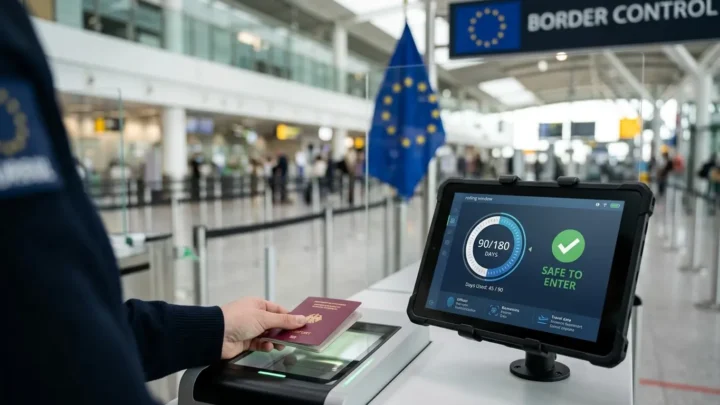
Now consider a leisure traveler taking one international vacation and two domestic trips per year. Global Entry provides the strongest return. The traveler receives standard PreCheck benefits for domestic flights and avoids long passport queues when returning to the United States. If your international itinerary involves complex rules such as the Schengen 90/180-day rolling window rule, rapid customs clearance helps prevent missed domestic connecting flights after overseas arrivals.
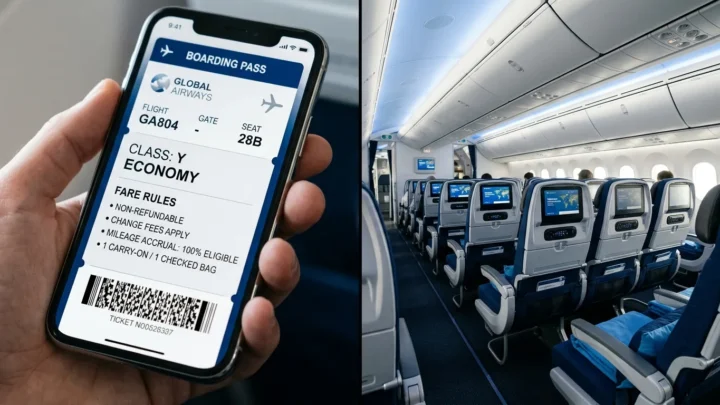
Travelers must also verify their booking details. The PreCheck indicator appears only when the name and date of birth on your reservation match your Known Traveler Number record exactly and the airline takes part in the program, so a typo or a missing KTN is the usual reason it fails to print.
Common Mistakes and Misconceptions Travelers Make
One widespread mistake is assuming CLEAR includes TSA PreCheck screening. CLEAR only verifies your identity at the entry kiosk. If your boarding pass lacks the PreCheck indicator, you must complete standard physical screening with shoes off and electronics unpacked.
Another common mistake is purchasing TSA PreCheck shortly before applying for Global Entry. Because Global Entry already includes TSA PreCheck, buying both separately leads to redundant fees. Travelers should evaluate their five-year travel plans before submitting an application.
Many premium travel credit cards provide statement credits that cover application fees for Global Entry, TSA PreCheck, or CLEAR. These benefits reflect general promotional terms rather than personal financial advice. Travelers should consult their financial institution or review card benefit guides to confirm active reimbursement terms before applying.
Finally, family access rules cause frequent confusion. TSA PreCheck lets children aged twelve and under go through the expedited lane with an enrolled parent or guardian. Teens aged thirteen to seventeen can join too, but only when they are on the same reservation and the PreCheck indicator appears on their own boarding pass. In contrast, CLEAR allows minors under eighteen to join an enrolled adult for free, but adult family members must purchase their own memberships.
FAQ
Can you use CLEAR without TSA PreCheck?
Yes, you can use CLEAR without TSA PreCheck, but you will only bypass the identity verification line before entering standard physical screening. Once at the baggage belts, you must remove your shoes, belt, light jacket, and laptop as required in general screening lanes.
Does Global Entry automatically include TSA PreCheck benefits?
Yes, Global Entry membership automatically includes full TSA PreCheck benefits for domestic and departing international flights. When booking flights, add your Customs and Border Protection PASSID number into the Known Traveler Number box on your airline reservation to receive expedited screening.
Can family members go through CLEAR or TSA PreCheck for free?
Children aged twelve and under can accompany an enrolled parent through TSA PreCheck lanes without their own membership, and teens aged thirteen to seventeen can do the same when they share the parent’s reservation and the indicator is on their boarding pass. With CLEAR, children under eighteen can accompany an adult member through biometric kiosks at no additional cost, but adult partners must maintain separate paid accounts.