In fabric clothing, GSM stands for grams per square meter, a standard metric measurement that indicates the physical weight and density of one square meter of textile.
When shopping for apparel online, you cannot touch the material, hold it up to the light, or feel how it falls against your skin. Product descriptions frequently list numbers like 180 GSM, 240 GSM, or 12 oz without explaining what those figures mean for daily wear. Understanding this single specification allows you to assess fabric thickness, structural stiffness, breathability, and thermal warmth before you place an order.
At BoringMagazine.Co, we examine garment construction to help shoppers build durable wardrobes. Along with our Fashion guides on tailoring, weaving, and textile care, this guide provides practical weight benchmarks across popular clothing categories.
How Grams per Square Meter Measures Fabric Weight
Manufacturers determine GSM by cutting a standardized swatch of fabric and weighing it on a calibrated scale. In commercial textile laboratories, technicians use a circular die cutter designed to stamp out an exact area of one hundred square centimeters, which equals one-hundredth of a square meter. The mass of that circular cutout in grams is multiplied by one hundred to produce the final grams per square meter value.
Because the test measures mass per unit of surface area, GSM is distinct from overall garment weight. A small t-shirt and an extra-large t-shirt cut from the exact same bolt of cloth share identical GSM ratings, even though the larger shirt requires more total fabric. GSM tells you the density of the raw material itself rather than the finished product weight.
Two primary variables determine the final GSM of any fabric: yarn thickness and yarn density. Thick yarns spun from heavy fibers naturally yield a heavier cloth. At the same time, weaving or knitting thin yarns close together in a dense construction can also create a high-GSM textile. As explained in our guide to cotton staple length and thread count, yarn structure and fiber fineness determine how closely fibers pack together during production.
How GSM Dictates Garment Drape, Structure, and Warmth
Fabric weight directly alters two primary garment performance traits: drape and thermal retention. Drape refers to the way a piece of fabric hangs, bends, and flows around the human body under gravity. High-GSM fabrics have greater mass and surface tension, which resists bending. Low-GSM fabrics fold easily under their own weight, creating fluid folds and soft ripples.
If you want a garment that holds a crisp silhouette, such as an overshirt, a chore jacket, or structured trousers, you need a higher GSM. The material stands away from the body and hides natural contours. Conversely, if you want soft summer shirts, flowing skirts, or base layers that move freely with your limbs, low-GSM textiles provide the necessary fluidity.
Warmth correlates closely with GSM, but not exclusively. A heavy textile typically contains more fiber mass and creates a thicker barrier against wind and cold air. Heavier fabrics slow down heat transfer away from your skin. However, the type of fiber remains significant. A 200 GSM merino wool knit traps still air inside its crimped fibers, keeping you warmer than a 200 GSM flat cotton jersey. GSM provides a reliable baseline for comparing fabrics made within the same fiber family.
Fabric GSM Benchmarks by Clothing Category
To evaluate clothing specifications while shopping online, use these standard industry brackets to understand how different weights perform across common clothing items:
- Lightweight fabrics (under 150 GSM): These materials feel airy, thin, and delicate. Common examples include linen shirting (120 to 140 GSM), lightweight summer t-shirts (130 to 150 GSM), silk blouses, and tropical wool suiting. They allow air to circulate freely and dry quickly, making them ideal for high temperatures. Some light fabrics require layering if the weave is open enough to be sheer.
- Medium-weight fabrics (150 to 250 GSM): This range forms the foundation of most wardrobes. Standard everyday cotton t-shirts usually sit between 160 and 190 GSM, offering opacity and durability without feeling hot. Classic Oxford cotton button-down shirts, casual chinos, light knit sweaters, and polo shirts fall into the 180 to 240 GSM bracket. They provide balanced drape and suit three seasons of moderate weather.
- Medium-heavy fabrics (250 to 350 GSM): Textiles in this weight bracket deliver substantial structure and insulation. Heavyweight crewneck t-shirts (around 250 to 280 GSM), french terry sweatshirts, lightweight hoodies, and casual trousers occupy this tier. They hold their shape over long periods of wear and withstand regular machine laundering.
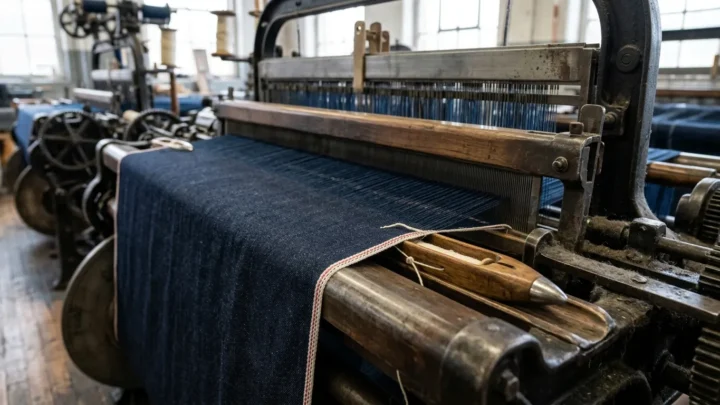
- Heavyweight fabrics (350 GSM and above): Reserved for winter outerwear, rugged workwear, and dense fleece. Premium winter hoodies often weigh between 400 and 500 GSM, delivering wind resistance and thermal insulation. Traditional raw selvedge denim woven on shuttle looms frequently measures between 400 and 550 GSM (equivalent to 12 to 16 ounces per square yard), offering stiff structural lines that soften slowly over months of regular use.
Converting Between Metric GSM and Imperial Ounces
While most international apparel brands specify fabric weight in GSM, American manufacturers, especially in workwear and denim production, often use ounces per square yard (oz/yd² or simple “oz”). Understanding how to convert between these two standards prevents ordering mistakes.
To convert ounces per square yard into GSM, multiply the ounce figure by 33.906. To convert GSM into ounces, divide the GSM figure by 33.906. Here is how standard measurements match up:
- 4.5 oz/yd²: Approximately 153 GSM, standard for lightweight graphic tees.
- 6.0 oz/yd²: Approximately 203 GSM, typical for sturdy, classic-cut work t-shirts.
- 8.0 oz/yd²: Approximately 271 GSM, standard for light chinos and casual twill shirts.
- 12.0 oz/yd²: Approximately 407 GSM, standard mid-weight denim and duck canvas jackets.
- 14.5 oz/yd²: Approximately 492 GSM, heavy denim jeans and heavy winter canvas coats.
Remember that British suiting and some wool mills quote weight in ounces per linear yard rather than square yards. Linear yard measurements depend on the width of the bolt, which is commonly 58 to 60 inches. If a tailor quotes wool weight in ounces without clarifying, ask whether they mean linear yards or square yards to avoid confusion.
Common Misconceptions About Fabric Weight and Quality
Shoppers often assume that higher GSM automatically means superior craftsmanship. In reality, weight is an indicator of fabric purpose rather than raw fiber quality. Several common assumptions lead buyers astray:
- Assuming heavy fabric equals durable fabric: A garment made with thick, low-grade short-staple cotton fibers can reach 250 GSM easily, yet the surface will pill, lose shape, and fray after a few wash cycles. In contrast, a 150 GSM jersey knitted from combed extra-long staple cotton will outlast the heavier alternative because individual fibers resist breakage.
- Confusing thickness with thermal insulation: A tightly woven cotton canvas at 300 GSM blocks wind well, but it traps very little dead air next to the body. A 200 GSM brushed fleece or wool knit with loft will keep you far warmer in cold conditions despite weighing one-third less. The three-dimensional structure of the yarn often matters more than simple weight.
- Equating low GSM with cheap materials: Some of the most expensive fabrics in modern tailoring, such as Super 150s wool, high-thread-count cotton voile, and mulberry silk, weigh less than 130 GSM. Producing fine, uniform yarns that hold together at low weights requires high-grade raw materials and sophisticated machinery.
- Overlooking shrinkage differences: Heavy knit fabrics with loose yarn tension often shrink more in percentage terms than dense, tightly woven lighter textiles. A 400 GSM untreated cotton fleece hoodie can lose substantial length in a hot dryer if the fabric was not pre-shrunk before cutting.
FAQ
What is a good GSM for an everyday t-shirt?
A good GSM for an everyday t-shirt ranges between 160 and 200 grams per square meter. This intermediate weight provides sufficient fabric density to prevent transparency while remaining breathable and soft during warm weather. T-shirts below 150 GSM feel breezy but may show undershirts, whereas options above 220 GSM produce a boxy, structured silhouette suitable for cooler days.
Does higher GSM mean clothing is better quality?
Higher GSM does not indicate better quality because it only measures fabric weight, not fiber strength, yarn construction, or finishing. Low-quality garments can achieve high weight by using coarse, uncombed fibers that feel rough and degrade quickly in the wash. Quality depends on fiber length, yarn spinning methods, dye processes, and stitching precision rather than mass alone.
How do you calculate GSM from ounces per square yard?
You calculate GSM from ounces per square yard by multiplying the ounce measurement by 33.906. If an American workwear brand lists a canvas jacket at 10 ounces per square yard, multiplying 10 by 33.906 gives approximately 339 GSM. Conversely, dividing any GSM figure by 33.906 reveals its equivalent weight in ounces per square yard.