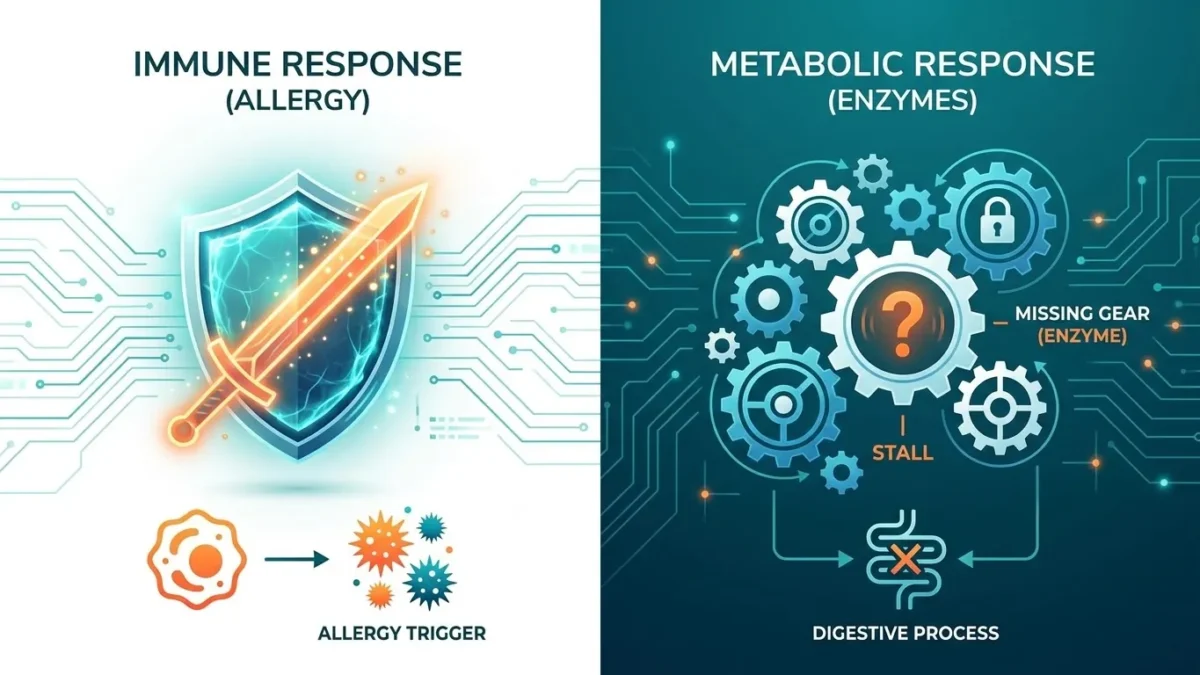
The fundamental difference between food allergy and intolerance biology is that an allergy is an immune system reaction mediated by antibodies, whereas an intolerance is a chemical breakdown failure caused by a lack of digestive enzymes. At BoringMagazine.Co, we explain how human tissues and organs interact at a molecular level without offering medical advice. Understanding these distinct pathways clarifies why some adverse reactions trigger sudden systemic symptoms while others remain confined to the digestive tract. Readers who explore our Health guides will find that confusing these conditions obscures how the human body processes food.
How the Immune System Drives an IgE-Mediated Food Allergy
An IgE-mediated food allergy begins within the adaptive immune system during sensitization. When a person encounters a dietary protein, immune cells mistakenly classify that harmless molecule as a biological pathogen. Specialized B lymphocytes transform into plasma cells that produce high volumes of Immunoglobulin E (IgE) antibodies designed specifically for that protein structure.
These IgE antibodies attach to high-affinity receptors on mast cells and basophils. Mast cells line mucosal barriers throughout the respiratory system, skin, and gastrointestinal tract. Once primed with antibodies, these cells stay ready for subsequent exposures.
When the person eats the trigger food again, the dietary proteins bind to adjacent IgE molecules on mast cells. This cross-linking sparks rapid degranulation. Within minutes, the cells release preformed chemical mediators, such as histamine and leukotrienes, into local tissues and circulation.
Histamine binds to vascular receptors, causing blood vessels to dilate and leak fluid into tissues. This produces hives, mucosal swelling, and redness. This rapid chemical cascade also illustrates how topical corticosteroids suppress local inflammatory skin responses by blocking secondary inflammatory mediators during allergic flares. In severe reactions, widespread vasodilation and airway constriction lead to anaphylaxis.
How Digestive Physiology Produces an Enzyme Intolerance
Food intolerances occur outside the immune system and stem from functional limitations in the digestive tract. The human gut relies on digestive enzymes to break complex nutrients into simple molecules that intestinal cells can absorb. When the body produces inadequate amounts of an enzyme, digestion fails.
Brush border enzymes line the microvilli of the small intestine. For example, lactase splits the milk sugar lactose into glucose and galactose. When lactase levels are insufficient, intact lactose passes unabsorbed into the colon.
Unabsorbed sugars alter intestinal fluid balance. Through osmosis, undigested molecules draw water from mucosal tissues into the gut lumen, causing loose stools. Meanwhile, resident colonic bacteria ferment the unabsorbed carbohydrates for energy.
This bacterial fermentation produces large amounts of hydrogen, carbon dioxide, and methane gas, along with organic acids. The gas stretches intestinal walls, stimulating sensory nerves that register pain, cramping, and bloating. The entire reaction represents a localized biochemical shortage rather than an immune defense.
Key Biological Differences Between Allergies and Intolerances
Distinguishing between these conditions requires examining the biological structures and chemical pathways involved in each response:
- Target system: Allergies involve the adaptive immune system and circulating antibodies. Intolerances remain restricted to the gastrointestinal lumen and digestive secretions.
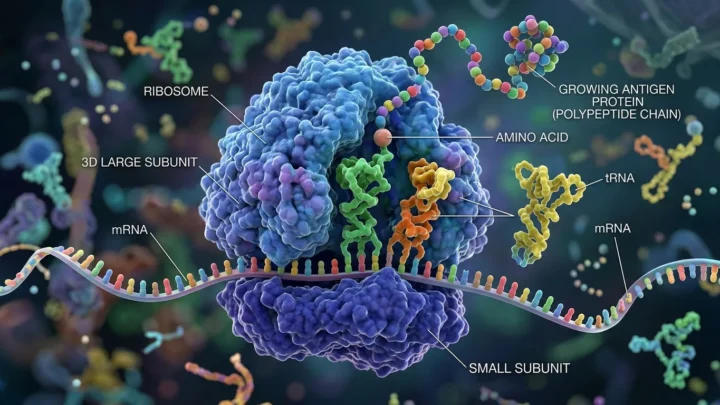
- Molecular triggers: Allergies target intact protein molecules that immune receptors bind to, a concept related to how cellular ribosomes translate mRNA to synthesize antigen proteins with distinct spatial shapes. Intolerances typically involve carbohydrates, sugars, or chemical compounds.
- Dose dependency: An intolerance is quantitative. A person with partial enzyme output can often digest a modest portion without symptoms. An IgE allergy is qualitative, meaning microscopic traces can provoke a reaction.
- Speed of onset: IgE reactions happen within minutes because mast cells release stored histamine immediately. Intolerance symptoms take hours because food must reach the colon for fermentation.
- Health severity: Allergies can cause life-threatening airway constriction and shock. Intolerances cause severe discomfort, but they do not cause anaphylaxis.
Comparing Real Cases: Peanut Allergy Versus Lactose Intolerance
A peanut allergy represents a classic IgE-mediated immune reaction, whereas lactose intolerance demonstrates an enzymatic shortage.
In a peanut allergy, the immune system views storage proteins like Ara h 1 and Ara h 2 as threats. Ingesting tiny amounts allows these proteins to bind to IgE on sensitized mast cells. Immediate degranulation follows. The individual may develop swollen lips, hives, abdominal pain, and airway constriction as bronchial smooth muscle spasms. This systemic response requires prompt epinephrine treatment to open airways and sustain blood pressure.
In lactose intolerance, the issue is a lack of lactase along the small intestinal brush border. When someone drinks milk, lactose travels to the colon unbroken. Colonic bacteria ferment the sugar into hydrogen gas and short-chain acids while osmosis pulls water into the colon. The result is gas, abdominal distension, and watery diarrhea hours later. The immune system never engages, and systemic circulation remains unaffected.
Common Misconceptions About Adverse Food Reactions
A widespread misconception is that an intolerance can progress to anaphylaxis if someone consumes a large serving. Because intolerances lack immune involvement, they cannot trigger an antibody cascade regardless of portion size.
Another misconception is that all post-meal stomach pain indicates an intolerance. IgE allergies also cause vomiting and sharp abdominal cramps because histamine stimulates smooth muscle in the stomach lining. Gastrointestinal symptoms alone cannot differentiate an allergy from an intolerance.
Many people also rely on commercial Immunoglobulin G (IgG) food sensitivity panels. In immunology, IgG antibodies reflect natural exposure and immune tolerance rather than disease. Using IgG tests often leads people to eliminate nutritious foods without scientific validity.
When to Consult a Medical Professional
This overview provides educational information and does not constitute medical advice. Anyone experiencing adverse reactions to food should consult a qualified physician or board-certified allergist. The National Institutes of Health publishes diagnostic criteria that clinicians use to distinguish immune allergies from enzyme shortages.
Certain signs demand emergency care. If you experience breathing difficulties, throat tightness, dizziness, or facial swelling after eating, seek emergency medical services immediately. For recurring bloating, abdominal cramps, or altered digestion, medical testing such as hydrogen breath tests or supervised challenges can identify the underlying cause.
FAQ
Can an enzyme intolerance turn into an IgE food allergy over time?
No, an enzyme deficiency cannot transform into an IgE-mediated food allergy because the two conditions involve completely different biological systems. An intolerance involves missing digestive enzymes in the gut, while an allergy involves adaptive immune cells that produce immunoglobulins. While a person can have both conditions, one does not cause or become the other.
Does a food intolerance cause hives or breathing trouble?
No, a food intolerance cannot cause hives or breathing trouble because those symptoms require an immune-driven histamine cascade. Intolerance symptoms remain confined to the digestive tract where unabsorbed nutrients cause gas, fluid retention, and cramping. Any symptom involving the airway or skin indicates an immune or histamine response that requires medical evaluation.
Can a single blood test diagnose both food allergies and enzyme deficiencies?
No single blood test can diagnose both conditions because they produce different biological markers. Allergists use specific-IgE blood tests to detect circulating antibodies against food proteins. Enzyme shortages do not produce diagnostic antibodies in the blood and require methods such as breath testing or elimination protocols.