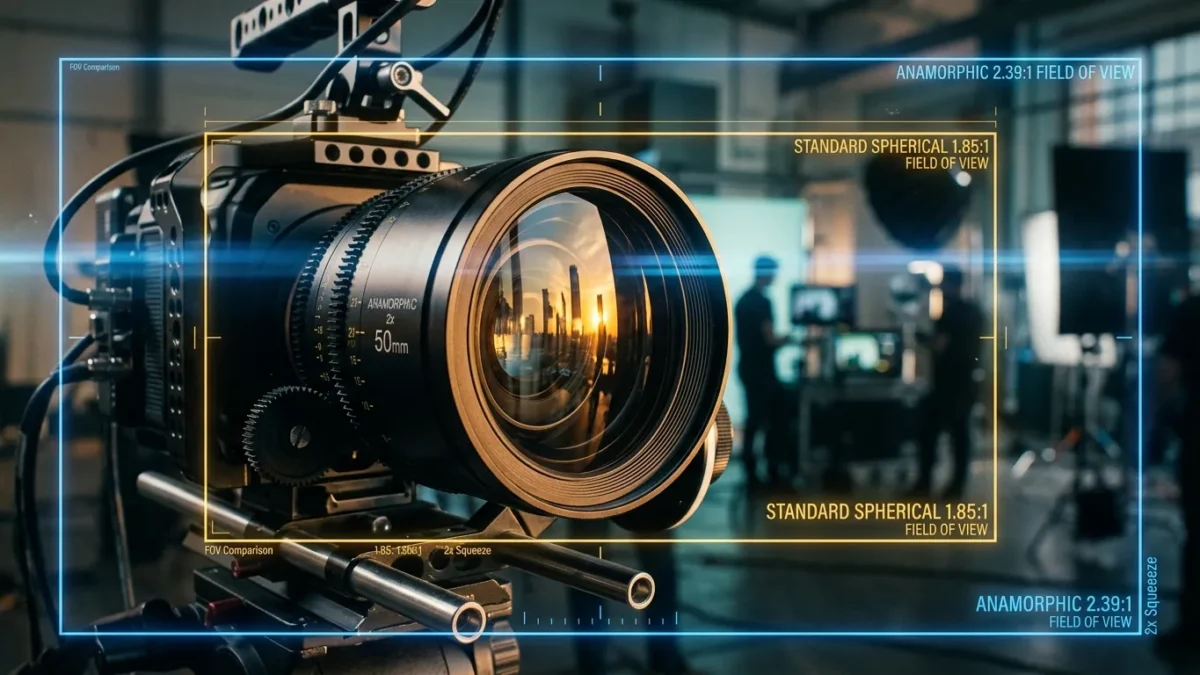
The difference between 1.85 and 2.39 aspect ratio comes down to the proportional balance between image width and height, where 1.85:1 provides a taller frame that nearly fills standard displays and 2.39:1 provides an expansive widescreen image. The 1.85:1 format, known as flat cinema, delivers a vertical perspective that fits modern television screens with minimal borders. The 2.39:1 format, known as Scope or anamorphic widescreen, creates a panoramic field of view that emphasizes horizontal space. Understanding these two standards helps viewers and filmmakers appreciate how framing directs audience attention.
Understanding 1.85:1 and 2.39:1 Framing in Modern Cinema
An aspect ratio measures the relationship between image width and height. When written as 1.85:1, it means that for every unit of vertical height, the image extends 1.85 units horizontally. This proportion arose in the nineteen-fifties as the standard American theatrical format for flat films, offering an immersive theatrical experience while keeping projection simple.
The 2.39:1 format expands horizontal framing, extending 2.39 units of width for every unit of height. Early standards labeled this format as 2.35:1 or 2.40:1, but modern guidelines from the SMPTE place the theatrical container near 2.39:1. This proportion creates an expansive frame that mimics human peripheral vision.
Selecting between these formats sets the physical boundaries of a movie. At BoringMagazine.Co, we examine the production mechanics that define filmmaking. The choice between flat and Scope framing affects camera distance, lighting placement, and actor staging.
How Anamorphic Lenses Compress and Unsqueeze the Image
To achieve widescreen framing on standard film stock, engineers developed anamorphic lenses. Standard spherical lenses use curved glass to project a round, undistorted image directly onto film or digital sensors. In contrast, anamorphic lenses use cylindrical glass elements to optically squeeze a wider horizontal field of view during recording.
Most cinema anamorphic lenses use a two-times squeeze factor. The lens takes in a wide view and squeezes the image horizontally onto a narrower sensor or film area. Recorded without correction, the footage looks distorted, making actors appear tall and thin.
The image is corrected during theatrical projection or digital editing. In theaters, a projector with an anamorphic lens unsqueezes the light beam, restoring natural proportions across the 2.39:1 screen. In digital post-production, editing software desqueezes the pixels electronically. This optical compression process creates distinct visual traits, including oval background blur and horizontal lens flares.
Spherical Flat Capture Compared to Anamorphic Widescreen
Producing a 1.85:1 flat film follows a direct optical path. Cinematographers use spherical lenses that pass light through without horizontal compression. Because spherical lenses maintain equal magnification across all axes, vertical lines stay straight and out-of-focus highlights remain circular.
To generate a 1.85:1 image, camera crews crop the top and bottom of the recorded sensor area. Frame lines in the viewfinder guide the operator to protect the active frame. Spherical lenses allow camera crews to work with lighter equipment, shoot in low light with wide apertures, and focus close to subjects.
During pre-production, directors also consider camera sensor behavior. Fast panning shots across wide frames can expose hardware traits such as rolling shutter distortion on CMOS sensors, making equipment selection essential. Anamorphic capture produces unique optical traits that contrast with spherical lenses:
- Oval background bokeh in place of round light points
- Horizontal streaks across bright light sources
- Gentle barrel distortion along frame edges
- Shallow perceived depth of field separating actors from backgrounds
Why Letterbox Bars Appear on Standard 16:9 Televisions
Modern home televisions and computer monitors feature a native 16:9 aspect ratio, which equals approximately 1.78:1. This dimension was established during the creation of high-definition television as a practical compromise between classic 1.33:1 television broadcasts and wider cinema screens.
Because theatrical formats do not match 1.78:1 exactly, home displays require visual adjustments. A 1.85:1 movie is only slightly wider than a standard television. The black bars at the top and bottom are very thin, and some televisions trim the edges slightly to fill the screen.
Viewing a 2.39:1 film produces prominent letterbox bars. The theatrical picture is much wider than the display. To show the full composition without cutting off the sides, black matte bars fill the extra space at the top and bottom, preserving the original framing intended by the director.
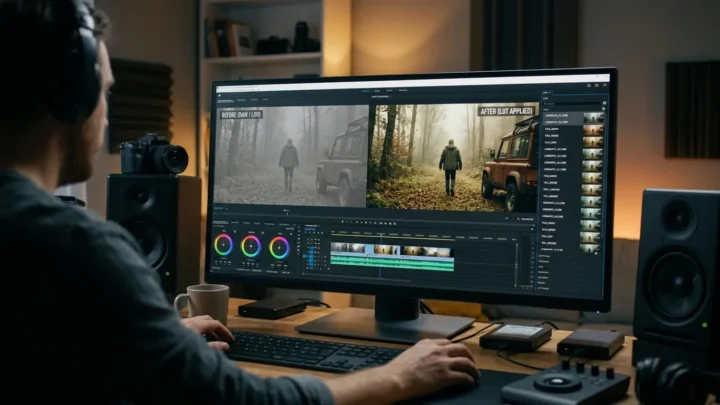
Post-production teams add these matte bars during mastering alongside color balancing workflows. Cinematographers shape contrast and tone across every scene, a process detailed in our overview on how digital color grading transforms raw log footage. To learn more about film craft, explore our Entertainment guides for thorough production overviews.
Real Examples and Creative Tradeoffs for Filmmakers
The choice between 1.85:1 and 2.39:1 influences how viewers experience intimacy and physical scale. The taller 1.85:1 frame provides vertical space, making it ideal for character studies and stories featuring tall subjects. Steven Spielberg chose 1.85:1 for Jurassic Park to fit massive dinosaurs and humans in the same shot without pulling the camera too far away.
In contrast, 2.39:1 emphasizes horizontal space and expansive movement. Westerns directed by Sergio Leone used wide compositions to present vast desert vistas alongside close-up shots of characters. Modern films like Dune use 2.39:1 to convey the scale of planetary environments.
Key creative tradeoffs between the two formats include:
- Vertical headroom: The 1.85:1 ratio provides room for tall buildings and vertical movement.
- Horizontal staging: The 2.39:1 ratio allows actors to spread out across a single wide shot.
- Camera mobility: Spherical lenses for 1.85:1 are lighter and focus closer.
- Visual texture: Anamorphic lenses for 2.39:1 create distinct flares and unique depth cues.
Common Mistakes and Misconceptions About Frame Ratios
A common misconception among home viewers is that black letterbox bars mean part of the movie is missing. In reality, letterboxing preserves the entire picture area. Cropping a 2.39:1 film to fill a 16:9 television would discard more than twenty percent of the original image.
Another misunderstanding is that every 2.39:1 film relies on anamorphic glass. Many cinematographers shoot with spherical lenses on digital sensors and crop the top and bottom to create a 2.39:1 image. This technique, called cropped widescreen or Super 35 extraction, delivers widescreen framing without anamorphic distortion.
Viewers also confuse 1.85:1 with standard 16:9 television screens. Although both formats look similar, 1.85:1 is slightly wider than the 1.78:1 screen. Theatrical projectors use specific lenses and masking settings to display 1.85:1 pictures accurately.
FAQ
Which aspect ratio is better: 1.85:1 or 2.39:1?
Neither aspect ratio is better, because the right choice depends on the visual goals of the film. A 1.85:1 frame works well for intimate drama and vertical subjects. A 2.39:1 frame works best for wide outdoor vistas, fast action scenes, and multi-character staging.
Why do some movies switch between aspect ratios?
Movies switch aspect ratios to signal shifts in story perspective, time periods, or transitions to expanded IMAX sequences. Opening the frame during dramatic scenes gives audiences an expanded sense of visual scale.
Can you shoot a 2.39:1 aspect ratio with standard spherical lenses?
Yes, filmmakers can shoot a 2.39:1 aspect ratio with spherical lenses by cropping the top and bottom of the recorded image. This technique offers widescreen framing while avoiding the weight, optical flares, and distortion of anamorphic lenses.