The primary difference between GFCI and AFCI breakers is that ground-fault circuit interrupters prevent electrocution by sensing leaking electrical current, while arc-fault circuit interrupters prevent structure fires by identifying dangerous electrical sparks. Both devices replace standard thermal-magnetic circuit breakers in modern electrical service panels, but they respond to completely separate physical hazards. Understanding how these safety mechanisms operate helps homeowners maintain electrical safety and diagnose unexpected circuit interruptions.
At BoringMagazine.Co, our mission is to explain complex residential infrastructure through simple technical principles. Electrical safety standards have advanced significantly over the past few decades, introducing specialized breakers that monitor circuits at a microscopic level. Homeowners exploring our Home Improvement guides will find that modern breaker boxes are designed around layered protection rather than a single universal cutoff.
How GFCI Breakers Monitor Current Imbalance
A Ground Fault Circuit Interrupter (GFCI) operates on a straightforward principle of physics: current balance. Under normal operating conditions, the electric current traveling out on the hot wire must equal the electric current returning on the neutral wire. A GFCI breaker continuously monitors this relationship using an internal differential current transformer.
The current transformer inside the GFCI breaker is a ring-shaped magnetic core that encircles both the hot and neutral conductors. When the outgoing current and returning current are identical, their opposing magnetic fields cancel each other out. If electricity finds an unintended path to ground, such as through water or through a human body touching an appliance, the returning neutral current decreases. This difference creates a net magnetic flux inside the sensing ring.
When the sensing coil detects an imbalance as small as 4 to 6 milliamperes, internal circuitry triggers a spring-loaded switch to open the circuit. This trip occurs within 25 to 30 milliseconds. That rapid response stops the flow of current before it can trigger ventricular fibrillation in the human heart. The Consumer Product Safety Commission credits widespread ground-fault technology with dramatically reducing residential electrocutions across the country.
How AFCI Breakers Detect Arcing Waveforms
An Arc Fault Circuit Interrupter (AFCI) addresses an entirely different danger: heat caused by unintended electrical arcing. An arc occurs when electrical current jumps across an air gap between conductors or through broken insulation. These micro-arcs reach temperatures exceeding 10,000 degrees Fahrenheit, which easily ignites surrounding wood framing, insulation, or fabric.
Detecting an arc requires sophisticated signal processing because electrical sparks occur naturally in every home. Flipping an ordinary wall switch creates a minor spark, and electric motors in vacuum cleaners or blenders produce steady commutating sparks. Standard circuit breakers cannot tell the difference between a high-draw appliance and an arcing wire, because an arcing wire often draws less current than the breaker rating.
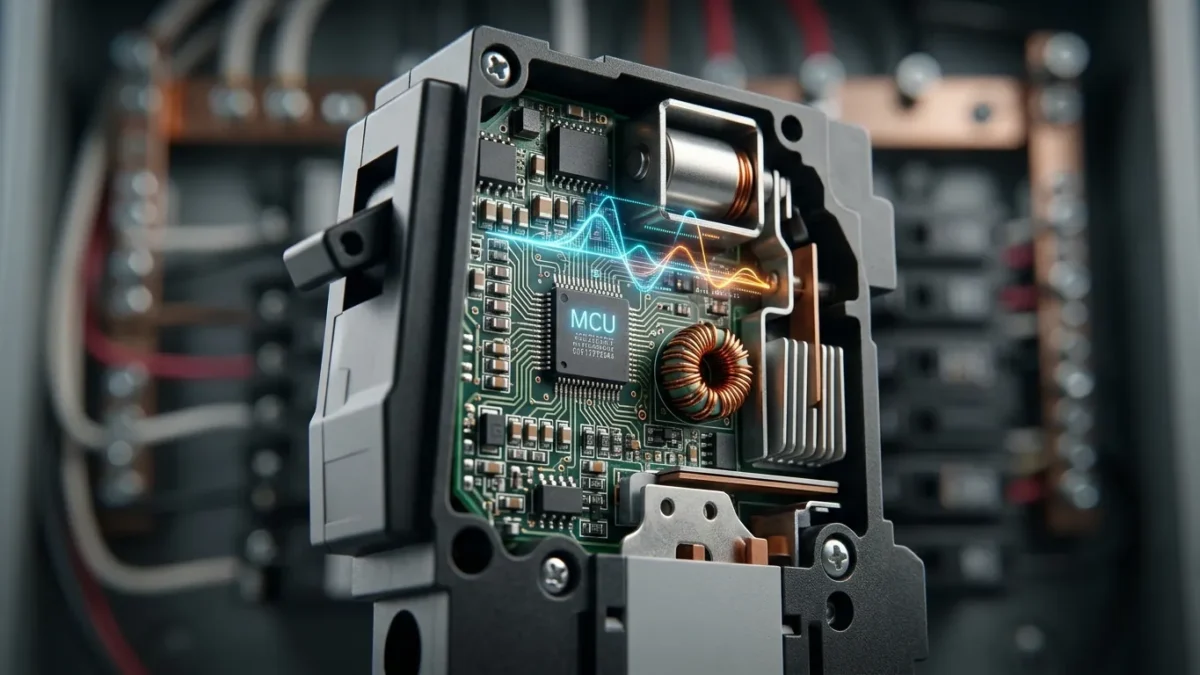
An AFCI breaker solves this problem using an internal microprocessor and filter circuitry that analyzes current waveforms in real time. Dangerous arcing creates irregular, high-frequency noise patterns and flat spots near the zero-crossing points of the alternating current sine wave. The onboard processor monitors these specific frequency signatures. If the waveform matches the mathematical profile of an unintended arc rather than standard motor operation, the breaker trips to prevent an electrical fire.
Key Differences Between GFCI and AFCI Protection
While both devices mount inside your main breaker box or subpanel, their internal sensors and target objectives differ across several categories:
- Target Hazard: GFCI breakers focus on personal safety by stopping electrical shock and electrocution. AFCI breakers focus on property protection by eliminating fire-starting electrical arcs.
- Sensing Mechanism: GFCI devices monitor the mathematical difference between hot and neutral currents using a differential transformer. AFCI units use digital signal processing to track high-frequency current signatures and wave distortions.
- Trip Threshold: A GFCI responds to minute current leakage between 4 and 6 milliamperes. An AFCI responds to intermittent waveform characteristics and energy spikes, even when total circuit current remains well below 15 or 20 amperes.
- Protected Fault Types: GFCI units stop ground faults, which occur when current bypasses the neutral conductor to reach earth ground. AFCI units detect both series arcs, such as a severed wire inside an appliance cord, and parallel arcs between separate conductors.
Standard breakers without GFCI or AFCI functionality only trip when total current exceeds the circuit limit or when a direct short creates massive current flow. Neither standard overload mechanism can sense a dangerous 5-milliamp shock or a low-amperage 5-amp arcing loose connection behind drywall.
Where Electrical Codes Require Each Device
The National Electrical Code, published by the National Fire Protection Association, outlines distinct installation rules for each breaker type. Because water drastically lowers electrical resistance, GFCI protection is required in areas with plumbing fixtures or outdoor exposure. These spaces include bathrooms, kitchens, unfinished basements, crawl spaces, garages, and exterior receptacles.
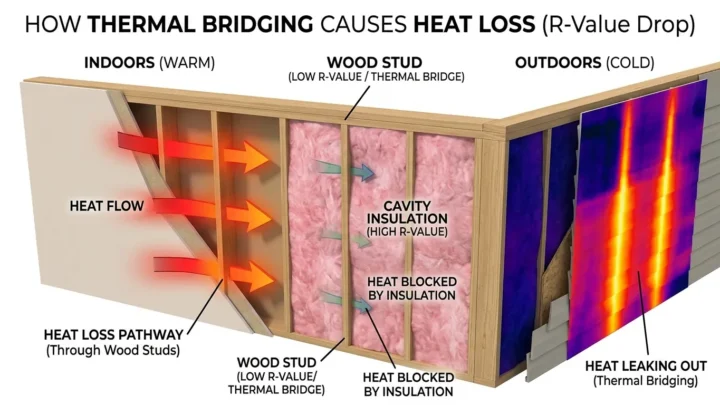
AFCI protection is required in living areas where wires run through structural framing and cords connect to furniture or appliances. Building codes mandate AFCI coverage in bedrooms, family rooms, living rooms, dining rooms, hallways, closets, and laundry rooms. When running new branch circuits through exterior walls, preserving electrical line integrity is just as vital as avoiding thermal bridging across wall framing.
In rooms where both water and general living activities converge, such as kitchens and laundry areas, modern electrical codes require dual protection. Homeowners can install dual-function breakers, often labeled as Combination AFCI and GFCI breakers. These units house both the differential current transformer and the arc-detection microprocessor in a single breaker body, providing complete coverage against shock and fire hazards.
Common Causes of Nuisance Tripping
Because both GFCI and AFCI breakers rely on sensitive electronic components, they can trip on benign conditions. Diagnosing the underlying cause requires a structured approach to prevent unnecessary breaker replacements.
GFCI breakers frequently trip due to moisture accumulation or cumulative circuit leakage. Outdoor receptacles with damaged weatherproof covers permit rainwater or humidity to reach terminal screws, generating a microscopic current bleed to ground. Long circuit runs with multiple connected devices can also develop capacitive leakage that approaches the 5-milliamp limit. Just as homeowners learn how plumbing vent stacks maintain pressure to avoid drain trap siphonage, maintaining clean, dry junction boxes ensures balanced electrical lines.
AFCI nuisance tripping typically stems from shared neutral wiring or aging appliances with worn motor brushes. In older multi-wire branch circuits, two hot wires frequently shared a single neutral return. An AFCI breaker cannot monitor current accurately if neutral currents divide across separate pathways. Furthermore, older vacuum cleaners, treadmills, or low-quality electronic power supplies can emit dirty electrical feedback that confuses arc-detection algorithms. If you suspect faulty panel wiring or loose connections, always consult a licensed electrician to evaluate your service panel safely.
FAQ
Can an AFCI breaker replace a GFCI breaker?
No, an AFCI breaker cannot replace a GFCI breaker because it does not contain the differential sensor required to detect ground leakage current. If a local building code mandates GFCI protection in a wet area, installing a standalone AFCI breaker leaves occupants vulnerable to fatal electrical shocks. To satisfy both requirements on a single circuit, install a certified dual-function breaker that provides both AFCI and GFCI protection.
Do GFCI and AFCI breakers wear out over time?
Yes, both GFCI and AFCI breakers wear out over time because their internal printed circuit boards and electronic sensors degrade from heat and power surges. Industry testing standards recommend testing each breaker once a month by pressing the built-in test button. If pressing the test button fails to trip the breaker handle or disconnect power, the unit has reached the end of its functional life and must be replaced immediately.
Why do AFCI breakers trip on power tools or vacuum cleaners?
AFCI breakers trip on power tools and vacuum cleaners because the carbon brushes inside universal electric motors produce natural sparking that can mimic the frequency signature of a hazardous arc fault. As motor brushes wear down, sparking increases, generating high-frequency electrical noise that travels along the power cord to the panel. Testing the appliance on a different circuit or servicing worn motor components will clarify whether the breaker or the motor caused the trip.