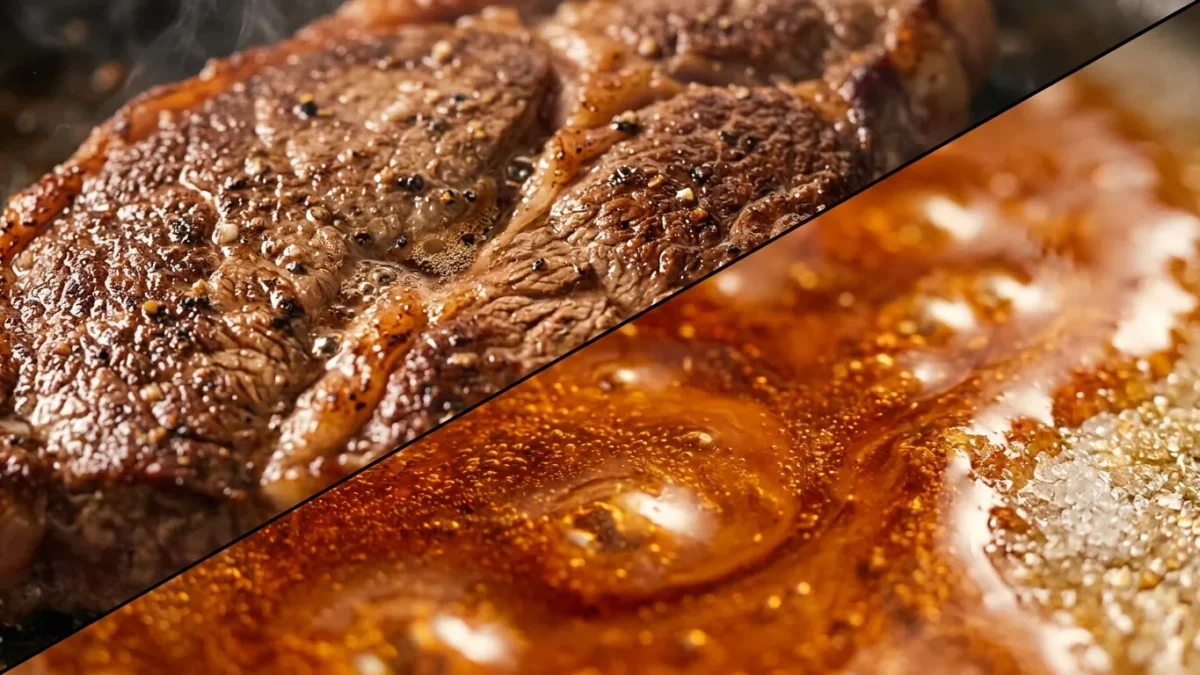
The fundamental maillard reaction vs caramelization difference is that the Maillard reaction requires an interaction between amino acids and reducing sugars, while caramelization is the thermal breakdown of pure carbohydrates without any proteins present. Both chemical processes turn food brown and produce distinct aromas, but they operate through completely different pathways. When you cook dinner or bake dessert, heat causes sugars and proteins to change on a molecular level. Recognizing how each reaction functions gives you direct control over color, flavor, and texture in the kitchen. At BoringMagazine.Co, we examine the practical science behind everyday kitchen techniques to help home cooks master their craft. In our Food guides, understanding thermal reactions helps you control browning and prevent food from burning.
How the Maillard Reaction Works
The Maillard reaction is a complex cascade of chemical reactions between amino acids, which are the building blocks of proteins, and reducing sugars under the influence of heat. French chemist Louis-Camille Maillard first described this process in 1912 while studying how biological cells synthesize proteins. The reaction begins when the carbonyl group of a reducing sugar bonds with the free amino group of an amino acid to form an unstable glycosylamine molecule.
This intermediate compound quickly undergoes an internal transformation known as the Amadori rearrangement. From there, the molecules dehydrate, fragment, and recombine into hundreds of distinct aromatic compounds. These new molecules include pyrazines, which provide savory and roasted aromas, pyrroles, which lend toasty notes, and thiophenes, which contribute meaty profiles due to the sulfur found in certain amino acids.
The final phase produces high-molecular-weight brown pigments called melanoidins. These pigments create the deep brown crust on seared steaks, roasted coffee beans, and toasted bread. The reaction typically accelerates around 280 degrees Fahrenheit (140 degrees Celsius) and proceeds efficiently up to 330 degrees Fahrenheit (165 degrees Celsius). Liquid water limits surface temperatures to the boiling point of 212 degrees Fahrenheit (100 degrees Celsius), so food surfaces must dry before this browning can take place.
How Caramelization Works
Caramelization is the thermal decomposition, or pyrolysis, of pure sugar molecules in the complete absence of amino acids. Unlike the Maillard reaction, caramelization does not rely on nitrogen or sulfur from proteins. Instead, dry heat forces sugars to melt, lose water molecules, and break apart into new chemical structures.
When high heat is applied to carbohydrates, sugar molecules undergo dehydration, isomerization, and condensation. The large sucrose or glucose molecules break into smaller, volatile fragments while simultaneously condensing into complex carbohydrate polymers. According to educational resources from the American Chemical Society, high temperatures break carbon-hydrogen bonds and reorganize sugar structures into new aromatic compounds and pigments.
The volatile molecules produced during caramelization create distinct flavor notes. Diacetyl provides a rich buttery sensation, while maltol and isomaltol produce warm, toasty flavors. Esters and lactones contribute fruity notes, and furans lend a nutty aroma. Meanwhile, larger polymers called caramelans, caramelens, and caramelins form the characteristic amber to dark brown color.
Caramelization demands higher temperatures than the Maillard reaction for common table sugar. While fructose begins to decompose at approximately 230 degrees Fahrenheit (110 degrees Celsius), sucrose and glucose require temperatures near 320 degrees Fahrenheit (160 degrees Celsius) to undergo significant caramelization. Maltose requires even higher heat, around 356 degrees Fahrenheit (180 degrees Celsius).
Key Differences Between the Two Browning Processes
Understanding the distinction between these two thermal processes comes down to four primary factors: reactants, temperature thresholds, aromatic results, and nutritional byproducts.
- Reactants: The Maillard reaction requires both a protein source with free amino groups and a reducing sugar, such as glucose, fructose, lactose, or maltose. Caramelization requires only sugars or starches broken down into simple sugars, with no protein participation.
- Temperature requirements: The Maillard reaction can occur at lower temperatures, beginning noticeably around 280 degrees Fahrenheit, and it can even proceed slowly at room temperature during extended food storage. Caramelization of table sugar requires direct heat exceeding 320 degrees Fahrenheit.
- Aroma profiles: Because amino acids contain nitrogen and often sulfur, the Maillard reaction creates savory, meaty, nutty, and roasty notes. Caramelization produces sweet, buttery, fruity, and slightly bitter tones because it involves only carbon, hydrogen, and oxygen.
- Moisture sensitivity: Both reactions require the removal of surface water to reach high temperatures. However, cooks often start caramelization by dissolving sugar in water for a wet caramel, boiling away the liquid until the remaining sugar reaches pyrolysis temperatures.
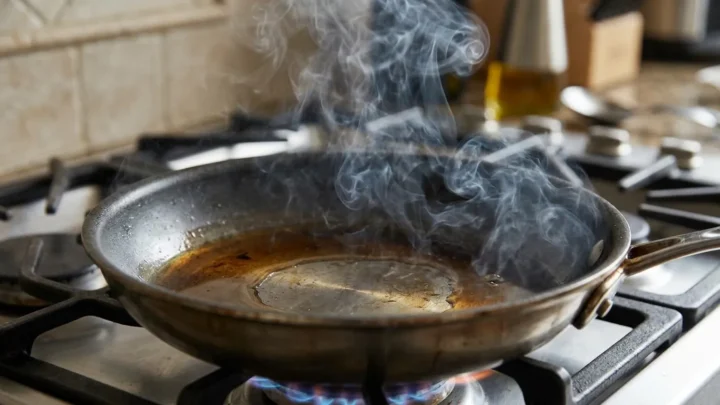
When searing meat at high temperatures, cooks also need to monitor the pan fat and understand what happens when cooking oil reaches its smoke point to prevent bitter acrolein compounds from ruining the crust. Selecting a fat with an appropriate smoke point keeps the cooking surface hot enough for browning without burning the fat.
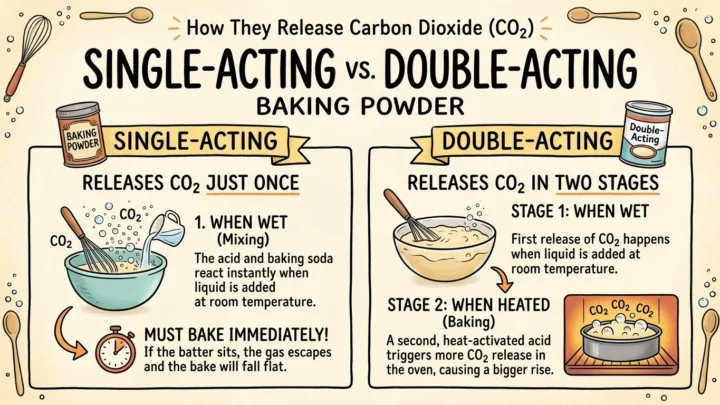
In baked goods, browning works alongside leavening agents, and understanding how chemical leaveners release carbon dioxide explains how cookies and biscuits achieve both an open crumb and a golden exterior. The alkaline environment created by leaveners like baking soda also speeds up the Maillard pathway.
Real Kitchen Examples of Both Reactions
Many classic foods rely purely on one reaction, while other dishes combine both pathways to develop their signature taste.
- Seared meat and poultry: The brown crust on a ribeye steak, pork chop, or roasted chicken thigh is a pure example of the Maillard reaction. Muscle tissue is rich in amino acids and contains small amounts of reducing sugars like glucose and glycogen.
- Caramel candies and flan syrup: Table sugar heated in a pan until it turns golden brown and syrupy is pure caramelization. The sweet, buttery aroma comes solely from the thermal breakdown of sucrose molecules.
- Roasted coffee and chocolate: Coffee beans and cacao seeds undergo extensive Maillard browning during the roasting stage. The amino acids and simple sugars present in the raw seeds react to produce the deep roasted, nutty, and earthy flavors that define these beverages.
- Bread crusts: Bread crust displays both reactions at once. The flour supplies proteins and starches, while enzymatic activity generates simple sugars. The crust browns primarily through the Maillard reaction, but sugars on the surface also caramelize under oven heat.
- Caramelized onions: Despite their common name, caramelized onions actually derive most of their rich flavor from the Maillard reaction. Onions contain natural sugars along with amino acids. As the onions cook slowly over medium-low heat, water evaporates, allowing amino acids and sugars to interact over an extended period.
Common Mistakes and Misconceptions
A frequent mistake in home cooking is overcrowding the pan. When you place too many pieces of meat, mushrooms, or vegetables in a skillet, the moisture released cannot evaporate quickly. The trapped liquid stays at 212 degrees Fahrenheit, steaming the food instead of browning it. Patting food dry with a paper towel before it hits the hot pan removes surface moisture and allows browning reactions to start immediately.
Another misconception is that caramelized onions need high heat. High temperatures cause the natural sugars to char and turn bitter before the inner moisture evaporates. Slow cooking allows the water inside onion cells to release gradually, giving sugars and amino acids ample time to produce complex flavor compounds without burning.
Cooks also frequently confuse dark color with desirable browning. If heat exceeds 350 to 400 degrees Fahrenheit for too long, both the Maillard reaction and caramelization transition into pyrolysis of carbon itself, producing charred, acrid ash. In starch-rich foods like fried potatoes or toast, excessive high-temperature browning can form acrylamide. This chemical forms when the amino acid asparagine reacts with reducing sugars at high heat. For individuals with dietary health concerns regarding charred foods or specific cooking byproducts, consulting a medical professional or registered dietitian can provide personalized guidance.
FAQ
Can the Maillard reaction and caramelization happen at the same time?
Yes, both processes frequently occur together in foods containing both proteins and carbohydrates, such as baked bread crusts and roasted vegetables. As surface water evaporates in the oven, simple sugars caramelize under high heat while simultaneously reacting with amino acids to generate Maillard aroma compounds.
Does caramelization require moisture to occur?
Caramelization requires dry heat or the complete evaporation of surface water, because water boils at 212 degrees Fahrenheit, which is well below the breakdown point of sugar. Although bakers often dissolve sugar in water to promote even melting, actual caramelization does not begin until all water has boiled off and the sugar temperature climbs past 320 degrees Fahrenheit.
Which reaction produces the savory umami flavor in seared meats?
The Maillard reaction produces the savory flavor in seared meats because meat contains amino acids that react with trace reducing sugars under heat. Pure caramelization cannot produce savory or meaty flavor notes because sugar molecules lack the nitrogen and sulfur atoms needed to form savory aroma rings.