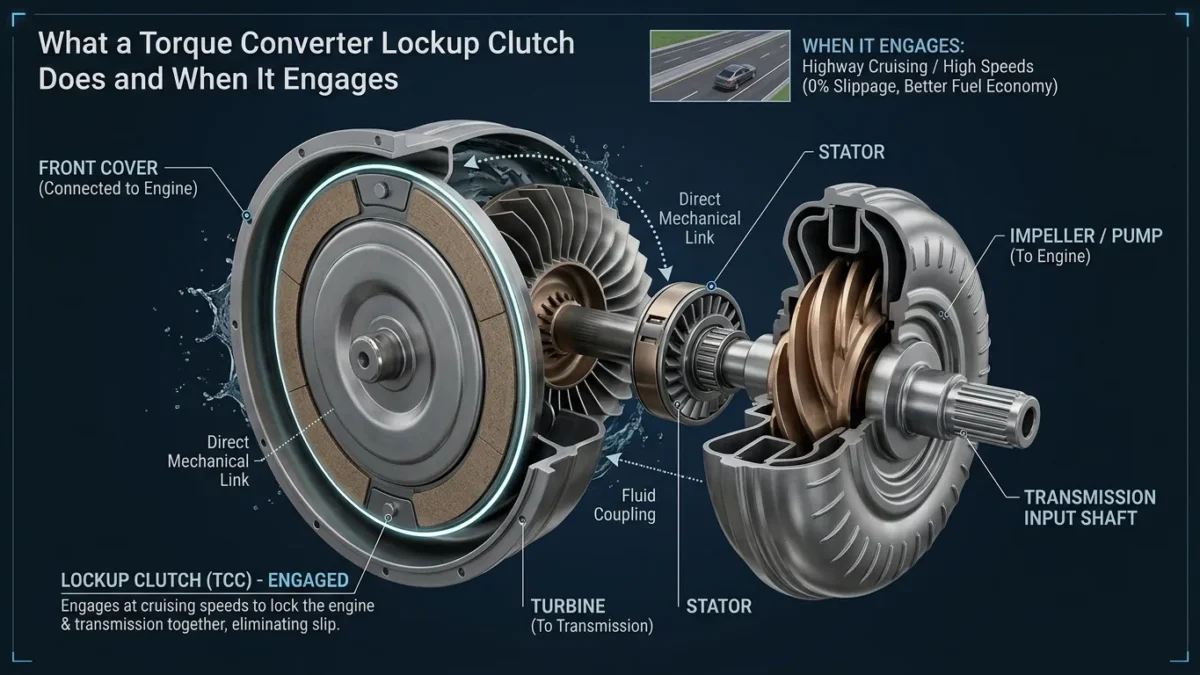
A torque converter lockup clutch works by mechanically clamping the turbine to the torque converter’s front cover, which is bolted to the engine’s flexplate, creating a direct physical connection that stops hydraulic fluid slippage. In traditional automatic transmissions, power transfers from the engine crankshaft to the gearbox through pressurized automatic transmission fluid. While this fluid coupling allows smooth acceleration from a complete stop, it inevitably wastes energy through fluid friction and internal heat generation. By locking the two rotating halves together at steady cruising speeds, the lockup clutch delivers true one-to-one mechanical efficiency, lowers engine speed, and sharply reduces fuel consumption. Readers exploring vehicle mechanics at BoringMagazine.Co can trace many modern fuel economy gains back to this single engineering component.
Fluid Coupling Versus Mechanical Lockup
To understand the lockup clutch, you first need to examine how a standard torque converter transfers power. A torque converter sits between the engine and the automatic transmission, acting as a fluid-filled hydrodynamic connection. It contains three main working elements: the pump impeller attached to the engine, the turbine attached to the transmission input shaft, and the stator situated between them to redirect oil flow.
When the engine runs, the impeller spins and flings transmission fluid outward against the curved blades of the turbine. This churning fluid forces the turbine to turn, which drives the input shaft of the transmission. Because no solid parts touch each other during this phase, the fluid absorbs engine shudder and lets the engine idle while the car stays in gear at a traffic light.
However, fluid coupling comes with an inherent drawback: slippage. The turbine always spins slightly slower than the impeller. In older non-lockup transmissions, this difference wasted roughly five to ten percent of engine energy as heat inside the fluid. The lockup clutch eliminates this loss. When engaged, a friction plate physically binds the turbine to the front cover of the converter housing. The impeller and turbine now spin at identical revolutions per minute, matching engine output to transmission input with zero fluid lag.
How the Internal Mechanism Operates
The lockup mechanism consists of several precision components packaged within the torque converter housing:
- Clutch Piston Plate: A heavy steel disc that slides along splines on the transmission input shaft.
- Friction Material Lining: A ring of heat-resistant friction material bonded either to the piston plate or the inner face of the front converter cover.
- Torsional Damper Springs: Heavy coil springs arranged radially around the clutch hub to cushion torque spikes when the clutch grabs.
- Lockup Control Solenoid: An electro-hydraulic valve in the transmission valve body that directs fluid pressure toward or away from the piston.
The lockup sequence relies on balanced fluid pressures. In the disengaged state, transmission fluid enters through the center of the converter and flows between the clutch piston and the front cover. This pressure pushes the piston away from the cover, keeping the friction surfaces separated and allowing the fluid coupling to slip freely.
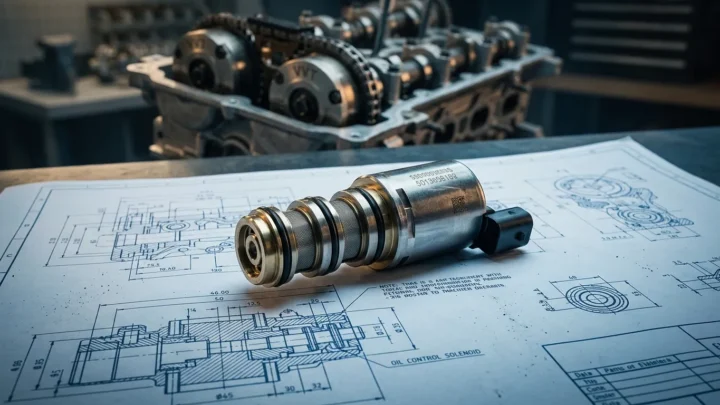
When the vehicle reaches cruising speed, the transmission control unit activates the lockup solenoid. Similar to how oil control solenoids regulate pressure in modern engine heads, this transmission valve redirects fluid circuits. The solenoid dumps fluid pressure from the front side of the piston while supplying pressurized fluid behind it. The resulting pressure differential forces the friction disc tightly against the converter cover. The torsional damper springs compress slightly to absorb the sudden mechanical shock, creating a quiet and smooth transition into direct drive.
When the Transmission Computer Engages Lockup
Modern vehicles do not leave lockup engagement to chance. The transmission control unit monitors a network of engine and drivetrain sensors before deciding to lock the converter. Specific operating conditions must be met:
- Vehicle Speed and Gear Selection: Lockup historically engaged only in top overdrive gear above forty-five miles per hour. Modern electronic transmissions often lock up in second, third, fourth, and higher gears to maximize efficiency.
- Throttle Position and Load: Lockup occurs primarily during light throttle, steady-state cruising, or gentle deceleration. Stepping hard on the gas pedal tells the computer to release the clutch instantly, restoring fluid torque multiplication for faster acceleration.
- Operating Temperature: Cold transmission fluid creates excessive drag and shifts erratically. The computer disables lockup until the engine coolant and transmission fluid reach normal operating temperatures, usually above one hundred twenty degrees Fahrenheit.
- Brake Pedal Signal: Tapping the brake pedal immediately breaks the electrical circuit to the lockup solenoid, releasing the clutch so the engine does not stall as the wheels slow down.
In contemporary multi-speed transmissions, engineers also use controlled partial lockup, often called slipping lockup. The computer rapidly pulses the solenoid to permit a tiny, controlled amount of slip, roughly twenty to forty revolutions per minute. This partial engagement dampens engine harmonics at very low engine speeds while still conserving fuel.
Real-World Driving Scenarios and Symptoms
You can observe the torque converter lockup clutch working right from the driver seat by watching your dashboard tachometer. When you merge onto a highway and maintain sixty-five miles per hour, your engine speed might initially sit at two thousand revolutions per minute. A few moments after the transmission reaches its top gear, you will see the needle drop by two hundred to three hundred revolutions per minute, even though your vehicle speed does not change. That sudden drop marks the exact moment the lockup clutch engages.
Towing heavy loads reveals another major benefit of lockup. Fluid friction produces immense heat inside a transmission under heavy loads, which degrades fluid quickly. Locking the converter stops fluid shear, allowing transmission fluid temperatures to drop substantially while climbing highway grades.
Conversely, a failing lockup clutch produces distinct warnings. The most common symptom is shudder, which feels like driving over highway rumble strips for a brief second as the car shifts into higher gears. Worn friction material or degraded automatic transmission fluid causes the clutch plate to slip and grab erratically instead of holding firmly. If you want to learn more about diagnosing drivetrain issues, explore our Automotive guides for detailed technical walkthroughs.
Common Misconceptions and Maintenance Mistakes
A widespread misconception is that the lockup clutch is an all-or-nothing switch that wears out quickly. In reality, modern lockup clutch friction linings are durable carbon or paper composites designed to last the life of the vehicle when fluid remains clean. However, neglecting fluid maintenance is the quickest way to ruin the assembly. Overheated, oxidized transmission fluid loses friction modifiers, leading to persistent clutch slippage and eventual glazed surfaces.
Another frequent mistake occurs during diagnostic troubleshooting. When an automatic transmission exhibits slippage codes, some owners assume the entire transmission requires a full rebuild. Often, the true culprit is simply a contaminated lockup solenoid or a stuck valve bore. When scanning with a code reader, issues with the torque converter clutch system usually present as diagnostic trouble codes P0740, P0741, or P0742.
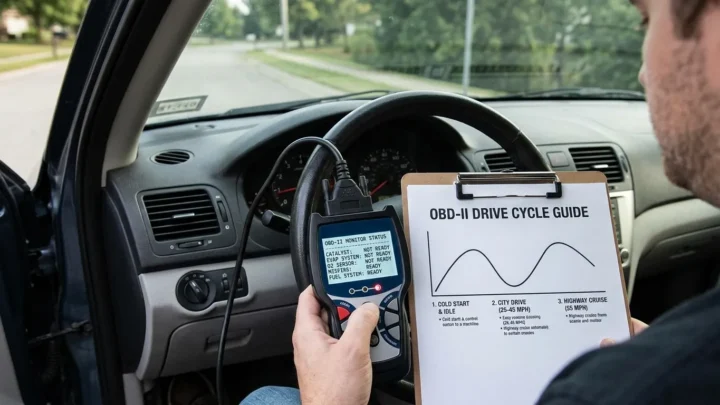
Clearing these codes without fixing the underlying hydraulic or electrical fault can disrupt onboard monitors. As explained in our guide on why diagnostic monitors reset, an active fault will prevent your vehicle from completing the drive cycles needed for emissions inspections. If your transmission slips or shudders repeatedly, consult a certified technician to inspect the hydraulic circuits before expensive mechanical damage occurs.
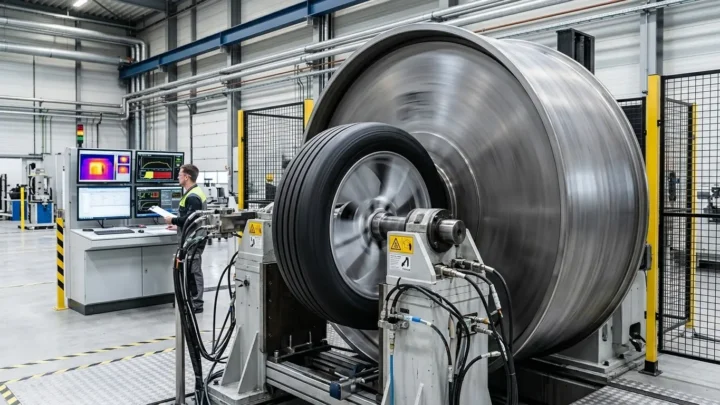
Related on BoringMagazine.Co: What Do Tire Speed Ratings Mean and How Are They Tested.
FAQ
Does a torque converter lockup clutch stay engaged at a stop?
No, a torque converter lockup clutch disengages whenever the vehicle slows down or stops to prevent stalling the engine. The hydraulic circuit dumps pressure from behind the piston, returning the transmission to pure fluid coupling so the car can idle peacefully in gear.
Can a failing lockup clutch trigger a check engine light?
Yes, a failing lockup clutch or stuck solenoid will trigger diagnostic trouble codes such as P0740 or P0741 and illuminate the check engine light. The transmission control unit compares engine speed against transmission input speed, flagging an error if expected lockup ratios fail to match.
What does torque converter clutch shudder feel like?
Torque converter clutch shudder feels like driving over highway rumble strips or experiencing a brief shudder during light acceleration. This mechanical shudder occurs when degraded fluid or worn friction lining causes the lockup plate to slip and grab unevenly against the converter cover.