A septic drain field works by accepting liquid effluent from a septic tank, dispersing it across underground perforated pipes and gravel beds, and filtering it through a biological slime layer and aerated soil before returning purified water to the groundwater table. While the septic tank captures solid waste, the drain field performs the final biological purification. Without an operational drain field, wastewater quickly pools on lawns or backs up into household plumbing fixtures.
The Journey of Wastewater from Tank to Trench
Wastewater begins its treatment journey inside the primary septic tank. Heavy solids settle to the floor as sludge, while oils and grease float to form a surface scum layer. Clarified liquid effluent rests between these strata. Each time fresh wastewater enters the septic tank, an identical volume of liquid flows out toward the yard through an exit baffle.
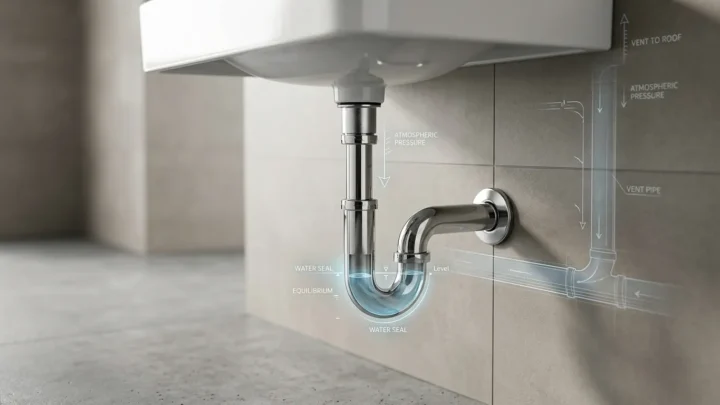
Reliable drainage requires steady flow across the entire property. Just as residential drain fixtures depend on proper plumbing vent stacks to prevent vacuum locks and siphoning, exterior septic lines rely on uniform gravity slope or a pump to move effluent outward. The liquid enters a distribution box, which splits the volume evenly among lateral trenches to prevent any single trench from becoming flooded.
Gravel Trenches and Mechanical Filtration
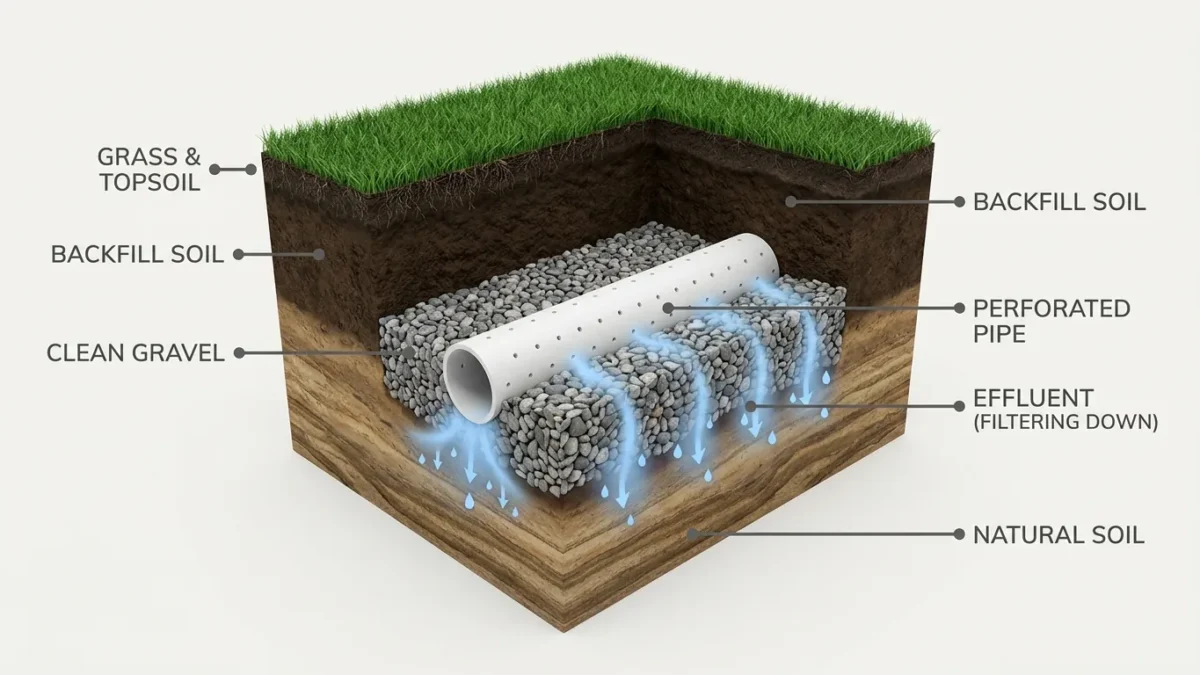
Traditional drain fields consist of shallow trenches dug into the ground and lined with clean gravel or crushed stone. A perforated plastic pipe rests inside this rock layer, buried one to three feet below the grass. A synthetic geotextile fabric covers the stone before the trench is backfilled with native soil.
The gravel layer performs several mechanical tasks:
- It supports the distribution pipe so it stays level and intact under soil weight.
- It creates temporary storage space during sudden surges from laundry or showers.
- It disperses effluent across the entire trench floor and sidewalls.
- It catches coarse particulates that escape the septic tank baffle.
The geotextile fabric prevents fine soil and silt from washing down into the rock bed during rainstorms. Without this barrier, silt fills the void spaces between stones, blocking drainage before effluent reaches the subsoil.
The Biomat Layer and Flow Regulation
At the boundary where gravel meets the trench floor, an organic zone forms called the biomat. This biomat is a dense matrix made of anaerobic bacteria, organic waste, dead microorganisms, and polysaccharides. It resembles a dark, gelatinous slime layer coating the soil surface.
Although clear soil might seem preferable, the biomat serves a necessary hydraulic purpose. It acts as a flow regulator. Effluent moves too rapidly through loose or sandy soils, which can carry live pathogens into shallow aquifers. The biomat slows the infiltration rate, spreading wastewater evenly across the full trench area.
This regulated pace allows effluent to seep into the subsoil under unsaturated conditions, meaning soil pores hold both air and moisture. Anaerobic microbes in the biomat consume dissolved organic compounds before water moves deeper. However, excessive solid waste can cause the biomat to become too thick. An impermeable biomat blocks drainage, causing effluent to back up into the yard.
Aerobic Soil Percolation and Final Purification
After trickling past the biomat, effluent enters the unsaturated native soil below. This zone completes the purification process. Unlike the septic tank and biomat, which lack oxygen, this subsoil contains air within its pore spaces.
Aerobic bacteria thrive in oxygenated ground and neutralize contaminants through three mechanisms:
- Biological consumption: Aerobic bacteria and soil organisms consume harmful pathogens and viruses present in the wastewater.
- Mineral adsorption: Soil minerals and clay particles carry electrical charges that bind phosphorus and heavy metals.
- Physical filtration: Microscopic spaces between soil grains trap remaining particles as the liquid percolates downward.
Passing through two to four feet of suitable unsaturated soil purifies the wastewater thoroughly. The clean moisture then safely enters the water table or evaporates into the atmosphere through grass roots.
Real Drain Field Configurations and Soil Types
Local geology and lot dimensions determine how an absorption system is built. As outlined in our Home Improvement guides, soil percolation tests establish whether a site can support a standard trench.
Common residential designs include:
- Conventional gravel trenches: Perforated pipes resting in stone beds, ideal for deep, well-drained soils.
- Plastic chamber systems: Hollow arched plastic structures installed without gravel, allowing the biomat to establish directly on the native soil bed.
- Mound systems: Sand and gravel beds built above natural grade for sites with high water tables or dense clay, using pumps to disperse effluent evenly.
The Environmental Protection Agency provides guidelines showing how matched configurations safeguard local groundwater supplies from contamination.
Common Mistakes That Damage a Drain Field
A drain field operates beneath the surface, making it easy to forget how sensitive the biological balance is. Daily habits in the home directly influence system longevity.
Homeowners often make several damaging errors:
- Hydraulic overload: Spreading laundry across several days prevents excess water from flooding trenches and suffocating aerobic soil microbes.
- Flushing harsh chemicals: Solvents, paint thinners, and antibacterial cleaners kill beneficial bacteria in the tank and biomat.
- Driving over the field: Heavy vehicles compact soil particles and crush underground pipes, destroying drainage capacity.
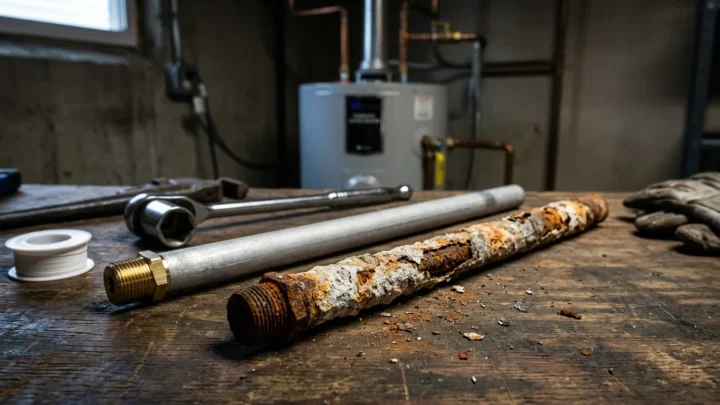
- Neglecting plumbing repairs: Just as replacing a water heater anode rod prevents tank deterioration, fixing a leaking toilet stops thousands of gallons from drowning a drain field.
If you notice persistent standing water or sewer smells, hire a licensed septic professional immediately. Working with septic components exposes individuals to hazardous biohazards and toxic gases that require professional safety gear. Discover more practical home care analysis at BoringMagazine.Co.
FAQ
How long does a septic drain field typically last?
A septic drain field typically lasts between twenty and thirty years when the septic tank is pumped regularly and the absorption trenches remain uncompacted. Lifespan depends on soil quality, household water use, and scheduled tank pumping every three to five years.
Can a clogged drain field biomat layer be repaired?
A clogged biomat layer can sometimes be restored by resting the drain field, which deprives the anaerobic bacteria of organic waste and allows oxygen to break down excessive slime. Professional soil aeration can also reintroduce oxygen, though severely degraded fields often require complete replacement.
What are the first signs that a drain field is failing?
The first signs of a failing drain field include sluggish interior plumbing drains, gurgling pipes, foul odors outdoors, and spongy or bright green grass above the trenches. When dark effluent surfaces on the yard, the soil can no longer absorb liquid and requires prompt professional evaluation.