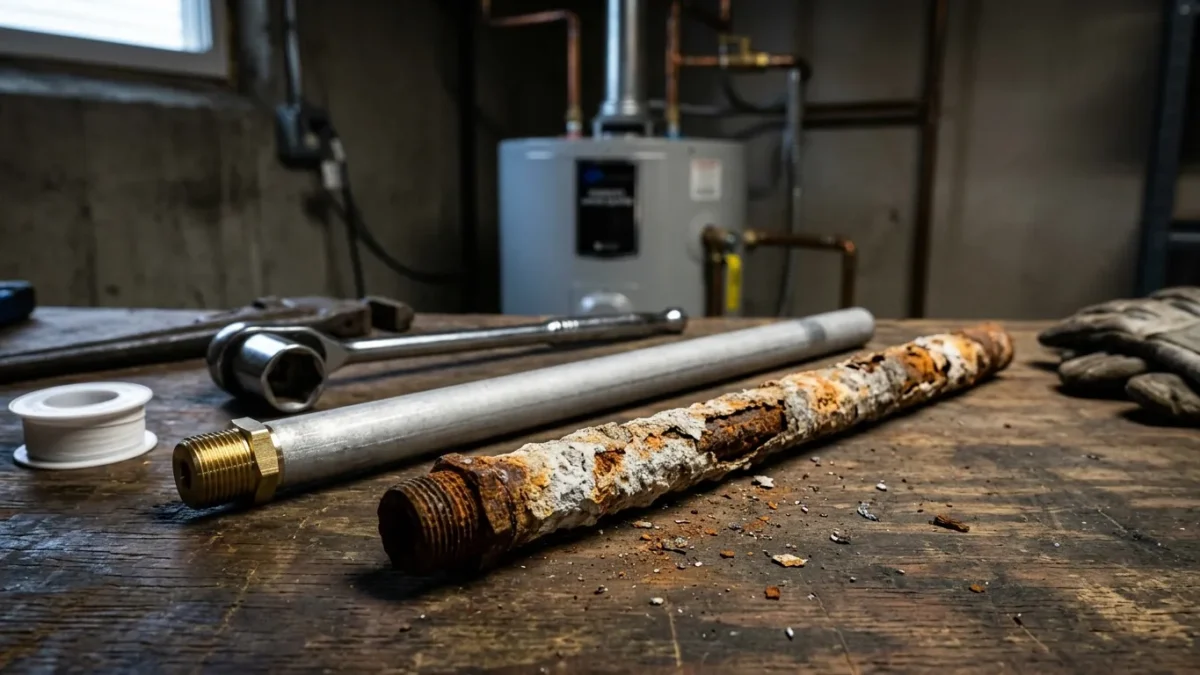
A water heater anode rod protects the tank by using galvanic corrosion, sacrificing its own metal to stop the interior steel walls from rusting. Most residential storage water heaters use carbon steel tanks lined with porcelain enamel glass. During manufacturing and daily heating cycles, microscopic fissures form in this brittle glass lining. Water seeps into these tiny cracks and attacks the exposed steel. By placing a more reactive metal rod inside the water, the tank forces that rod to corrode instead. At BoringMagazine.Co, we explore how home mechanical hardware works behind the scenes. Understanding this sacrificial metal helps homeowners prevent tank failure and avoid messy utility leaks.
The Electrochemical Science Behind Galvanic Protection
Galvanic corrosion takes place when two dissimilar metals sit in an electrolyte and connect electrically. In a water heater, household water containing dissolved minerals acts as the electrolyte. The carbon steel tank serves as one metal, while the anode rod acts as the other. Because both touch through the threaded steel hex plug at the top of the tank, they create a completed circuit.
Every metal carries a specific electrical potential on the galvanic series. Magnesium and aluminum have significantly more negative electrical potentials than iron and steel. When submerged together, a natural voltage difference develops. The more active rod metal acts as an anode, giving up electrons through oxidation. The less active steel tank functions as a cathode, receiving these electrons.
Current flows naturally from the anode to the cathode. This protective electron flow shields the iron atoms in the steel shell from combining with oxygen. As long as the sacrificial rod dissolves, the steel tank remains intact at every microscopic crack in its glass lining.
Key Differences Between Anode Rod Materials
Manufacturers install three primary types of rods to match varying water conditions:
- Magnesium Rods: Magnesium produces a high driving voltage, making it the standard factory choice for typical municipal water. It provides strong protection across soft and moderately hard water supplies, but softened water dissolves it rapidly.
- Aluminum and Zinc Alloys: Aluminum rods generate a lower voltage and dissolve more slowly, making them suitable for hard water. Adding zinc suppresses sulfur bacteria. If hot water develops a rotten egg odor, an aluminum-zinc rod prevents that smell while still shielding the steel tank. Segmented aluminum rods also install easily under low ceilings.
- Powered Titanium Rods: Unlike sacrificial rods, a powered anode uses an external electrical adapter wired to an inert titanium probe. The control box pulses a small electric current through the water to protect the steel. Titanium rods never dissolve, produce zero sediment, and eliminate sulfur reactions entirely.
In our Home Improvement guides, matching equipment to regional water chemistry is fundamental to system longevity.
Steps to Inspect and Replace a Depleted Anode Rod
Inspecting an anode rod every two to three years helps homeowners catch wear before the tank sustains damage. Here is the replacement process:
- Shut Off Power and Water: Turn off the circuit breaker for an electric model, or turn the gas valve to pilot. Close the cold water shutoff valve above the heater.
- Drain Several Gallons: Open a hot water faucet inside the house to break vacuum pressure. Attach a garden hose to the tank drain valve and empty three gallons of water into a floor drain to drop the water level below the tank head.
- Unscrew the Hex Head: Fit a 1-1/16 inch socket onto a long breaker bar and set it on the hex plug at the top of the tank. Turn counterclockwise to break the factory seal.
- Check Rod Wear: Pull the rod out of the tank. If the metal has eroded to less than one-half inch thick, or if the thin inner steel wire shows, the rod is depleted.
- Install the Replacement: Wrap the threads of the new rod with five layers of PTFE tape. Thread the rod in by hand, then tighten it with a socket wrench.
- Refill the Tank: Close the drain valve and reopen the cold water supply. Turn on a hot faucet until water runs smoothly without air bursts, then restore electric power or gas supply.
Real Household Scenarios and Water Chemistry Examples
Local water chemistry changes how fast an anode rod decays. Here are three common examples:
The Salt-Softened Supply: When a homeowner adds a salt-based water softener, sodium ions replace calcium and magnesium. Sodium increases electrical conductivity in the water. This extra conductivity accelerates galvanic corrosion, causing a factory magnesium rod to dissolve in under two years. Regular annual inspections keep the tank protected.
The Well Water Odor Issue: In homes drawing well water with natural sulfates, sulfate-reducing bacteria thrive inside warm storage tanks. These bacteria feed on free hydrogen released by corroding magnesium, producing smelly hydrogen sulfide gas. Swapping the magnesium rod for an aluminum-zinc alloy stops this odor.
The Neglected Storage Tank: In an uninspected six-year-old water heater, the sacrificial rod can dissolve completely. Once the core wire stands bare, galvanic current stops. Dissolved oxygen attacks exposed steel, causing pinhole leaks and requiring full tank replacement.
Common Mistakes and Misconceptions About Anode Rods
A widespread mistake is removing a smelly anode rod and leaving the port empty. While this stops the rotten egg odor, it leaves bare carbon steel exposed to hot water, causing leaks within two years. Always switch to an aluminum-zinc or powered rod instead.
Another misconception is that the interior glass lining provides total protection. Because steel expands more than rigid porcelain during heating cycles, fine stress cracks form across the lining. The sacrificial rod acts as an indispensable backup to guard those exposed spots.
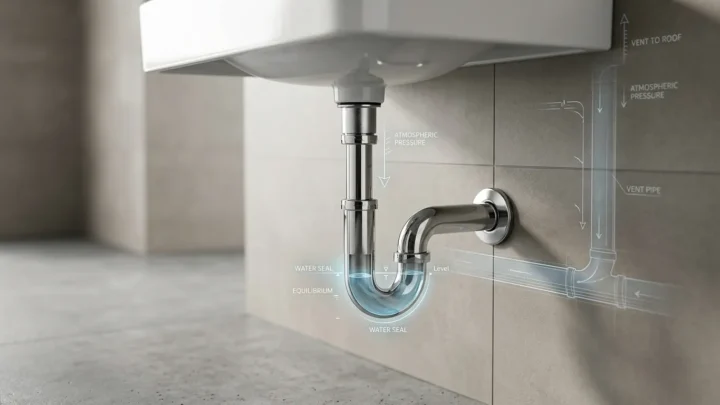
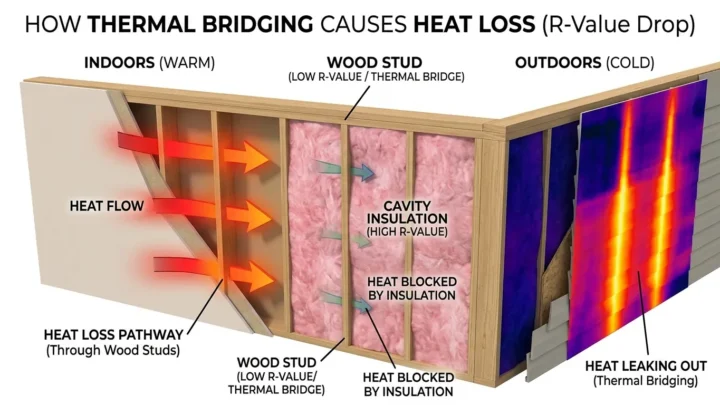
Plumbing systems rely on balance across multiple components. For example, maintaining proper plumbing vent stacks protects drainage traps from pressure loss, just as sacrificial rods protect pressurized vessels from rust. Similarly, preventing structural heat loss through thermal bridging in insulation framing requires attention to hidden construction boundaries. If you feel uncomfortable handling high-torque plumbing tools, gas lines, or 240-volt electrical circuits, consult a licensed plumbing contractor.
FAQ
How often should you replace a water heater anode rod?
You should inspect a water heater anode rod every two to three years and replace it when more than half of the original metal has corroded away. If your home uses a salt-based water softener, inspect the rod annually due to higher corrosion rates. Replacing the rod before the central core wire appears keeps the tank in good condition.
What happens if you remove an anode rod and do not replace it?
If you remove an anode rod without replacing it, hot water begins corroding the exposed carbon steel tank immediately, causing tank failure within one to three years. The anode rod supplies the continuous electrical current needed to prevent rust. Without it, the water heater loses its primary defense mechanism against corrosion.
Why does hot water smell like rotten eggs after installing a new anode rod?
Hot water smells like rotten eggs when sulfate-reducing bacteria in your water react with a magnesium anode rod to generate hydrogen sulfide gas. These bacteria use electrons released by the corroding magnesium to convert natural sulfates into foul-smelling gas. Replacing the magnesium rod with an aluminum-zinc alloy or a powered titanium rod eliminates this odor.