Double acting baking powder works by producing carbon dioxide gas in two separate stages: first when mixed with liquid at room temperature, and second when heated in the oven. This two-phase release gives bakers a reliable safety net, ensuring batters rise evenly even if they sit on the counter before baking. At BoringMagazine.Co, we break down everyday kitchen science into straightforward facts. In our Food guides, understanding the mechanics of chemical leaveners helps you master texture, timing, and lift in every baked good.
The Two-Phase Chemical Release Mechanism
Chemical leavening relies on a simple acid-base reaction. Baking soda, known chemically as sodium bicarbonate, acts as the alkaline base in baking powder. When sodium bicarbonate dissolves in the presence of an acid, it neutralizes and creates water, mineral salts, and bubbles of carbon dioxide gas.
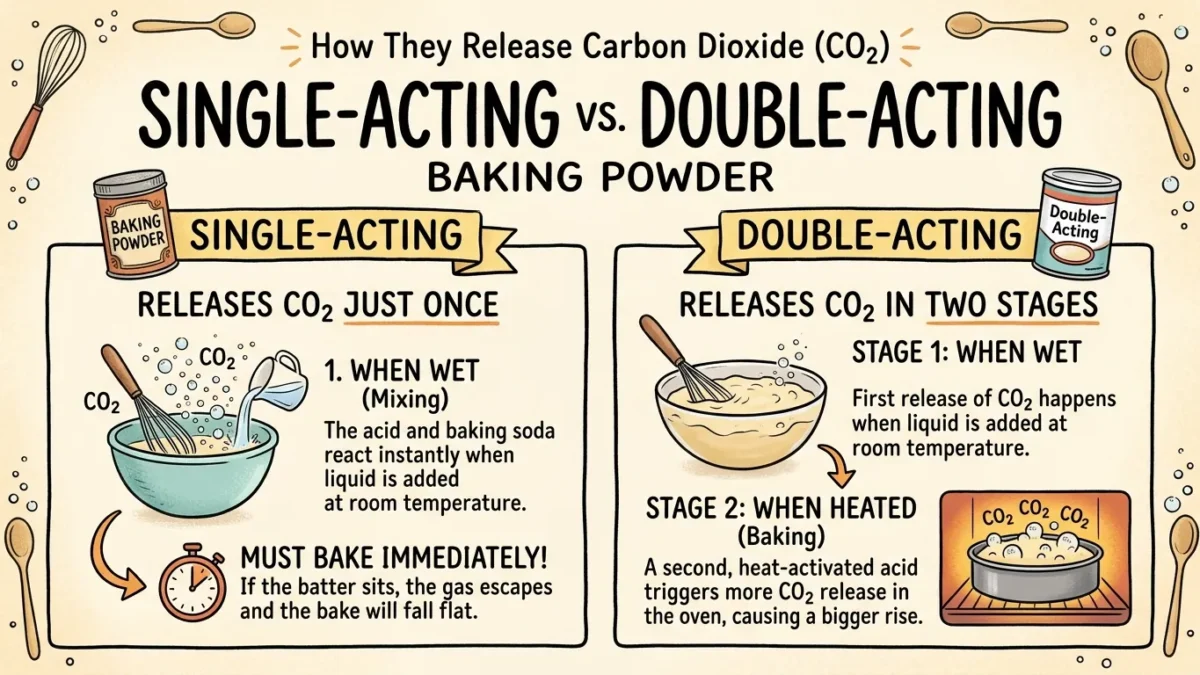
In double-acting baking powder, manufacturers blend sodium bicarbonate with two distinct acid salts rather than just one. The first acid is fast-acting and soluble in cool water. In most commercial tins sold in grocery stores, this first acid is monocalcium phosphate. As soon as you pour milk, water, or eggs into your dry bowl, monocalcium phosphate dissolves and reacts with a portion of the sodium bicarbonate. This cold phase generates roughly twenty to thirty percent of the total carbon dioxide volume.
The remaining sodium bicarbonate stays unreacted because the second acid requires thermal energy to dissolve. Modern recipes typically use sodium aluminum sulfate or sodium acid pyrophosphate as this second acid. These compounds remain largely inert at room temperature. Once the batter enters an oven and climbs past 140 degrees Fahrenheit, the second acid dissolves, triggering the rest of the chemical reaction. This heat-activated surge produces the main burst of carbon dioxide that lifts the cake or muffin during baking.
Single-Acting vs. Double-Acting Baking Powder
The fundamental distinction between single-acting and double-acting leaveners lies in how many acid compounds are present in the formula. Single-acting powders contain only one acid salt, which dissolves completely in cold or room-temperature liquid. The most famous traditional single-acting powder uses cream of tartar, also known as potassium bitartrate.
When you mix single-acting powder into liquid, the entire chemical reaction begins at once. Carbon dioxide bubbles form immediately and continue to bubble up until the acid and base are fully spent. If you do not slide your pans into the oven within minutes of mixing, those gas bubbles expand, rise to the surface, and escape into the kitchen air. The resulting baked item turns out dense, heavy, and flat.
Double-acting powder solves this timing vulnerability. Because only a fraction of the gas releases during mixing, the batter retains the majority of its leavening potential until it reaches baking temperatures. Commercial bakeries and home kitchens rely on double-acting powder because it tolerates real-world delays. You can mix a large batch of pancake batter, let it sit on the counter, and still produce light, fluffy pancakes twenty minutes later.
Optimal Batter Timing and Oven Rise
Understanding the two activation steps changes how you manage batter rest periods. Many muffin and waffle recipes call for a ten to fifteen minute bench rest after mixing. During this resting period, flour proteins hydrate and starches begin absorbing liquid.
The room-temperature reaction of double-acting powder performs a specific physical role during this rest. The initial carbon dioxide bubbles do not expand the batter into its final volume. Instead, they seed millions of microscopic gas pockets throughout the mixture. Chemical leaveners cannot generate new bubbles out of empty liquid; they can only expand air pockets introduced during mixing or created by early acid dissolution.
When the rested batter hits the preheated oven, heat transfers from the pan into the wet mixture. The heat-activated acid dissolves and reacts, flooding those seeded pockets with fresh carbon dioxide. At the same time, water in the batter turns to steam, further expanding each cell. This gas expansion occurs right before the crumb solidifies through egg protein coagulation and the chemistry of starch gelatinization. If the gas expands too late after the crumb sets, the crust cracks; if it expands too early, the bubbles pop and collapse.
Practical Baking Examples in Everyday Recipes
Different baked goods interact with double-acting powder based on moisture, thickness, and cooking methods. Pancake batter provides a clear example. When you whisk pancake mix with milk and eggs, the initial bubbles create a light, frothy texture in the bowl. As each ladle of batter hits a hot skillet, the griddle heat triggers the second acid reaction within seconds. You see bubbles rise to the surface and pop, signaling that the crumb is setting and the pancake is ready to flip.
Layer cakes highlight another practical advantage. Cake batters require gentle folding to avoid developing tough gluten strands. Because double-acting powder does not expend all its gas during folding, you can take your time smoothing batter into multiple cake pans. In the oven, steady thermal transfer allows the cake to rise gradually from the edges to the center, creating an even, flat top rather than an irregular dome.
Drop biscuits and scones also benefit from controlled gas release. Cold butter cubes must remain solid during mixing to produce distinct flaky layers. The delayed heat reaction ensures that gas expansion coordinates with the melting butter in the oven, puffing the dough apart while heat encourages surface browning through the Maillard reaction.
Common Baking Powder Mistakes and Misconceptions
A frequent mistake in home kitchens is treating baking powder and baking soda as interchangeable ingredients. Baking soda is pure sodium bicarbonate, requiring an external acidic ingredient like buttermilk, lemon juice, or yogurt to react. Baking powder already contains both the base and the dry acid. If you substitute baking soda for baking powder without adding an acid, your food will not rise and will develop a bitter, metallic flavor.
Another error involves using expired leavening powder. Baking powder containers include an inert starch, usually cornstarch, which separates the acid and base granules while absorbing stray humidity. Over several months, moisture from the atmosphere enters the opened container. The dry ingredients slowly react inside the tin, depleting the available carbon dioxide long before you scoop the powder into your mixing bowl.
Overmixing represents a third common pitfall. Some bakers believe vigorous stirring helps distribute the leavening agents more thoroughly. In reality, double-acting powder dissolves readily in wet ingredients. Excessive stirring knocks out the initial micro-bubbles and develops excess gluten, trapping the remaining gas in rubbery walls that resist oven lift. Gentle stirring until dry pockets vanish yields the best crumb texture.
FAQ
Can you substitute single-acting for double-acting baking powder?
You can substitute single-acting for double-acting baking powder at an equal one-to-one ratio by weight or volume, but you must transfer the batter into the oven immediately after mixing. Because single-acting powder expends its leavening gas in the mixing bowl, any delay on the counter will cause the batter to deflate. Commercial kitchens that use single-acting powder prepare their pans and preheat ovens well ahead of time.
How do you test if baking powder is still fresh?
You can test baking powder freshness by stirring one teaspoon of powder into a half cup of warm tap water. If the mixture bubbles vigorously within a few seconds, the first-stage acid and sodium bicarbonate remain active. If you observe only weak bubbling or no fizz at all, discard the container and buy fresh powder.
Why does commercial baking powder contain cornstarch?
Commercial baking powder contains cornstarch to absorb ambient moisture and keep the dry acid and alkaline salts from reacting during storage. The starch grains act as a physical barrier between the sodium bicarbonate and acid crystals. Standard formulations typically consist of roughly thirty percent sodium bicarbonate, thirty to forty percent acid salts, and twenty to thirty percent cornstarch by weight.