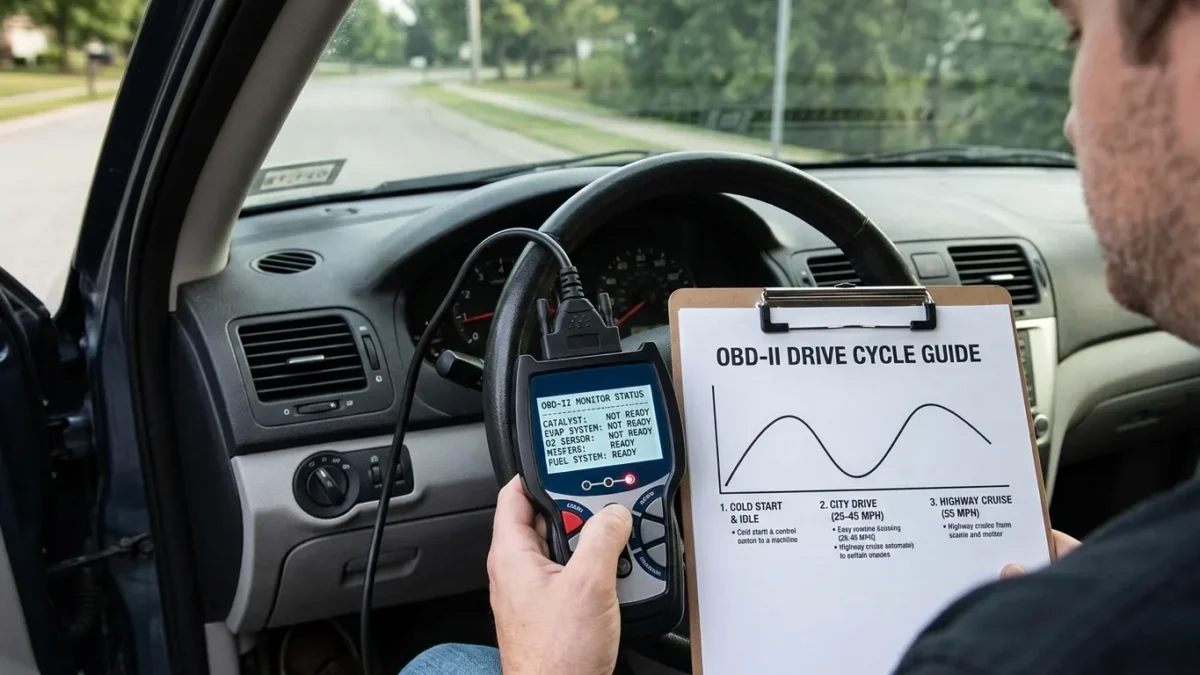
Your OBD2 monitors are not ready because the powertrain control module has not completed the automated diagnostic checks required after battery disconnection or trouble code clearing.
When you visit an emissions inspection station, test equipment connects directly to your diagnostic port. If the vehicle reports that readiness monitors remain incomplete, the testing station rejects the car even if the check engine light is off. Understanding how these self-tests operate helps you prepare your vehicle for state testing without unexpected delays.
At BoringMagazine.Co, we explain mechanical systems with straightforward facts. For more repair insights and diagnostic guidance, explore our Automotive guides.
How OBD-II Readiness Monitors Work
Federal emissions regulations require passenger vehicles built since 1996 to feature On-Board Diagnostics Second Generation, known as OBD-II. The powertrain control module does not simply react when a sensor fails. Instead, it runs internal software routines to evaluate emissions components under real driving conditions.
Each automated check is called a readiness monitor. While you drive, the computer measures sensor outputs, fuel delivery, and exhaust composition. When a routine completes without detecting a malfunction, the monitor switches from Not Ready to Ready.
These routines track the catalytic converter, fuel trims, engine ignition, oxygen sensors, and fuel vapor systems. If a test detects an issue, the computer records a pending code. If the fault repeats, the check engine light illuminates.
Why Your OBD2 Monitors Reset to Not Ready
Readiness monitors reset to incomplete whenever the computer loses stored memory or receives a manual reset command. Common causes include:
- Clearing diagnostic trouble codes: Using a scan tool to turn off a check engine light erases diagnostic memory and resets every monitor to incomplete.
- Disconnecting the battery: The computer stores readiness data in Keep Alive Memory. Disconnecting battery cables or installing a replacement battery cuts power and wipes this data.
- Low battery cranking voltage: An aging battery that drops below ten volts during engine starting can cause the computer to reboot, clearing stored test progress.
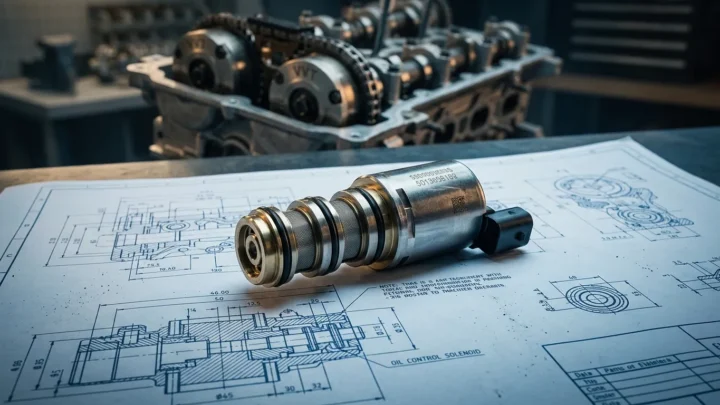
- Pending mechanical faults: If a secondary component malfunctions, the computer delays dependent monitors. For example, camshaft errors caused by variable valve timing solenoid issues often suspend misfire and catalytic converter evaluations until timing stabilizes.
Continuous vs Non-Continuous Monitors
The engine computer organizes readiness tests into continuous and non-continuous categories.
Continuous monitors run constantly while the engine runs, checking critical combustion safety metrics:
- Misfire Monitor: Tracks crankshaft speed variations to detect engine misfires.
- Fuel System Monitor: Tracks fuel trim adjustments to maintain proper air and fuel ratios.
- Comprehensive Component Monitor: Checks electrical circuits, throttle switches, and sensors for abnormal voltages.
Non-continuous monitors run only under specific engine temperatures, road speeds, and driving loads:
- Catalyst Monitor: Compares upstream and downstream oxygen sensor activity to confirm catalytic converter efficiency.
- Evaporative System Monitor: Tests the fuel tank and vapor lines for fuel vapor leaks.
- Oxygen Sensor Monitor: Verifies sensor voltage response rates and internal heater circuits.
- Exhaust Gas Recirculation Monitor: Confirms valve operation and flow rates during deceleration or cruise.
Universal Drive Cycle Steps to Complete Monitors
A drive cycle is a specific sequence of operating conditions that allows the computer to run its diagnostic monitors. Following these universal steps helps complete most monitors on modern gasoline vehicles:
- Cold soak the vehicle: Let the car sit parked for eight hours so engine coolant and intake air temperatures match ambient air temperatures.
- Set the fuel level: Keep the fuel tank between one-quarter and three-quarters full so evaporative leak tests can execute.
- Cold start and idle: Start the engine and idle in park for three minutes with electrical accessories turned off.
- City driving: Drive at 25 to 35 mph for five minutes with smooth acceleration and gentle stops.
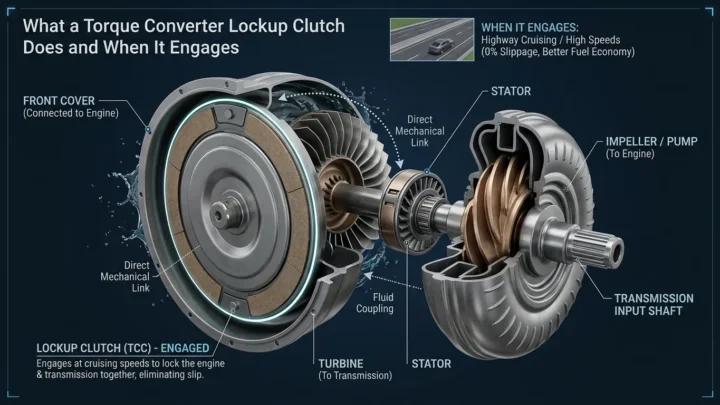
- Steady highway cruise: Accelerate smoothly to 55 mph and maintain steady throttle for fifteen minutes. Constant engine load during this phase works smoothly, much like the stable road speeds seen during torque converter lockup clutch operation, allowing catalyst and oxygen sensor monitors to evaluate exhaust flow.
- Decelerate without braking: Release the throttle pedal and coast down from 55 mph to 20 mph without pressing the brakes.
- Final idle: Park the vehicle and idle for two minutes before turning off the ignition.
Common Mistakes When Trying to Set Monitors
Several everyday driving mistakes keep readiness monitors in an incomplete state before inspection day.
Resetting trouble codes right before testing is the most frequent blunder. Clearing a check engine light to pass an inspection resets all monitors back to zero, ensuring immediate rejection at the testing station.
Driving with an improper fuel level also stops monitors. The evaporative emissions monitor aborts if the fuel tank is over 85 percent full or under 15 percent full because fuel slosh and vapor volume prevent accurate pressure readings.
Highway driving alone will not set every monitor. Many drivers assume an hour of highway driving is sufficient, but evaporative and oxygen sensor heater monitors require cold starts, low-speed city driving, and idle periods. Furthermore, a thermostat that fails to bring coolant up to 175 degrees Fahrenheit prevents closed-loop operation, keeping monitors suspended until a certified technician resolves the mechanical problem.
FAQ
How long does it take for OBD2 monitors to become ready?
Setting OBD2 monitors typically takes between fifty and one hundred miles of mixed driving, or one to two completed drive cycles that include a cold engine start. While continuous monitors complete almost immediately, non-continuous monitors require specific driving speeds and an overnight cold soak before finishing their automated tests.
Can you pass an emissions inspection with one incomplete monitor?
Most state emissions programs permit 2001 and newer passenger vehicles to pass testing with one incomplete non-continuous monitor, while 1996 to 2000 vehicles can pass with two incomplete monitors. In most jurisdictions, the single incomplete monitor must be the evaporative system, while catalyst and misfire monitors must be ready. You can verify regional rules with the United States Environmental Protection Agency or your local inspection agency.
Why does the EVAP monitor take the longest to set?
The evaporative emissions monitor takes the longest to set because it requires strict fuel tank levels, specific outside temperatures, and an extended cold rest period. If the ambient temperature is below 40 degrees Fahrenheit or above 90 degrees Fahrenheit, or if the fuel tank is full, the computer postpones the vacuum leak test entirely.