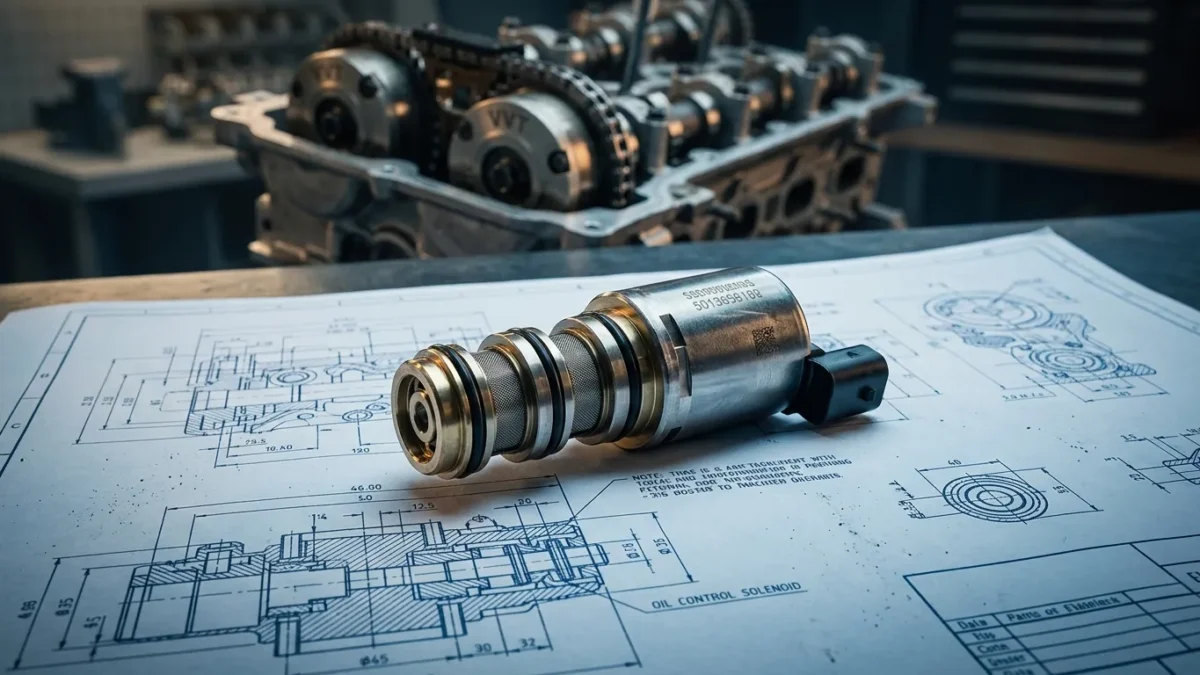
A variable valve timing (VVT) solenoid works by using an electromagnetic coil to move a spool valve, which routes pressurized engine oil into chambers inside a camshaft phaser to rotate the camshaft forward or backward relative to the crankshaft.
Traditional engines used fixed camshaft profiles, forcing a compromise between smooth idling and high-speed power. Variable valve timing solves this by altering camshaft positions while the engine runs. Readers following vehicle technology on BoringMagazine.Co know that modern powertrains rely on quick communication between computer sensors and mechanical actuators. The oil control solenoid serves as the hydraulic switch that makes this dynamic adjustment possible without needing bulky electric drive motors.
The Core Components of an Oil Control Solenoid System
An oil control solenoid system combines electrical and hydraulic components to direct engine oil accurately:
- Electromagnetic coil: Copper wire windings that generate a magnetic field when energized by the engine control module.
- Armature and plunger: A movable metal core that shifts forward in response to magnetic pull.
- Spool valve: A ground steel shaft with lands and grooves that routes oil to different passages.
- Return spring: A mechanical spring that pushes the spool back to its resting position when power cuts off.
- Camshaft phaser: A sprocket assembly on the camshaft with internal cavities separated by movable vanes.
- Mesh filter screen: A fine screen that blocks debris from entering the narrow solenoid valve ports.
The tolerances between the sliding spool and its outer bore measure only a few microns. Because clearances are so tight, clean oil is essential for smooth mechanical movement.
Step-by-Step Oil Routing and Camshaft Phasing
Camshaft phasing adjusts continuously based on real-time driving conditions through a repeatable sequence:
- Sensor processing: The engine computer evaluates signals from camshaft, crankshaft, throttle, and airflow sensors.
- Pulse-width modulation: The computer pulses the electrical ground to position the solenoid plunger at a specific depth.
- Spool movement: The plunger pushes the spool valve against the spring, aligning oil supply passages.
- Oil entry: High-pressure engine oil flows through the camshaft journal into the advance or retard chambers of the phaser.
- Vane movement: Oil pressure pushes internal rotor vanes, twisting the camshaft relative to the timing sprocket.
- Fluid venting: Oil in opposing chambers drains through exhaust ports back to the oil pan.
- Hydraulic lock: The computer centers the spool to trap oil on both sides of the vanes, holding the desired camshaft angle.
How Valve Timing Changes Across Engine Speeds
Engine airflow requirements shift as engine speed rises, and the VVT solenoid adjusts valve overlap accordingly:
At low RPM and idle, the solenoid keeps valve overlap minimal. Overlap is the period when intake and exhaust valves remain open together. Keeping overlap low stops exhaust gases from entering the intake tract, ensuring smooth idle combustion and lower raw hydrocarbon emissions.
At moderate highway speeds, the system increases valve overlap. Trapping a calculated volume of inert exhaust gas lowers peak cylinder temperatures. This reduces nitrogen oxide output and lowers pumping effort. As covered across our Automotive guides, managing combustion heat through internal gas recirculation improves everyday fuel economy without separate external hardware.
At high RPM, the solenoid advances intake valve opening. Incoming intake air travels at high velocity. Opening the intake valve earlier uses the momentum of the incoming air column to pack extra air into the cylinder, increasing top-end horsepower.
Real-World Systems and Valve Timing Variations
Automakers use different proprietary names for variable valve timing, but the basic hydraulic mechanism remains consistent:
- Toyota VVT-i: Uses solenoids on the cylinder head to adjust intake timing, while Dual VVT-i controls intake and exhaust camshafts independently.
- BMW VANOS: Controls camshaft phasing via dedicated solenoids, with Double-VANOS managing both intake and exhaust timing.
- Honda VTC: Continuously rotates the intake camshaft with an oil control solenoid, working alongside VTEC lobe switching.
- Ford Ti-VCT: Adjusts intake and exhaust camshafts separately across the RPM range using independent oil solenoids.
While some performance vehicles tune these systems for sharp throttle response, modern passenger cars rely on them primarily to satisfy stringent emissions regulations and conserve fuel.
Common Misconceptions and Diagnostic Mistakes
Variable valve timing problems often lead to incorrect repairs because symptoms mimic other mechanical faults:
A frequent misconception is that the solenoid motor physically rotates the camshaft. The solenoid is only a hydraulic valve. The actual force moving the camshaft comes from pressurized engine oil. If the oil pump is worn or oil levels are low, the cam phaser will fail to move even with a functional solenoid.
Another common mistake is replacing the solenoid the moment a timing code like P0011 appears. Trouble codes indicate that the camshaft failed to reach its target position, but dirty oil, clogged pickup screens, or stretched timing chains cause the same issue.
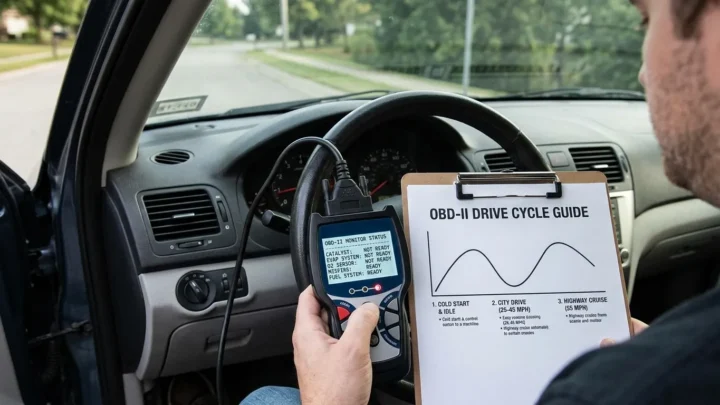
Clearing trouble codes without fixing underlying oil problems only delays necessary maintenance. Resetting diagnostic codes also wipes onboard emissions monitoring data. To learn how vehicles verify their emission controls, review our guide on why OBD-II readiness monitors reset before taking a car for state inspection.
Symptoms and Causes of Solenoid Failure
When an oil control solenoid fails or clogs, it produces noticeable drivability problems:
- Check engine light: Codes such as P0010, P0011, P0013, and P0014 flag electrical circuit faults or cam timing errors.
- Rough idle: If the valve sticks open, excessive overlap causes engine stumbling, vibration, or stalling at low speeds.
- Sluggish acceleration: A jammed spool valve prevents timing advance, leaving the engine underpowered under load.
- Reduced gas mileage: Suboptimal valve timing causes incomplete combustion, burning more fuel per mile.
The primary cause of solenoid failure is dirty or degraded engine oil. Extended drain intervals cause sludge and varnish to accumulate on the sliding spool. Using the manufacturer-specified oil viscosity and changing oil on schedule keeps internal passages clean and prevents solenoid sticking.
FAQ
How do you know if a VVT solenoid is bad?
A bad VVT solenoid typically triggers a check engine light with camshaft timing codes, causes a rough idle, and makes acceleration sluggish. Drivers might also notice a rattling noise near the timing cover during cold starts. Technicians verify solenoid failure by measuring electrical resistance across the terminal pins with a digital multimeter.
Can you drive with a failing VVT solenoid?
You can drive short distances with a failing VVT solenoid, but ignoring the problem can lead to poor fuel economy and prolonged timing errors. When the engine computer detects abnormal cam phasing, it often defaults to fixed timing to protect internal components. Driving long term in this mode reduces power and increases exhaust emissions.
Can dirty engine oil cause VVT solenoid failure?
Dirty engine oil is the most common cause of VVT solenoid failure because suspended carbon and sludge clog the delicate spool valve and filter screen. Small particles can cause the precision-machined spool to bind within its bore. Regular oil changes ensure oil passages stay open and hydraulic pressure remains consistent.