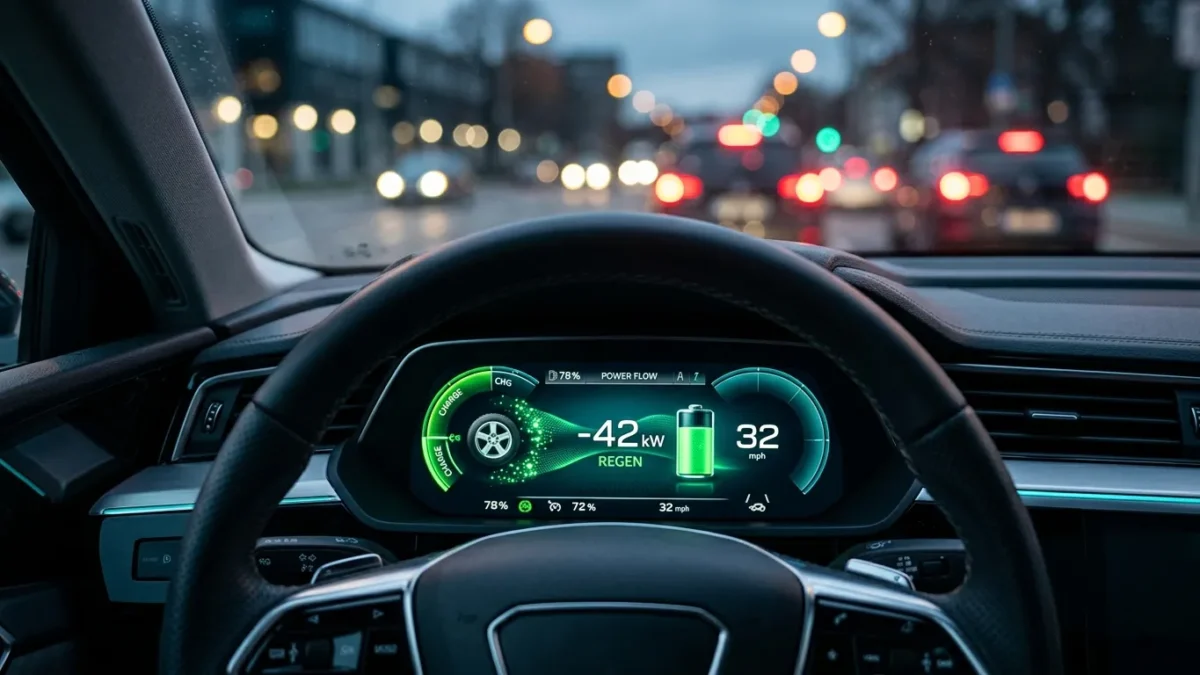
Blended braking in hybrids works by using an electronic brake control module to combine regenerative deceleration from the electric motor with physical clamping force from hydraulic friction brakes. At BoringMagazine.Co, we break down complex automotive engineering into direct explanations. When you press the brake pedal in a hybrid or electric vehicle, your foot does not directly push hydraulic fluid into the calipers. Instead, sensors measure pedal travel and speed, sending that data to an electronic control unit. The computer commands the electric drive motor to act as a generator, turning vehicle momentum into stored battery power while slowing the car down. If your stopping demand exceeds the motor’s regenerative capacity, or as the car comes to a complete halt, the computer applies the hydraulic friction brakes.
The Mechanics of Brake-by-Wire and Regenerative Blending
Blended braking relies on an electro-hydraulic brake-by-wire system. In conventional cars, a mechanical rod connects the brake pedal through a vacuum booster to a master cylinder. Hybrids isolate this mechanical link during standard driving.
A blended braking system relies on five main components:
- Pedal sensors: Stroke and pressure sensors measure how far and fast you push the pedal to determine driver intent.
- Pedal simulator: A spring-loaded hydraulic chamber provides firm pedal resistance for normal pedal feel.
- Brake control module: The computer calculates total stopping demand and splits torque between systems.
- Inverter and motor-generator: The electric powertrain generates negative torque and recharges the high-voltage battery.
- Hydraulic actuator: An electric pump and solenoid valves meter fluid pressure to each wheel caliper.
The control module reads inputs hundreds of times each second. It evaluates vehicle speed, battery state of charge, and road grip before selecting the right mix of motor resistance and hydraulic clamping. The system continually recalculates these values to keep deceleration smooth and predictable.
Step-by-Step: What Happens When You Press the Pedal
The blending process takes place continuously in fractions of a second:
- Driver input: The pedal stroke sensor measures pedal travel and application speed.
- Torque calculation: The control module calculates total required braking torque to match driver intent.
- Generator resistance: The computer commands the electric motor to resist axle rotation, sending electricity to the battery pack.
- Hydraulic blending: If generator resistance cannot meet the torque target, solenoid valves open to apply the brake pads.
- Final stop: Below roughly ten miles per hour, motor resistance fades, and hydraulic pads bring the vehicle to a complete rest.
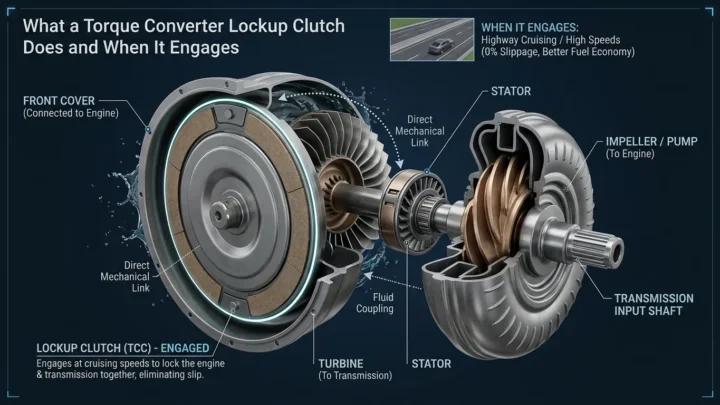
A conventional gas car slows through engine drag only when you lift off the throttle, and its brakes do all the work once you press the pedal. A hybrid instead keeps adjusting motor resistance so deceleration feels linear. Its transmission plays a part as well, which our guide on how a torque converter lockup clutch works explains.
Regenerative Braking vs. Friction Braking
Combining both braking methods solves the physical limits of each system.
Regenerative braking captures kinetic energy that standard cars lose as heat. Kinetic energy spins the electric motor, generating electricity for the traction battery. However, a motor-generator cannot produce strong braking force at very low speeds and cannot hold a parked car on a hill.
Friction braking uses hydraulic fluid to squeeze pads against spinning metal rotors. This friction creates thermal energy to stop the vehicle quickly. While friction brakes offer massive stopping power for panic stops, all that kinetic energy dissipates as heat.
Blended braking brings these systems together. The computer uses regenerative braking for most routine slowing events, which preserves pad thickness and cuts brake dust. Meanwhile, the hydraulic system stays pressurized and ready for sudden emergency stops.
Real-World Systems and Driving Dynamics
Automakers tune blended braking to balance energy recovery and driver comfort. Early systems, such as Toyota’s Electronically Controlled Brake system in the Prius, used dedicated hydraulic accumulators and twin pedal sensors to balance pedal feel with motor drag.
Modern electric and hybrid vehicles use compact integrated power brake units. These units combine the master cylinder, booster, and stability control hardware into one assembly. On a slippery road the controller cuts back regeneration on the driven axle, because a single motor cannot vary its drag wheel by wheel, and lets the ABS and stability system work each hydraulic caliper on its own. That is a different job from the one a limited-slip differential does, which shares drive torque across an axle. Federal brake standards from the National Highway Traffic Safety Administration require a car to keep stopping safely when part of its braking system fails.
Many newer electric models also include one-pedal driving modes. Releasing the accelerator pedal applies strong regenerative braking right away. You can explore more powertrain and chassis topics in our Automotive guides.
Common Misconceptions and Brake Maintenance
Several misunderstandings surround blended braking systems and their maintenance needs.
One misconception is that hybrid brake pads never wear out. While regenerative braking greatly extends pad and rotor life, the friction brakes still work during hard stops and low-speed maneuvers. In wet or salted road conditions, hybrid brake rotors can rust or suffer sticking caliper slide pins from lack of regular use. Periodic visual inspections remain essential.
Another myth is that regenerative braking works the same way all the time. When the battery is completely full, it cannot accept more electrical current. The computer must disable regenerative braking and rely entirely on friction pads or engine compression. Cold battery temperatures can also temporarily limit regeneration.
Some drivers notice a slight grabby sensation as the car comes to a stop. This feeling happens when the computer transfers braking force from the electric motor to the hydraulic pads. If your brake pedal feels spongy, sinks toward the floor, or shows warning lights, have a certified technician inspect the brake-by-wire system.
FAQ
Does blended braking work if the hybrid battery is full?
Blended braking relies entirely on hydraulic friction brakes when the hybrid battery is full, because the battery cannot accept additional electrical energy. The electronic control unit limits generator resistance and directs hydraulic fluid to the calipers to maintain stopping force.
Why do hybrid brakes feel grabby at low speeds?
Hybrid brakes can feel grabby at low speeds because the vehicle must transfer deceleration from the electric motor to the mechanical friction pads before stopping. If the hydraulic pressure timing is slightly off during this transition, the driver feels a sudden increase in bite.
Do hybrid vehicles still require brake fluid flushes?
Yes, hybrid vehicles still require regular brake fluid flushes because moisture contaminates hydraulic fluid over time. Fresh fluid protects sensitive solenoid valves, internal pumps, and calipers from internal corrosion.