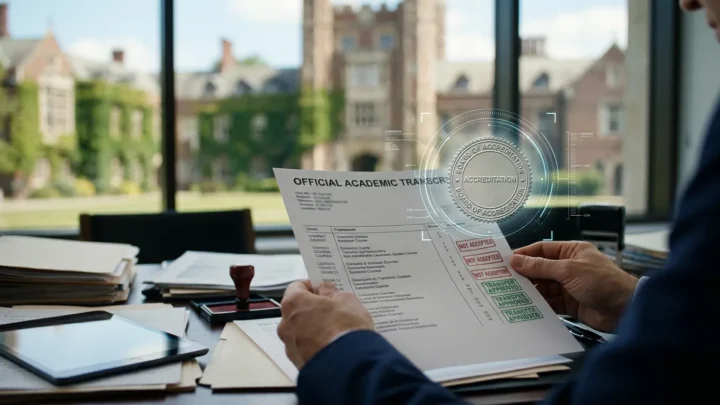
Dual enrollment works in high school by allowing students to take college-level classes that simultaneously earn both high school graduation credits and accredited undergraduate college credits. Through these partnerships, eligible secondary students register for courses offered by local community colleges or four-year universities. Instead of studying advanced topics purely for an end-of-year standardized exam, students complete actual undergraduate syllabi over a standard college term. Readers visiting BoringMagazine.Co will discover that understanding these educational tracks helps families plan secondary academic paths and future tuition savings effectively.
How Dual Enrollment Programs Operate
Dual enrollment partnerships rely on formal cooperative agreements between public school districts and regional post-secondary institutions. State regulations define baseline eligibility rules, funding mechanisms, and credit limits. Students typically qualify during their junior or senior year by maintaining a minimum high school grade point average, often an unweighted 2.5 or 3.0 GPA, and demonstrating academic readiness on standardized tests.
Once accepted, a student selects approved courses from a college course catalog. Common choices include general education subjects like English Composition, College Algebra, and American History. The sponsoring school district and partner college agree in advance on course equivalencies so that a single semester college course fulfills a high school graduation requirement. Funding varies by state. Many states cover tuition, fees, and textbooks through public funds, while others require families to pay discounted tuition rates. You can find more secondary course planning advice in our Education guides.
District Articulation Agreements and Delivery Models
An articulation agreement is a formal contract between a school district and a college establishing how coursework transfers between both institutions. This document defines instructor credentials, syllabus standards, and grading scales. Without an articulation agreement, a high school cannot award secondary credit for college courses.
School districts offer three common delivery models under these agreements:
- On-campus instruction: Students travel to the college campus, attend classes with regular undergraduate students, and learn from college professors.
- High school campus instruction: Qualified high school teachers holding master’s degrees teach the college syllabus in regular high school classrooms.
- Online instruction: Students complete coursework through the college learning management system during scheduled school periods.
Every delivery model uses the same curriculum and grading standards set by the post-secondary institution. College faculty or approved secondary instructors evaluate coursework using undergraduate expectations rather than modified high school grading scales.
How High Schools Calculate Weighted GPAs
Most public school districts apply weighted grade calculations to dual enrollment courses on the high school transcript. Standard secondary courses use a 4.0 unweighted scale where an A equals 4.0 points and a B equals 3.0 points. Because dual enrollment coursework mirrors university difficulty, districts typically add a full quality point, creating a 5.0 maximum scale.
Under a 5.0 weighted scale, an A in a dual enrollment course awards 5.0 grade points, a B awards 4.0 points, and a C awards 3.0 points. This grading policy matches the weight given to Advanced Placement courses. To see how exam-based pathways compare, read our guide on AP and IB exam scoring rules.
High school GPA weighting is strictly an internal policy. School districts calculate weighted GPAs for class rank and local honors. Many university admissions offices recalculate an applicant’s GPA on an unweighted scale during the admissions review process.
How College Transcripts Record Coursework
Enrolling in a dual enrollment class creates an official, permanent post-secondary academic record. The college registrar assigns the student an identification number and opens a college transcript. This official record exists independently from the high school transcript.
The college transcript lists the course title, department number, credits attempted, credits earned, and final letter grade. For example, a student taking introductory writing receives an entry showing “ENG 101: English Composition I, 3.0 Credits, Grade: A.” Registrars format these entries exactly like those of regular undergraduate students.
Some colleges place a small notation indicating high school concurrent enrollment, but many do not differentiate. The earned grade immediately factors into the student’s cumulative college GPA. Withdrawing after the add/drop deadline generates a permanent “W” on the record, and failing grades damage future college academic standing.
Credit Portability and Transfer Policies
Earning college credits in high school does not guarantee that every four-year university will accept those credits. Credit portability depends on institutional transfer rules, course equivalencies, and accreditation standards. Students should verify how regional versus institutional accreditation impacts credit acceptance across different colleges.
Public universities within the same state typically maintain statewide articulation agreements. Under these systems, general education classes taken at an in-state community college transfer smoothly to state universities as direct course equivalents. Private universities and out-of-state institutions evaluate transfer requests on an individual basis.
Admissions evaluators examine syllabi to ensure course content matches their campus requirements. If direct equivalencies do not exist, universities may award general elective credits instead of major requirements. Students should retain every syllabus and major assignment to document their coursework for future transfer evaluations.
Common Mistakes and Misconceptions
A frequent mistake is believing dual enrollment grades remain private unless a student chooses to submit them. Federal financial aid rules and university honor codes require applicants to report all previous post-secondary coursework. Concealing college transcripts can cause admission revocation or academic probation.
Another error involves overlooking future financial aid impacts. Federal student aid requires students to meet Satisfactory Academic Progress guidelines, which monitor course completion rates and maximum attempted credit hours. Failing grades or repeated withdrawals during high school can limit future eligibility for federal grants and loans. Families managing college financing questions should speak with a certified financial aid advisor or guidance counselor for specific assistance.
Students also assume all completed credits fulfill major requirements. Taking random college electives can consume valuable credit limits without fulfilling degree prerequisites. Consulting academic advisors at both institutions ensures coursework aligns with future college degree plans.
FAQ
Does dual enrollment hurt your high school GPA?
Dual enrollment will not hurt your high school GPA if you earn grades that match or exceed your usual academic performance. Most public school districts assign an extra quality point to dual enrollment courses, meaning an A or B can increase your weighted GPA. A low grade such as a D or F will reduce both your high school GPA and your college GPA.
Can dual enrollment credits transfer out of state?
Dual enrollment credits can transfer to out-of-state colleges if the receiving university approves the course content and the issuing school’s accreditation. Public colleges often accept introductory general education courses like English composition and college algebra. Highly selective private universities evaluate credits individually and may decline courses taught inside high school buildings.
How do colleges verify dual enrollment coursework?
Colleges verify dual enrollment coursework by requiring an official transcript sent directly from the partner college registrar. Admissions officers review the official college record alongside your high school transcript to confirm grades and credits earned. Both documents become permanent parts of your academic file.