The infield fly rule applies when there are fewer than two outs, runners occupy first and second base or all three bases, and a batter hits a fair fly ball that an infielder can catch with ordinary effort.
Baseball created this rule to protect base runners from unfair defensive traps. Without it, an infielder could let a routine pop fly drop to the dirt on purpose. The defense could then start an easy double play against frozen runners. Readers exploring sports rules through BoringMagazine.Co know that fair play often depends on clear umpire guidelines.
The Exact Conditions Required for an Infield Fly
An umpire can only call an infield fly when specific game situations occur at the same time. If any single condition is absent, standard baseball rules apply.
Under official baseball rules, four conditions must exist:
- Fewer than two outs: There must be zero outs or one out. With two outs, dropping the ball offers no double-play advantage.
- Base runners at risk: Runners must occupy first and second base, or first, second, and third base. A force play must exist at third base.
- Fair fly ball: The ball must be hit into fair territory in the air. Line drives and bunts do not qualify.
- Ordinary effort: An infielder must be able to make the catch without extreme exertion.
The rule does not apply with a runner only on first base. In that scenario, dropping the ball only allows the defense to retire one runner. The batting team loses nothing that normal play would not produce.
Why Baseball Created the Infield Fly Rule
Baseball introduced the infield fly rule during the late nineteenth century to eliminate a dishonest fielding tactic. During the 1890s, clever fielders intentionally dropped pop flies to retire multiple runners.
With runners on first and second, a pop fly put the offense in an impossible bind. If the runners strayed from their bases, the infielder caught the ball and doubled them off. If the runners stayed on their bases, the fielder let the ball bounce and threw to third and second for a cheap double play.
The National League adopted the infield fly rule in 1895 to remove this trap. By declaring the batter out immediately, the rule removes all force plays. Runners can stay on their bases safely even if the ball drops. Much like how the offside rule in soccer is judged prevents unfair positioning, this baseball rule stops defenders from manufacturing unearned outs.
How Umpires Determine and Signal Ordinary Effort
The rule relies on umpire judgment regarding ordinary effort. This standard means a fielder of average skill can reach and catch the ball without diving or sprinting recklessly.
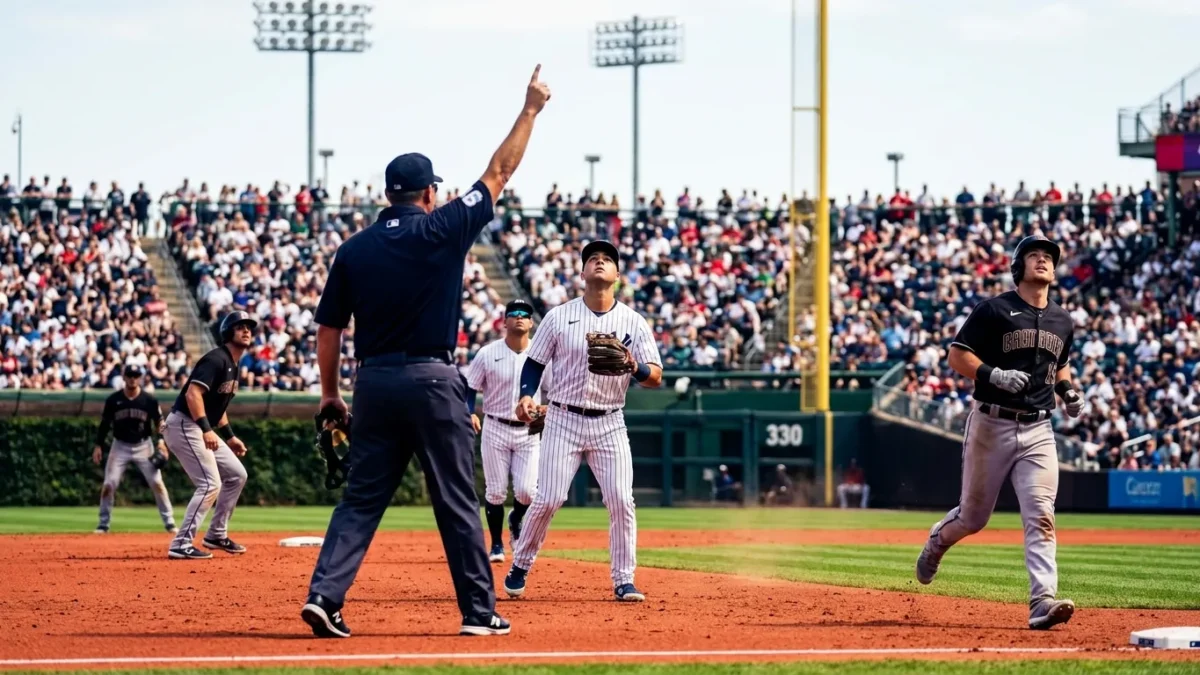
When the umpire identifies an infield fly, the umpire points into the air and shouts, “Infield fly, batter is out.” If the ball flies near a foul line, the umpire calls, “Infield fly, if fair.” This phrasing protects the call if the ball drifts into foul territory uncaught.
Several factors guide this judgment call:
- Wind conditions that cause sudden ball movement can negate ordinary effort.
- Sun glare or lighting problems may prevent a routine catch.
- Outfielders can trigger the call if they settle under a fly ball within the infield area.
The ball remains live during an infield fly. If the fielder catches the ball, runners must tag up before advancing. If the ball drops fair, runners may advance at their own risk without being forced.
Bunts, Line Drives, and Intentional Drops
The infield fly rule explicitly excludes bunts and line drives. Baseball treats a popped bunt as a failed sacrifice attempt where the batter accepts the risk of an errant pop-up. Line drives travel with too much speed for umpires to gauge ordinary effort fairly.
A separate rule prevents fielders from intentionally dropping line drives or bunts. Under official rules, an umpire calls the batter out if an infielder touches a line drive or bunt and drops it on purpose with runners on base.
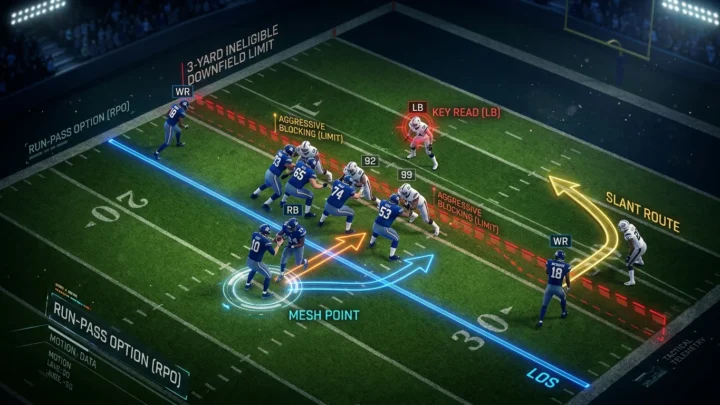
The key distinction is physical contact. An intentional drop requires the fielder to touch the ball before dropping it. An infield fly applies whether the fielder touches the ball or not. Readers studying sports mechanics through our Sports guides can see how precise definitions preserve integrity. This balance mirrors how the ineligible receiver downfield rule in football limits lineman movement on deceptive pass plays.
Famous Controversies and Common Misconceptions
A common myth claims that an infield fly must land on the infield dirt. In reality, the rule depends on which fielder can make the play, not where the ball lands.
An infielder drifting into shallow outfield grass can still trigger the call if the catch requires only ordinary effort. This distinction caused massive debate during the 2012 National League Wild Card game between the Atlanta Braves and the St. Louis Cardinals.
In the eighth inning, Atlanta batter Andrelton Simmons hit a high fly ball into shallow left field. Outfield umpire Sam Holbrook called an infield fly roughly 225 feet from home plate. The ball fell untouched between two fielders. The call stood, Simmons was ruled out, and St. Louis held their lead. Major League Baseball confirmed that Holbrook applied the rule correctly based on umpire judgment.
Another misconception is that runners cannot run when an infield fly is called. Runners can always run, but they must weigh the risk of being thrown out or tagged.
FAQ
Can a runner advance on an infield fly?
Base runners can advance on an infield fly at their own risk because the ball remains live. If the fielder catches the pop-up, runners must tag up by touching their original base after the catch before attempting to advance. If the ball drops to the ground in fair territory, runners do not need to tag up and can run to the next base without facing a force out.
Does the infield fly rule apply with only a runner on first base?
The infield fly rule never applies when a runner occupies only first base. The rule requires forces at both second and third base to prevent a multiple-out trap. When only first base is occupied, a dropped ball allows the defense to record one out at most, giving the fielding team no unfair tactical advantage.
What happens if an infield fly drifts foul and drops uncaught?
If a fly ball called as an infield fly lands uncaught in foul territory, the play counts as an ordinary foul ball and the batter is not out. The umpire call is always conditional on the ball becoming fair. If the ball touches foul ground without being touched by a fielder, the umpire signals a foul ball, runners return to their bases, and the at-bat continues.